Math at the forefront of AI
Foundational innovation to responsible impact
From advancing AI safety and explainability to accelerating drug discovery to strengthening Canada’s critical minerals supply chain, the University of Waterloo’s Faculty of Mathematics continues to be a leader in artificial intelligence. This roundup highlights recent news stories featuring Math faculty, students and alumni who are shaping how AI is developed, applied and governed.

Using AI to accelerate drug development
Computer Science PhD candidate Bing Hu, alongside Professor Dr. Helen Chen (Health) and Applied Mathematics Professor Dr. Anita Layton, built a machine learning model that analyzes pharmaceutical data to predict drug properties and interactions, drawing on domain knowledge from biology and medicine to train more efficient neural networks.

Pascal Poupart receives $480K grant to apply AI to critical minerals recycling
CS Professor Pascal Poupart and Chemical Engineering Professor Luis Ricardez-Sandoval received $480K from BMO and Mitacs to apply artificial intelligence to the recycling of rare earth elements, strengthening Canada's critical minerals supply chain.

Google-UWaterloo symposium showcases student AI research
Waterloo's new Future of Work Institute concluded its inaugural Futures Lab: An AI + UX Prototyping Workshop series with a public symposium in December, where students presented their AI-powered solutions to an educational problem.

CS professors receive CIFAR grants for AI safety
Three Waterloo CS professors — Maura R. Grossman, Yuntian Deng, and Wenhu Chen — were named to inaugural CIFAR Canadian AI Safety Institute (CAISI) Solution Networks, each receiving $700K over two years to tackle AI safety in the legal system and linguistic inequality.

Building safe autonomous AI systems
Applied Math Professor Jun Liu and his team are using tools from applied mathematics and machine learning to rigorously verify the safety of AI-driven systems like autonomous vehicles and power grids — mathematically modelling dynamic systems using differential equations.
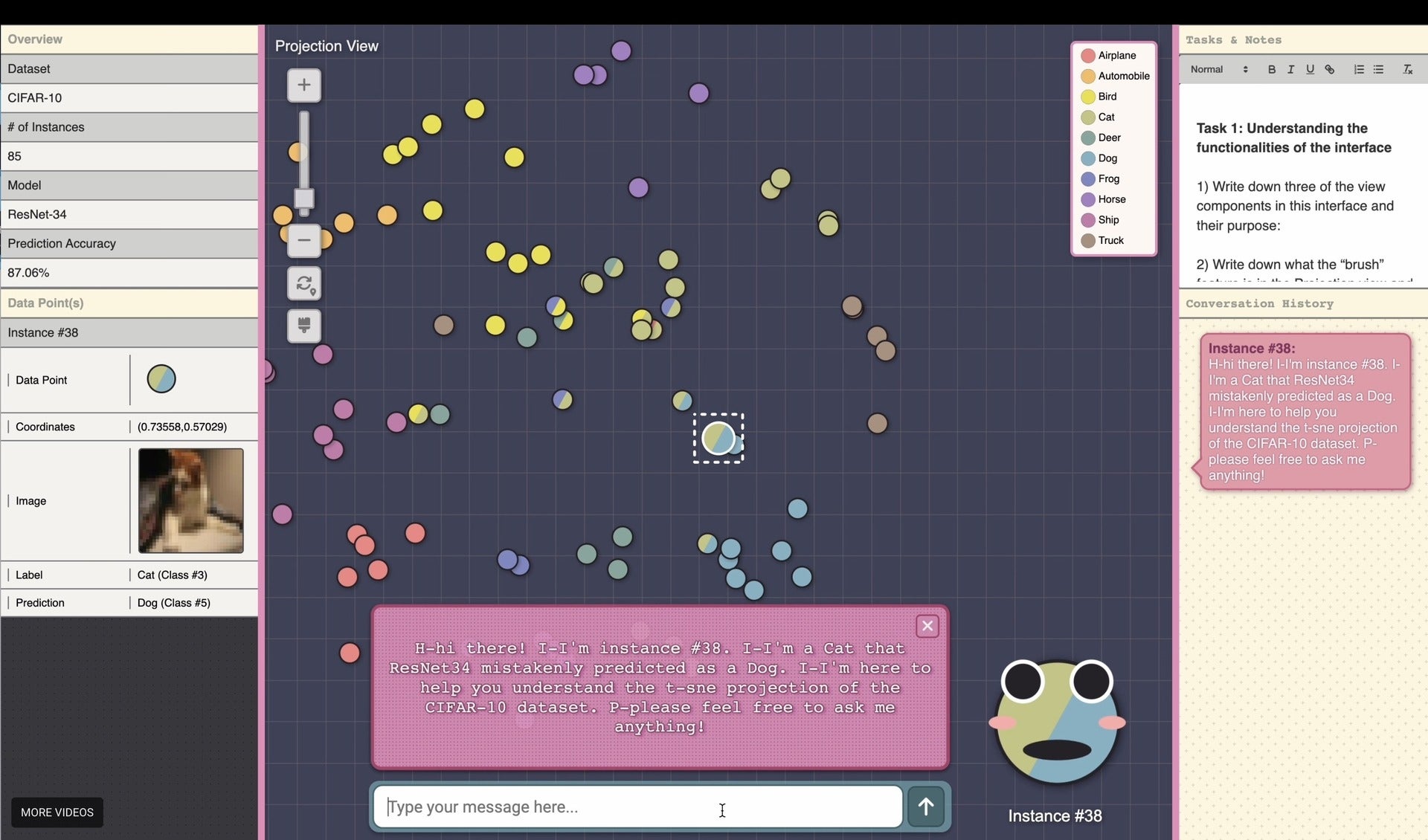
Gamifying AI
CS PhD student Yuzhe You (MMath '23) is developing interactive video game-based visualizations to make Explainable AI (XAI) accessible to non-technical users — addressing the problem that most XAI tools are only usable by experienced machine learning engineers.

Using AI to democratize sports analytics
Researchers Dr. David Radke and Kyle Tilbury developed an AI system using reinforcement learning to simulate soccer matches, creating open-source datasets for researchers who lack access to expensive proprietary pro-sports data.