Tuesday, March 24, 2026
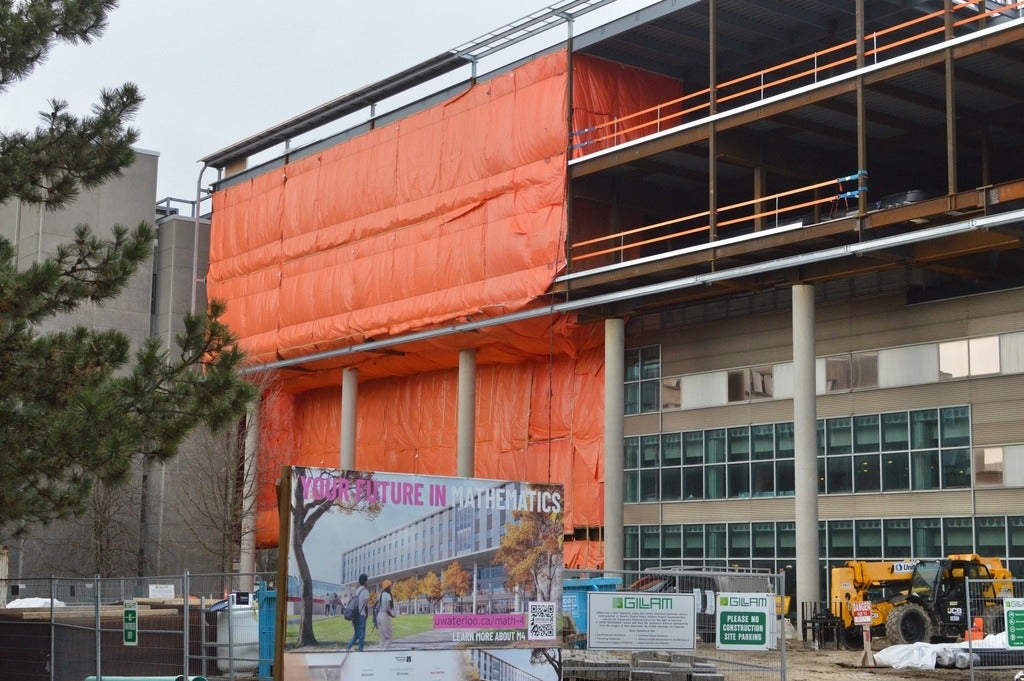
Mathematics 4 Update
An update on M4 building progress and the researchers who will call M4 home.
An update on M4 building progress and the researchers who will call M4 home.
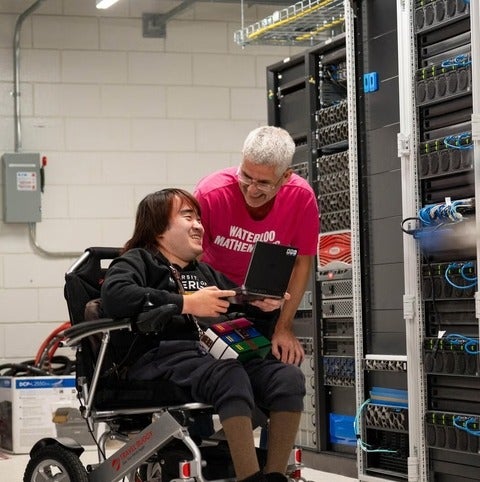
Considering the ubiquity of smart devices and the increasing data demands of artificial intelligence (AI), the amount of energy required to operate data centres continues to grow dramatically.

“Computers loom large in the world of tomorrow,” declared an October 1968 article in the University of Waterloo Quarterly. “They will help educate children, run complex industrial plants, revolutionize the communications industry; they will drastically alter the way we shop for food, clothing and other merchandise.”
The article accompanied a photo of the brand-new Mathematics and Computer (MC) building, which was completed earlier that year. It was the largest building on campus, and featured the biggest and fastest computer in Canada at the time: a testament to the Faculty of Mathematics’s focus on cutting-edge technology and innovation.

When completed in 2027, Mathematics 4 (M4) will be one of a limited number of Canadian buildings to feature a solar chimney. This architectural innovation harnesses natural forces to ventilate and cool, thereby reducing a building’s energy use.

“In every stage of the life of the building – planning, construction, and occupation – there are optimization problems to solve,” says Dr. Levent Tunçel, professor in the Department of Combinatorics & Optimization. “That’s true of every major building project, and it’s true of M4.”

The Green Room, an innovative server room in Waterloo’s new Mathematics 4 building, will apply an efficiency lens to computing research and education

Catherine Dong is a mathematics student at the University of Waterloo and was a member of the Secretariat from 2019 to 2022. She gave the following speech at the Mathematics 4 Groundbreaking event.

Researchers from the University of Waterloo have found a way to reduce the energy use of some data centres by as much as 30 per cent.

Donors, alumni, faculty, staff and students gathered on October 28 to celebrate the official groundbreaking for Mathematics 4 (M4), the new Faculty of Mathematics building that begins construction this fall.

M4 will provide our students with dynamic classrooms, lounges and event spaces that will allow them to explore, create and collaborate on a whole new level. It will equip researchers and students with powerful computational tools and state-of-the-art lab spaces that will accelerate their world-changing research–particularly in fields like data science and AI. And it will unite our whole math community, forging new connections at the intersection of disciplines and bridging academia, industry and government to achieve global impact.
Read the full story on E-Ties.