Current students

Friday, August 24, 2018

AI technology rapidly analyzes water samples

by Brian Caldwell, Faculty of Engineering

Progress on new artificial intelligence (AI) technology by Waterloo Engineering researchers could improve monitoring at treatment plants to help ensure clean water and safeguard public health.

The researchers have developed AI software capable of identifying and quantifying different kinds of cyanobacteria, or blue-green algae, a threat to completely shut down water systems when it suddenly proliferates.
Friday, August 17, 2018

Reducing the time to diagnose and treat patients

by Megan Vander Woude, Faculty of Engineering

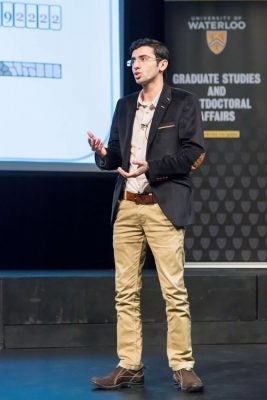
Seyed Hossein Mirjahanmardi talking on stage
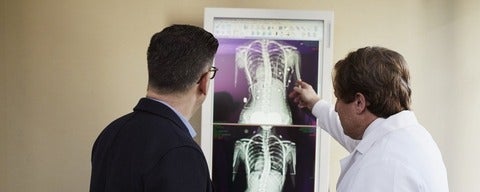
Waterloo researchers in the Advanced Concepts Research Lab are developing a new method for medical imaging that could reduce the time to diagnosis.

Thursday, July 19, 2018

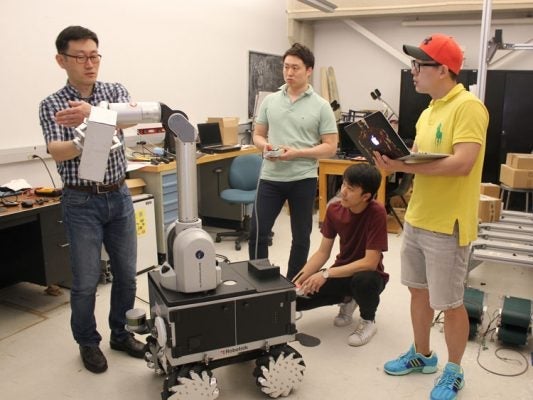
Developing a robotic companion with human-like dexterity

by Carol Truemner, Faculty of Engineering

A robot glides across a warehouse floor, picks up an object from a top shelf, boxes it and then carefully loads the wrapped package on a delivery truck – all in record time and without bumping into anything.

Soo Jean shows research work with his graduate students

Friday, July 6, 2018

Radar and AI could produce a prick-free glucose monitor

by Brian Caldwell, Faculty of Engineering

Researchers at Waterloo Engineering are developing new technology that would free people with diabetes from painful finger pricks to monitor their blood sugar.

A team led by professor George Shaker has combined radar and artificial intelligence (AI) to detect changes in glucose levels without the need to draw blood several times a day.

Thursday, June 21, 2018

New silicon breakthrough accomplishes the ‘impossible’

by Brian Caldwell, Faculty of Engineering

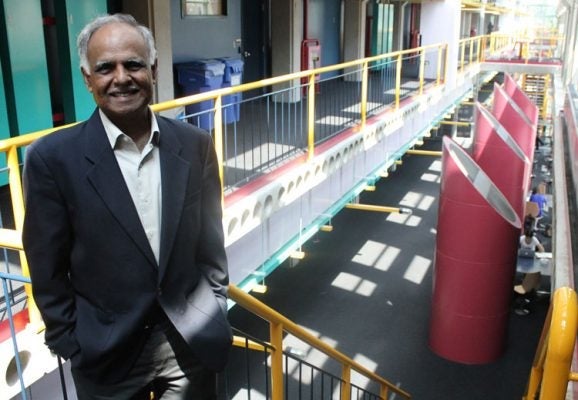
Selvakumar standing in on DC stairs on second floor
Researchers using powerful supercomputers and nanotechnology have discovered a way to generate microwaves with inexpensive silicon, a breakthrough that could dramatically cut costs and improve devices such as sensors in self-driving vehicles.

Friday, June 1, 2018

Harnessing the vast potential of AI

by Brian Caldwell, Faculty of Engineering

Tapping the power of artificial intelligence (AI) is at the heart of several new initiatives at Waterloo Engineering, including an institute to foster collaboration with industry partners and an option for high-achieving undergraduate students.

While building on expertise developed at Waterloo in the last several decades, the initiatives recognize and anticipate the tremendous potential of AI technology to evolve, improve and expand in the future.

Friday, June 1, 2018

Bargain hunting app downloaded 40 million times – and counting

by Brian Caldwell, Faculty of Engineering

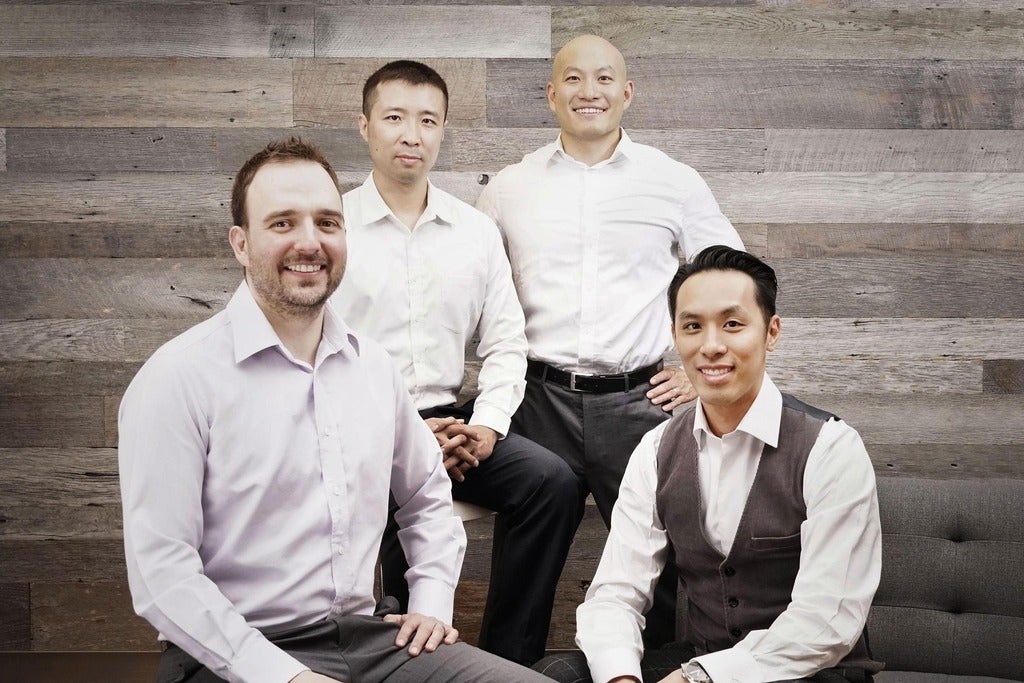
More than two years after graduating, David Au-Yeung (BASc '04), Matthew Cheung (BASc '04), David Meyers (BASc '04) and Wehuns Tan (BASc '04) were all putting their engineering degrees to good use at good jobs in the working world.

But that wasn’t what they really wanted.

Close friends since their first year of Waterloo’s computer engineering program, the foursome from the Toronto area still had their sights set on becoming entrepreneurs.

Friday, June 1, 2018

A seat of honour under the "tree of hope"

by Angela Pause, Faculty of Engineering

When Jaleh Seyed Moossai and Nosratollah Soltani left Iran in 1991 to come to Toronto, they did so for one reason – to provide their children Tina, Sina, and Nima with an environment to succeed and grow.

What they did not know at the time was that their future in Canada would involve a close and inspiring connection with Waterloo Engineering.

Friday, June 1, 2018

Non-invasive technology promises to reduce biopsies

by Carol Truemner, Faculty of Engineering

A medical startup has developed cutting-edge imaging technology that has the potential to detect skin cancer without leaving a mark.

Elucid Labs uses artificial intelligence (AI) technology in a small non-invasive imaging device to analyze moles and other skin lesions for signs of skin cancer, helping dermatologists make faster, more accurate decisions and reducing the number of unnecessary biopsies.

Friday, June 1, 2018

Grand Opening of Engineering 7

by Beth Cotter, Faculty of Engineering

It’s official!  Monday, October 29, 2018 is the Grand Opening of Engineering 7.

Attached to both E5 and E6, this seven-storey, 242,000-square-foot building will be a new vibrant home for students, faculty, research facilities and staff.