Low-cost 3D-printed filter removes up to 90 per cent of microplastics from water
The new customizable filter design could be adapted for household and industrial water treatment
University of Waterloo engineers have developed a low-cost, customizable 3D-printed filter that removes up to 90 per cent of microplastics from water, offering an inexpensive solution for both residential and industrial uses.
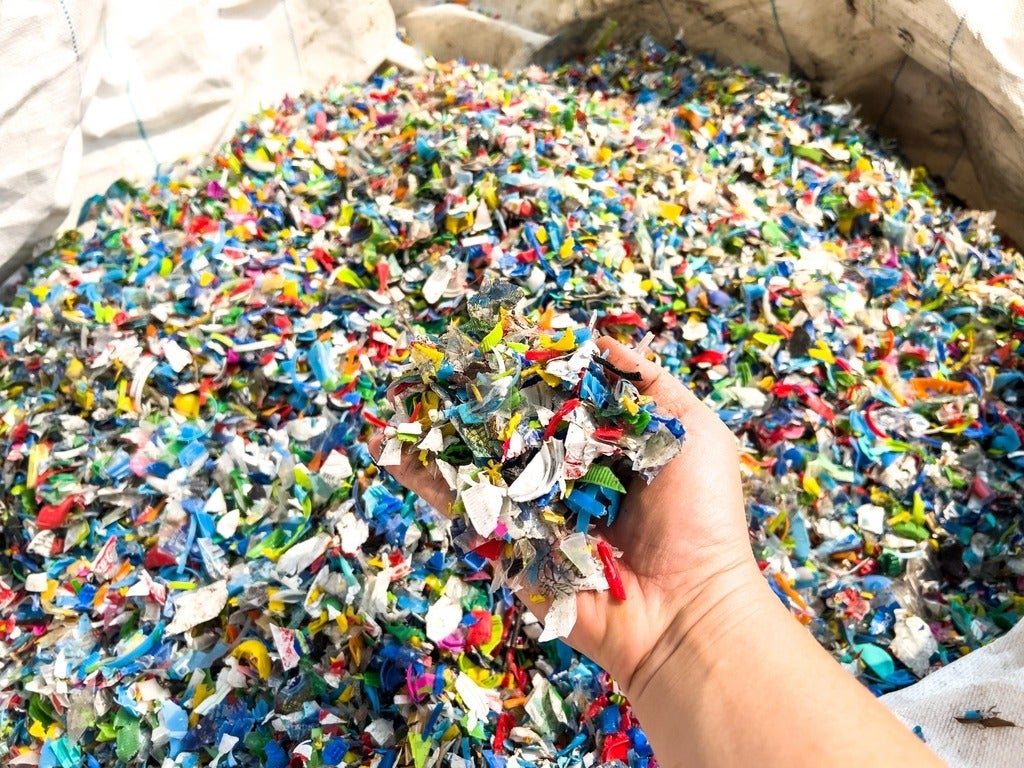
Microplastics are tiny plastic fragments smaller than five millimetres that are increasingly found in drinking water worldwide. Once ingested, they can enter human tissue and blood and have been found in breast milk. Ongoing research suggests they could be linked to health problems including cancer and heart attacks.
The research team used a three-step process to develop a filtration column of stacked, 3D-printed disk filters made from a biodegradable polymer. The columns are easy to produce and customize.

Professor Tizazu Mekonnen
“We explored using between eight and 20 filters stacked together,” said Dr. Tizazu Mekonnen, a chemical engineering professor at Waterloo. “With 20 filters, we removed 90 per cent of microplastics, a marked improvement over current filtering technologies.”
Researchers first designed disk filters to maximize contact with water flowing through them, then added a water-soluble polymer that washes away after printing, leaving behind pores at the nano and micro scales.
Lastly, they added a pressure-sensitive adhesive that increases microplastic capture without blocking the pores.
Relatively large microplastics were captured almost completely, while particles smaller than 10 micrometers proved more difficult to trap. Figuring out how to remove that 10 per cent is the next step in the project, which includes engineering graduate student Ethan Crawford. Microplastics can get into water supplies through unexpected sources, including household laundry.
“Our clothes are mostly a mix of Polyethylene terephthalate (PET) in the form of polyester and cotton or pure polyester,” said Mekonnen, the Canada Research Chair in Sustainable Multiphase Polymers. “When you pull out the dryer filter, you can see how much fiber it captures. Those are all microplastics and that filter can capture only a portion of them.”
Washing machines release even more microplastics because of the high speed spinning that pulls tiny fibers loose and sends them into wastewater systems.

A low-cost, customizable 3D-printed filter developed by University of Waterloo researchers that removes up to 90 per cent of microplastics from water (University of Waterloo).
Mekonnen said the new technology has promising potential for integration into household drinking water systems and industrial water treatment plants since current filtering methods, like activated carbon, are only partially effective at removing microplastics.
A study on the work titled, 3D-printed, flow-through water filters for microplastic capture: The effect of surface porosity, column height, and pressure-sensitive adhesives on removal efficiency, was published in the journal Separation and Purification Technology.