Sustainable Futures

Wednesday, February 21, 2024

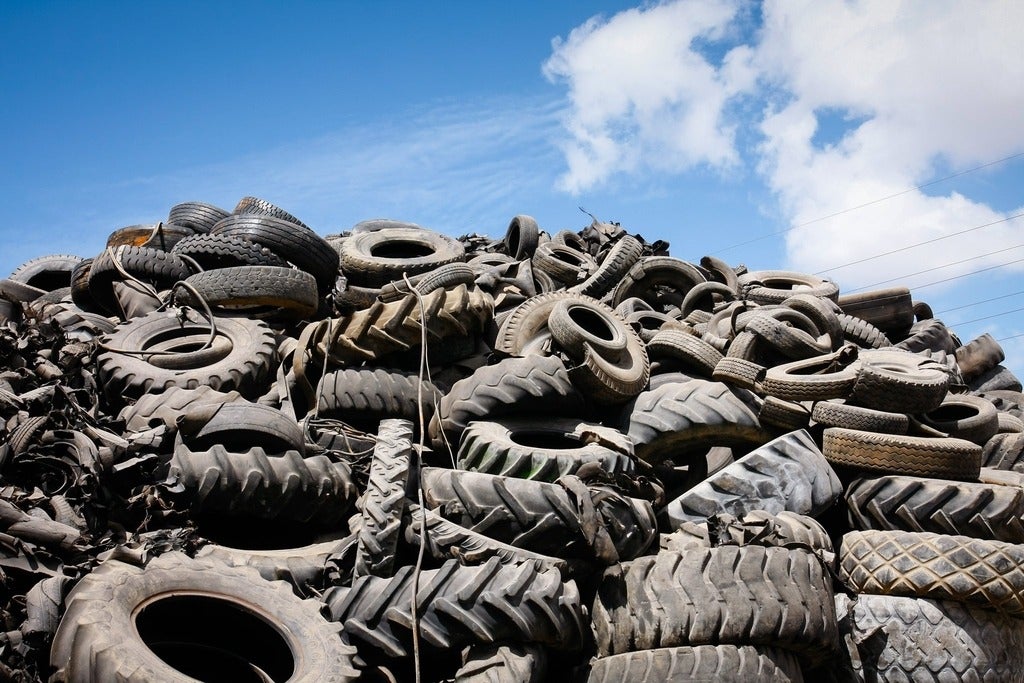
Outstanding plastic waste research earns prestigious Polanyi Prize

by Nicola Kelly, Faculty of Engineering

As the planet faces the pressing challenge of reducing plastic waste in the environment, new strategies for managing plastic waste are urgently needed. One of the biggest roadblocks to addressing the plastic waste crisis is the use of thermosets and rubbers — a class of non-recyclable plastics widely used in infrastructure, automobiles, planes, adhesives, 3D printing and chemical industries.
Thursday, February 15, 2024

Building green tech one metallic layer at a time

by Faculty of Engineering, Faculty of Engineering

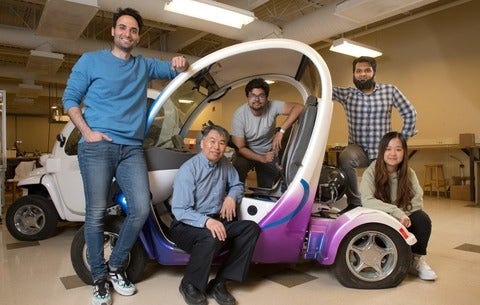
In the quest to reach zero emissions by 2050, Waterloo engineering researcher Dr. Xianguo Li and Dr. Samaneh Shahgaldi from Université du Québec à Trois-Rivières (UQTR) are working with industry partners to develop more efficient, durable, cost-effective fuel cells.  

Wednesday, February 14, 2024

Collaboration can advance the greening of materials

by Office of Research

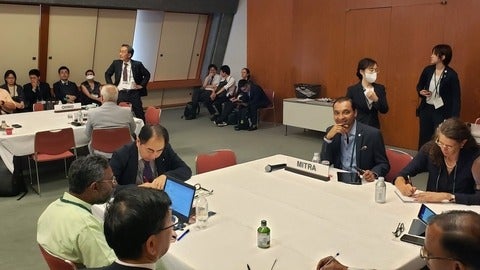
Dr. Sushanta Mitra is the executive director of the Waterloo Institute for Nanotechnology (WIN), Canada’s largest nanotechnology institute and a professor in the Department of Mechanical and Mechatronics Engineering.

His research interests focus on how fluids move around in micro and nano-sized spaces with applications in energy, water and biological systems. Outside of teaching, research and administration, he is an entrepreneur leading several startups.

Thursday, February 1, 2024

Addressing our global future with expert thought leaders

by Angelica Marie Sanchez, University Relations

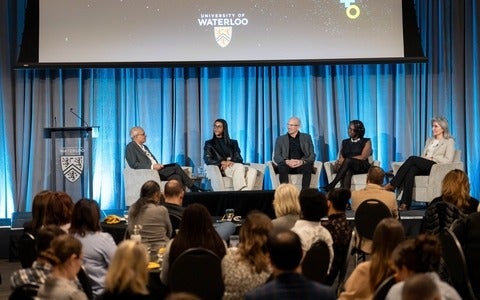
“The world continues to face compounding major crises, and education and research are essential to ensuring society is equipped to tackle these challenges head-on,” said Vivek Goel, University of Waterloo’s president and vice-chancellor, in his opening address at the Global Futures 2024 launch event on January 31. 

Waterloo researchers and entrepreneurs are committed to finding and addressing the world’s most pressing challenges with a multi-disciplinary approach. Goel added that in order to achieve this vision, we must start by thinking globally and acting locally. 

Wednesday, January 31, 2024

Waterloo students win GenAI competition in Toronto

by Darren McAlmont, University Relations

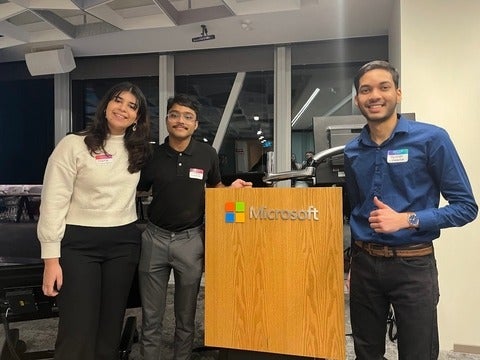
On January 18, two teams of Waterloo students participated in the final round of competitions at the inaugural AI EarthHack competition at Microsoft’s headquarters in Toronto. Team Cyclic Geese — comprised of three third-year software engineering students — emerged as winners of one of the two grand prizes and will receive an internship at Manulife.  

Friday, January 26, 2024

Reducing cancer risk with new firefighting gear

by Nicola Kelly, Faculty of Engineering

Recent studies have suggested that firefighters are three times more likely to die of cancer than the general population. This is partly attributed to their gear, which contains polyfluorinated substances (PFAS), a large group of chemicals that are used in many applications, and often elevates the risk to cancer.

While sustainability reporting is a widespread practice in the private sector, new research shows that the same cannot be said for Ontario municipalities.

Researchers at the University of Waterloo studied 38 municipalities in Ontario, representing more than two-thirds of the population, and discovered that almost all municipalities publish their sustainability and climate change goals, but under half are formally reporting on their progress.

Tuesday, January 23, 2024

WISA has its eye on innovative pilot training

by Waterloo Institute for Sustainable Aeronautics

As Canada searches for a way to address its lingering pilot shortage, University of Waterloo researchers believe a solution to help reduce the cost of training is in sight.

Monday, January 22, 2024

Knowing our history to know ourselves

by Faculty of Arts

Susan Roy is a University of Waterloo researcher and professor in the Department of History and at the Balsillie School of International Affairs. Her research examines the history of Indigenous-non-Indigenous relationships with attention to land rights activism and cultural performance, along with resource and urban development disputes in Canada.

We asked Roy how fundamental research and collaborating with Indigenous partners help deepen our knowledge and understanding of the arts, humanities and social sciences.


Opinion by Susan Roy

Monday, January 22, 2024

Responding to climate change with space technology

by Chantal Vallis, Faculty of Environment

At a time when we are experiencing the effects of floods, fires and heatwaves like never before, a new space mission aims to improve climate projection models to help us understand what future scenarios may be possible.

chris fletcher

Dr. Christopher G. Fletcher
Professor, Faculty of Environment
> Waterloo Climate Institute
> Water Institute