How tiny technology is changing industries
Waterloo researchers across the Faculty of Science are using nanotechnology to improve our health, protect our planet and shape the future of technology
The field of nanotechnology is enabling unprecedented precision on a tiny scale. Across the University of Waterloo’s Faculty of Science, researchers are innovating nanotechnology to develop solutions to challenges in medicine, chemical manufacturing, and electronics. By designing materials at the nanoscale, scientists are discovering new possibilities that could improve our day-to-day lives.
Improving drug delivery through nanotechnology

At the School of Pharmacy, Dr. Marianna Foldvari and her team are developing nanoscale delivery technologies that help drugs, biologics, vaccines, and gene therapies navigate the body’s natural barriers. By enabling non-invasive delivery through the skin, eye, and nose, their work is creating new opportunities for treating skin, ocular, and neurological diseases.
Biological barriers designed to protect us, such as the skin, the eye, and the blood-brain barrier, can also prevent medicine from reaching diseased tissues. Researchers in the Foldvari Lab are developing nanomedicines that address this by packaging therapies inside carefully designed carriers. These carriers protect therapeutic agents, improve their stability, and help transport them to their intended destination.
“Conventional medicines are often distributed broadly throughout the body, even when only a small amount is needed in one specific tissue,” Foldvari says. “Nanotechnology allows us to control the journey a therapy takes. The therapeutic provides the message and the nanocarrier ensures the message reaches its destination.”
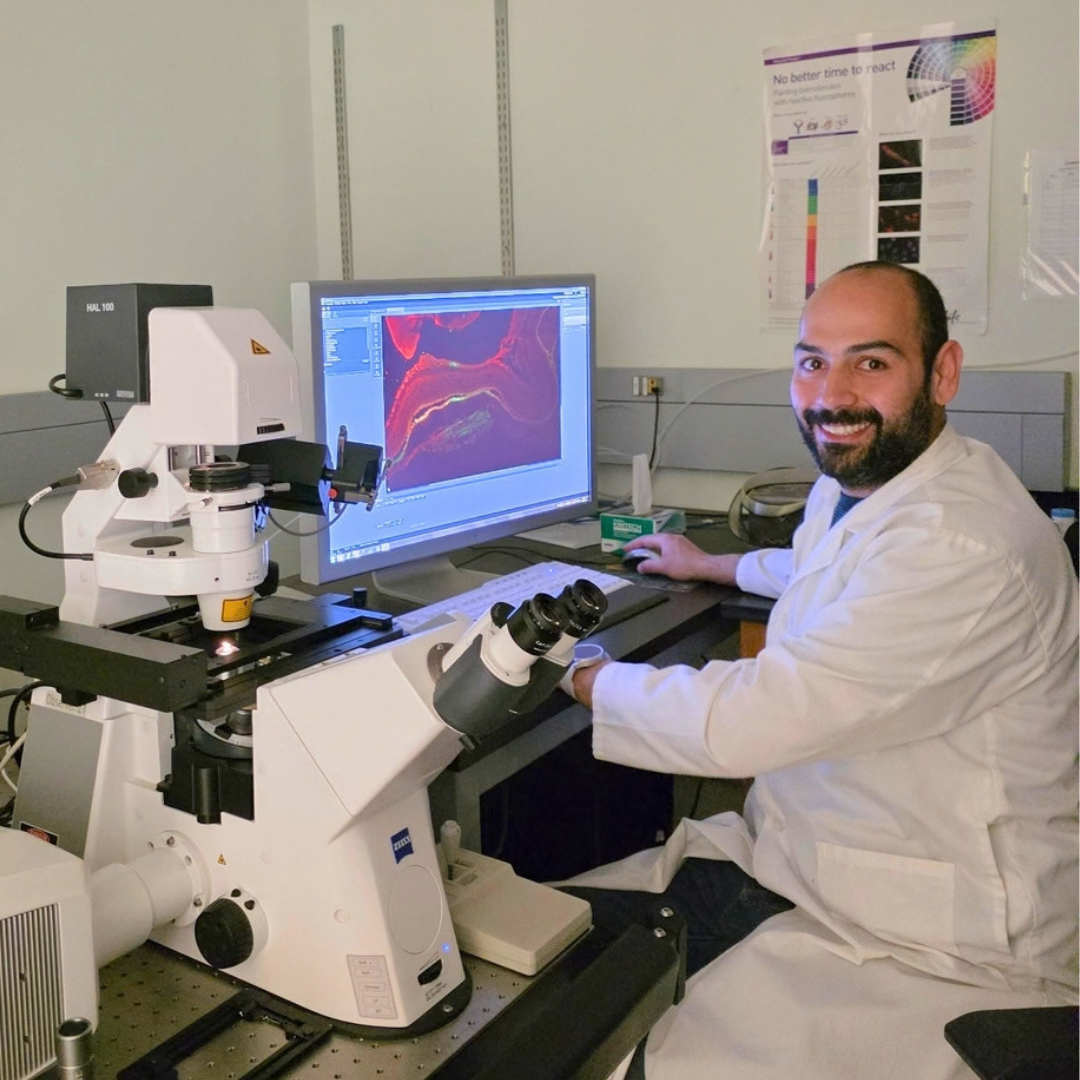
Foldvari’s lab is advancing drug delivery technologies for retinal, skin and neurological diseases, based on the belief that the future of medicine depends on delivering therapies precisely where they are needed. For example, her team has used nanotechnology to deliver neuroprotective genes to retinal tissues to preserve vision and slow neurodegeneration and has demonstrated highly efficient intranasal delivery of neuroprotective agents to the brain.
More precise drug delivery could improve treatment effectiveness, reduce side effects, and help make advanced therapies practical for a broader range of diseases. As treatments become tailored to an individual's genetics and disease profile, nanoscale delivery systems will need to become equally precise. By working at the same scale as the molecules, cells, and biological processes they seek to influence, Foldvari and her team are helping unlock new possibilities for precision medicine.
Advancing sustainable chemical manufacturing with nanoparticles
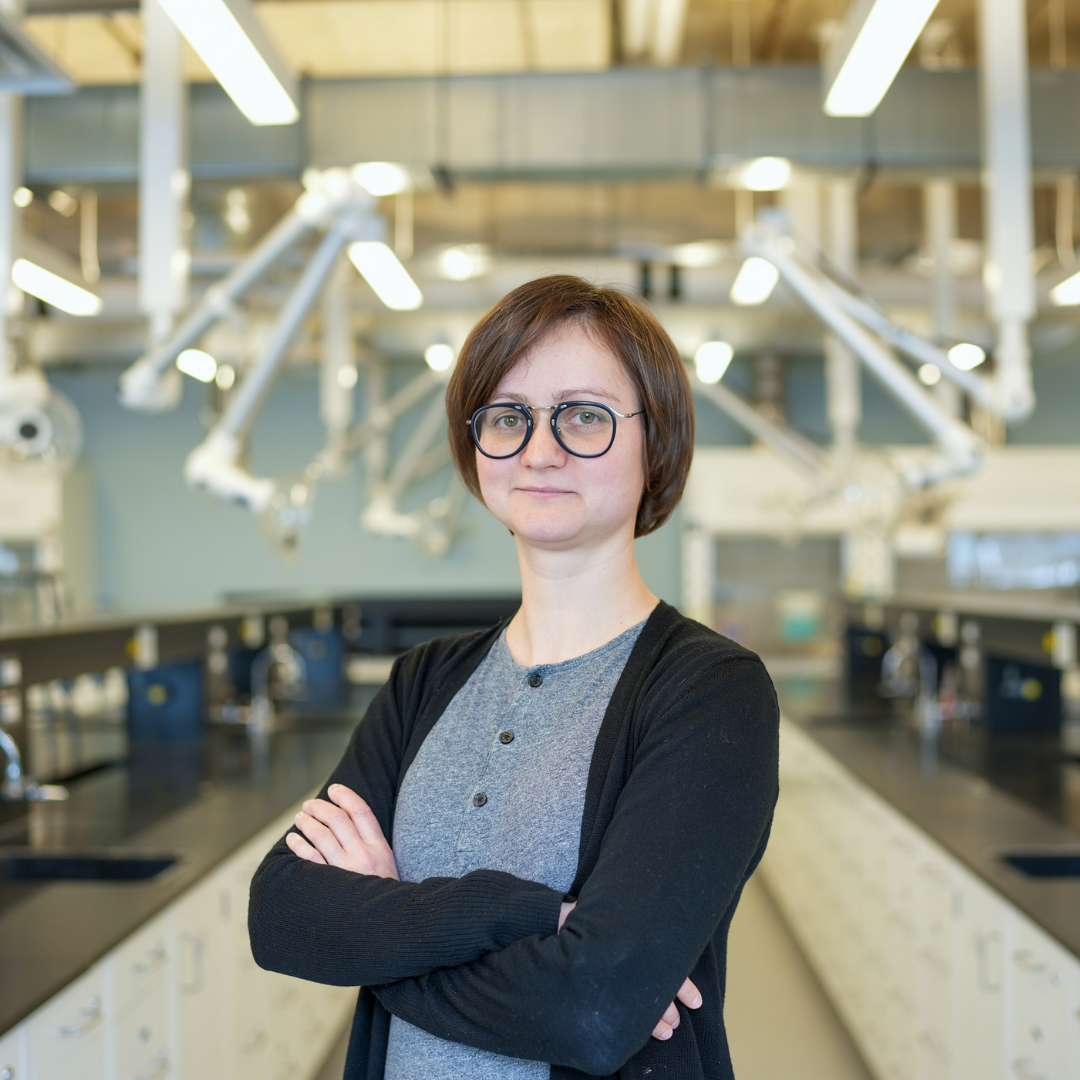
Clean energy solutions are often focused on how we generate and store electricity. However, another emissions challenge gets far less attention: how chemicals are made. Fossil feedstocks, high temperatures, and large, centralized plants manufacture fuels, fertilizers, plastics, and industrial chemicals. In Dr. Anna Klinkova’s lab in the Department of Chemistry, researchers are designing nanoparticles that let renewable electricity drive those reactions instead.
“We are exploring ways to convert carbon dioxide into fuels and chemical feedstocks, using captured carbon as a building block for organic synthesis rather than simply treating it as waste,” Klinkova says. “We are also developing processes to recover nitrogen from urea and ammonia in wastewater, and more recently, we’ve begun working on ways to produce hydrogen peroxide, an important industrial oxidant, on site and on demand.”
Each avenue of research has the same goal: replacing heat and fossil carbon with electrons and a well-designed catalyst. Researchers synthesize metal nanoparticles (crystals measuring only tens of nanometers across). By controlling their size, shape, composition, and atomic arrangement, they create highly efficient electrocatalysts that allow renewable electrons to drive complex chemical reactions. “Making a reaction go faster is comparatively easy," Klinkova says. "Making it go one way and not another is the hard part, and it's decided by structure.
While research remains in its early stages, the goal is to replace carbon-intensive fossil fuels with clean, renewable electricity to manufacture chemicals, fuels and everyday materials directly from recycled waste.
Nanotechnology for next-generation technology

Each year, electronics get smaller, faster and more powerful. However, conventional technologies are reaching their limits, and we need new materials to drive innovation. In Dr. Adam Wei Tsen’s lab in the Department of Chemistry, researchers are exploring ultra-thin two-dimensional quantum materials reduced to the nanoscale that could pave the way for next-generation technology.
“Two-dimensional materials have a layered structure similar to graphite, which means they can be stabilized all the way down to a single layer,” Tsen says. “In single-layer materials, the natural interaction between layers disappears, completely changing how electricity, magnetism and light behave within them. By artificially stacking these layers back together in new combinations, we can engineer entirely new properties that do not exist in nature."
This cutting-edge research takes place at Waterloo’s Institute for Quantum Computing, one of the top quantum information research institutes in the world. The team is using these ultra-thin materials to build advanced light sensors, such as broadband photodetectors that allow a single, microscopic sensor to see a massive range of light. This research could lead to more compact and higher-functioning light-sensing solutions for security and diagnostic applications.


