New year’s resolutions? Add social fitness to the list

Dr. Troy Glover (PhD ’00)
Faculty of Health

Dr. Troy Glover (PhD ’00)
Faculty of Health
This year brought countless reasons to celebrate as Waterloo students, alumni and researchers took bold new steps to innovate and create solutions for a complex future.
As we wrap up 2025, we reflect with pride and share just a glimpse of student success, on-campus initiatives and groundbreaking research of our Waterloo community.
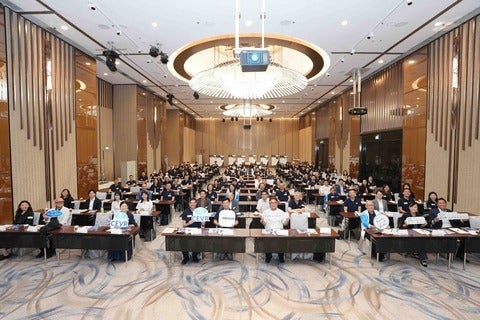
The world’s first international hub for vision science, a research collaboration between the University of Waterloo and The Hong Kong Polytechnic University (PolyU), has had its funding extended through to 2030.
The mission of the InnoHK Centre for Eye and Vision Research (CEVR) is to generate technologies that prevent, detect, treat and mitigate vision loss. Its goal is not only to conduct world-leading vision science research but also to explore opportunities for translating innovations into practical solutions that enhance eye health.
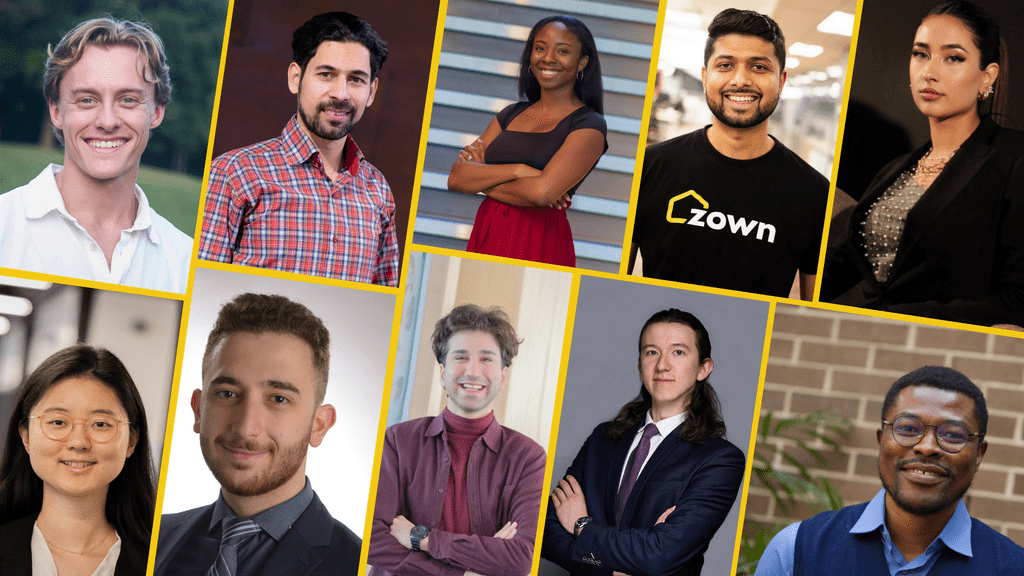
As Global Entrepreneurship Week 2025 begins, we’re spotlighting 10 standout entrepreneurs from the University of Waterloo — students and alumni who are challenging norms, redefining industries and building a better future. These innovators are not only making waves in their respective fields but are also setting the pace for what’s next for society, health, technology, the economy and sustainability.
The University of Waterloo has seen an increase in the number of researchers included in this year’s Highly Cited Researchers™ 2025 list recently published by Clarivate. The list highlights the world’s most influential researchers and scientists.
Those selected have authored multiple Highly Cited Papers which rank in the top one per cent by citations in their field. Citations and peer review are the lifeblood of academic research, ensuring both integrity and innovation. The Highly Cited Researchers™ list recognizes only one in 1,000 researchers from around the world.
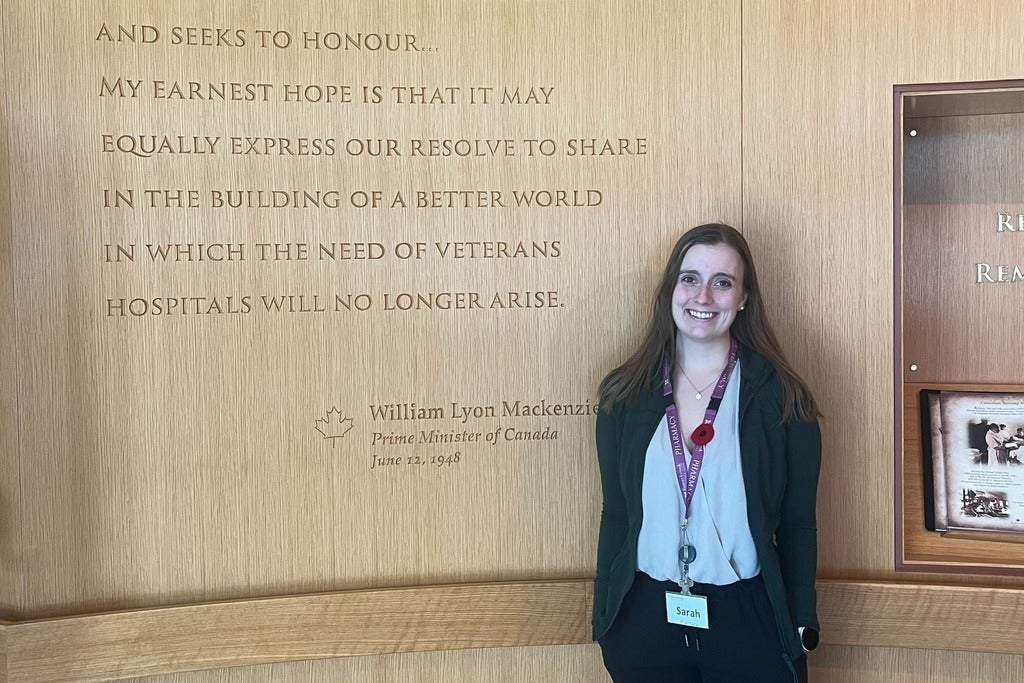
Career paths can often stem from unexpected moments, for Sarah Fallis (PharmD ’23) witnessing her grandmother’s care at a number of Toronto hospitals as a child inspired her to pursue a career in pharmacy. Today, Fallis works as a pharmacist in Sunnybrook’s Veterans Program – Canada’s largest Veterans care facility, to provide compassionate care to those who served in World War II and the Korean War.
University of Waterloo alumni Frank Baylis (BASc ’86) and Valerie Baylis (BA ’86) visited campus to announce the Gloria Baylis Foundation’s philanthropic contribution of $20 million to the Faculty of Engineering.
The gift honours former Waterloo Engineering dean, the late Dr. Pearl Sullivan, who prioritized students’ educational experiences with indomitable energy. Under Sullivan’s leadership, the Faculty’s flagship building, Engineering 7, was built to give students and researchers greater access to leading technologies, labs, experiential learning hubs, workspaces and more.
The development of a new tool for testing the eyesight of children under three could mean more children receive treatment for vision difficulties earlier, leading to positive effects on learning and development.
Children under three struggle with the precise tests used for older children. With that in mind, researchers from the School of Optometry & Vision Science at the University of Waterloo created the Waterloo Differential Acuity Test (WatDAT), a new method for measuring vision equally precisely in younger toddlers.
Four researchers at the University of Waterloo have been awarded $3.95 million in funding to support their research as part of the illustrious Canada Research Chairs (CRC) program.
This year, the CRC program is investing more than $198 million to support new and renewed Chairholders. Through the program, up to $311 million each year is invested to attract and retain some of the world’s most accomplished and promising minds.
An international team led by researchers at the University of Waterloo has developed new material that can be used as flexible “artificial muscles” to replace rigid motors and pumps in robots and allow them to move more naturally and fluidly.
Soft robots differ from hard robots in that they are pliable and flexible, making them safe for interaction with people, but the materials currently used for components enabling their movement aren’t strong enough to be effective.