Acting fast when an epidemic hits
A team of researchers at the University of Waterloo and Dalhousie University have developed a method for forecasting the short-term progression of an epidemic using extremely limited amounts of data.
The Canada Foundation for Innovation (CFI) is a non-profit corporation that invests in research infrastructure at Canadian universities, colleges, research hospitals and non-profit research institutions. Since 1997, the CFI has been supporting Canadian researchers each year to carry out world-class research through grants and government funding.
Dr. Nikolas Knowles, a professor who joined the Department of Kinesiology and Health Sciences in 2022, has received a $100,000 grant from the Canada Foundation for Innovation’s John R. Evans Leaders Fund (JELF). He is one of 13 recipients at the University of Waterloo.

The Optometry Clinic at the University of Waterloo’s School of Optometry and Vision Science, in collaboration with Essilor and Modern Optical, conducted an outreach event on August 14, 2023, to provide vision screening and eye examinations for more than 45 children and youth. The Clinic worked with the Youth Association for Academics, Athletics and Character Education (YAAACE), which is a Black-led community organization that seeks to engage children and youth from all communities, to organize this summer camp style event on campus.
Diverse knowledge and expertise are critical in understanding the intersections between health and climate change. Indigenous and local knowledge are fundamental in tackling this area of research and supporting the co-production of knowledge, bringing generations of wisdom, experience and practices to the discussion.
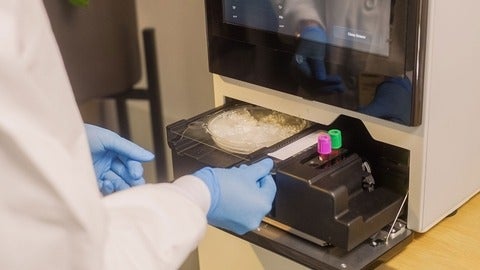
Four and a half years ago, the VitalOne was an ambitious idea. Today, the desktop computer-sized blood diagnostics device can run comprehensive tests on comparatively small blood samples — in 20 minutes.
Made by Vital Bio, a company founded at Velocity, the VitalOne was unveiled to the public and scientific community at a conference held by the American Association for Clinical Chemistry (AACC) last month, where Vital Bio also won the Disruptive Technology Award.
From automating a medical imaging device to developing a health-care platform to reduce anxiety, the Velocity health stream is creating the next generation of innovators working to transform their research into real-world technological solutions.
Entrepreneurship is the heart of the University of Waterloo.
The University is widely known for thriving technology companies — in everything from quantum computing, artificial intelligence and robotics to nanotechnology — that grew out of its incredible ability to generate startups.
But today, in a world beset by climate change and other formidable challenges, a different type of entrepreneur is emerging: one that cares deeply about making a positive impact on society and the environment.
It’s the start of World Breastfeeding Week, and University of Waterloo Pharmacy researchers have developed a novel metric for an underserved research area to aid healthcare providers in advising on maternal medication use for breastfeeding mothers or nursing persons.
“Trying to answer important health questions often requires the collection and ultimately the analysis of human health data,” says Joel Dubin, an associate professor of statistics and actuarial science who is cross appointed in the School of Public Health Sciences.