Ethereum co-founder Vitalik Buterin visits Waterloo
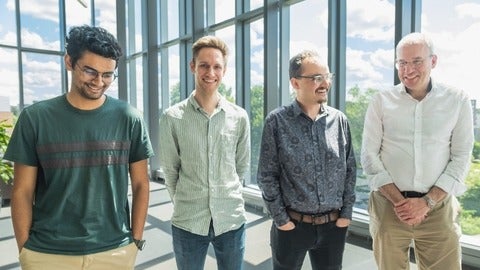
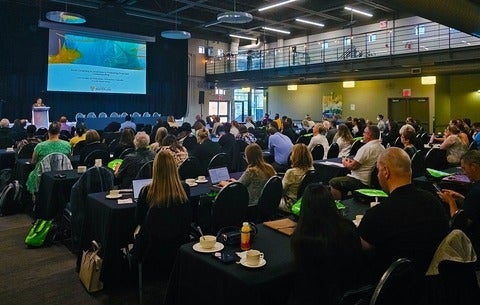
On Saturday, July 6, nearly two hundred students gathered for an ask-me-anything event with Vitalik Buterin, the co-creator of the Ethereum blockchain and a former University of Waterloo student.
A University of Waterloo engineer has paired inexpensive wireless communication antennas with artificial intelligence (AI) to improve how doctors can detect bone fractures.
Determining bone fractures using traditional diagnostic methods such as x-rays, computed tomography (CT) scans, and magnetic resonance imaging (MRI) takes time — such equipment is not readily available in ambulances or primary care facilities and, with health care services in high demand, many people have to wait for an x-ray or scan once they arrive at the hospital.
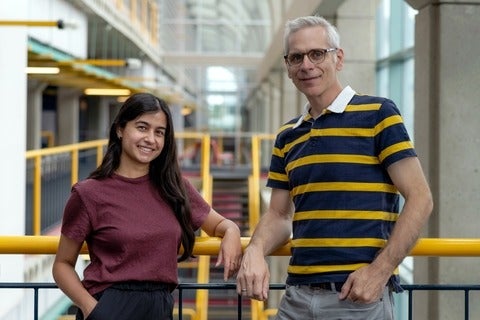
If you scroll through the average student’s digital textbook or reading, you will probably see multi-coloured streaks scattered everywhere. However, new research reveals that excessive highlighting may do more harm than good.
Researchers at Waterloo excel at creating new technologies, investigating human-technology interactions, and exploring how to mitigate harm. That’s why it’s no surprise that two computer scientists from Waterloo investigated whether technology controlling the number of words a user can highlight could affect their reading comprehension.
Accurate models of real-world scenarios are important for bringing theoretical and experimental research together in meaningful ways. Creating these realistic computer models, however, is a very large undertaking. Significant amounts of data, code, and expertise across a wide range of intricate areas are needed to create useful and comprehensive software.
Waterloo researchers are renowned for challenging perspectives in their pursuit of truth and to produce knowledge that leads to transformative solutions for humanity to thrive in a complex future.
Although universities are environments where new ideas and discoveries are cultivated, and a space for curiosity to flourish, researchers in many fields also experience hostile responses to their work.
Two-thirds of people surveyed think that artificial intelligence (AI) tools like ChatGPT have some degree of consciousness and can have subjective experiences such as feelings and memories, according to a new study from the University of Waterloo.
Large language models (LLMs) like ChatGPT often display a conversational style when outputting content. These human-like abilities have spurred debates on whether AI has consciousness.
Canada’s population could double in the next 50 years, and the population of people aged 85 and older could triple, according to the Statistics Canada data released earlier this week.
It’s a potentially life-altering medical condition typically diagnosed in childhood. The good news is treatment works well if followed properly. The bad news is the treatment is hard to stick to.
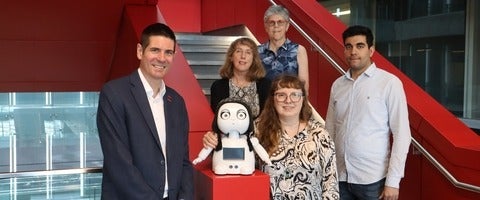
An interdisciplinary team of University of Waterloo researchers is trying to improve treatment adherence through use of a social robot that can educate and motivate children and their caregivers.
With the rising cost of housing, aging infrastructure, climate change and disruptive technology at the forefront of urban planning, cities require data-driven tools and expertise to prosper today, and into the future.
On June 12, WatSPEED convened senior health care leaders and executives to explore the transformational potential of artificial intelligence (AI) in enhancing Canadian health care services.