Technological Futures

Thursday, April 25, 2024

Global Futures in Focus: Uncovering today’s challenges and tomorrow’s solutions

by Megan Vander Woude, Office of Advancement

In the midst of a rapidly changing world, how can we ensure a prosperous future for humanity and our planet? A new podcast hosted by University of Waterloo chancellor Dominic Barton, called Global Futures in Focus, explores this question and more.


Wednesday, April 24, 2024

Transforming environmental studies into global climate action with AI solution

by Jordan Flemming, University Relations
Laura Zizzo

Laura Zizzo
Co-Founder and CEO, Manifest Climate

Laura Zizzo (BES ’04) is co-founder and CEO of Manifest Climate, which offers a software solution that utilizes artificial intelligence to assist organizations in understanding and preparing for climate-related risks by analyzing their climate strategies and comparing them with publicly available global standards and the practices of their peers.

Tuesday, April 23, 2024

Applying AI in the genetic studies of cerebral palsy

by Sarah Fullerton, Faculty of Science

Two co-op students from the Faculty of Science have made a big impact during a recent work term at the SickKids Research Institute. Murto Hilali and Kritika Grover are using AI as a tool to understand cerebral palsy — and their efforts have earned them recognition as contributing authors in an upcoming paper published in Nature Genetics. 

The University of Waterloo’s Health Initiatives team designed the Graham Seed Fund (GSF) for researchers to submit their proposals for innovative health-care solutions that address the world’s most pressing challenges.  

The GSF seeks to leverage and build health system partnerships that extend beyond academia. Empowering interdisciplinary teams of Waterloo researchers to collaborate directly with a full range of health providers and clinicians to develop transformative health technologies that are made for real-world impact. 

Wednesday, April 17, 2024

Students pitch solution to boost productivity in manufacturing 

by Naomi Grosman and Will Muir, Velocity

There are more than 90,000 manufacturing plants in Canada making our food, vehicles and parts. It’s an industry that contributes significantly to the company’s gross domestic product, yet some manufacturers still use pen and paper to track lubrication maintenance that is necessary to keep the machines running smoothly. 

Tuesday, April 16, 2024

Governance and policymaking in the AI era

by University Relations

With the rapid advancement and adoption of artificial intelligence, it’s crucial for policy leaders to have a high-level understanding of its impact to make informed decisions. To help the Canadian government navigate this technological disruption, WatSPEED has developed a new program, AI Adoption, Policy and Governance, enabling senior policymakers to lead through the opportunities and challenges that AI presents. 

Friday, April 12, 2024

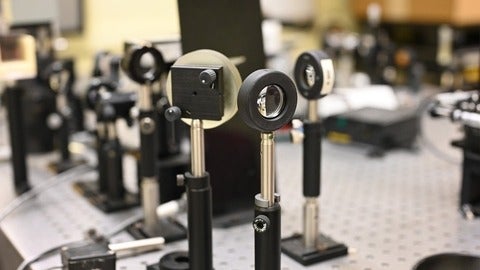
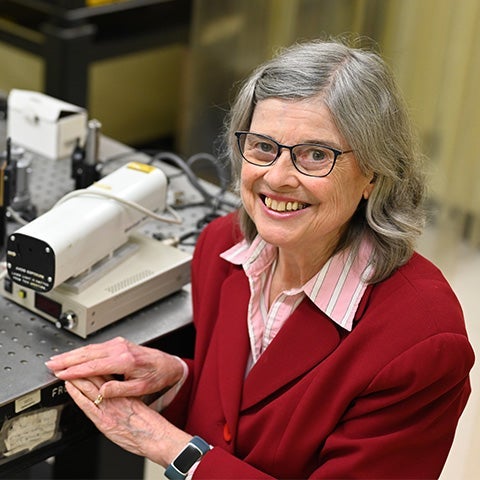
IQC is an international destination for quantum innovation

by Elizabeth Kleisath, Institute for Quantum Computing

Canada’s National Quantum Strategy, released last year, identified quantum science as having “the potential to transform how people work and live.”  

Since the discovery and inception of quantum mechanics more than 100 years ago, this field has been disrupting our understanding of the universe and igniting new technologies. Without past advances in quantum information, many technologies used today would not exist, including lasers, GPS maps and hospital MRI machines. 

Thursday, April 11, 2024

Cosmic rays, quantum bits and underground labs intersect to advance the future of computing

by Elizabeth Kleisath, Institute for Quantum Computing

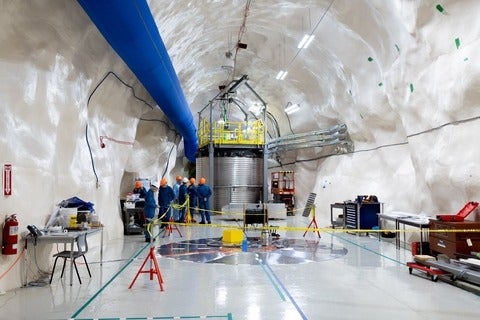
A new collaboration between researchers from the Institute for Quantum Computing (IQC) at the University of Waterloo, SNOLAB near Sudbury, Ontario, and Chalmers University of Technology in Sweden has been awarded a new grant to investigate the impact of radiation and cosmic rays on quantum technologies.

Thursday, April 11, 2024

How to have a more natural conversation with a robot

by Media Relations

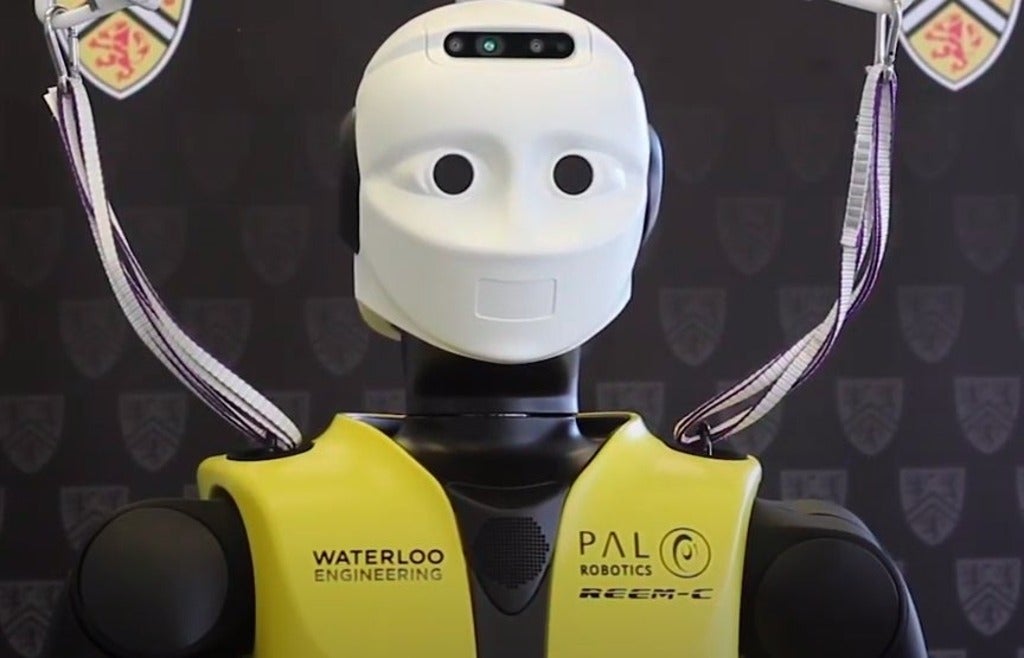
Talking to a robot often feels stilted or delayed, thanks to computer software trying to keep up with the conversation. However, new research from the University of Waterloo has improved the ability for humans to communicate naturally with humanoid robots.

Waterloo researchers were able to solve how a humanoid robot can identify the direction where human speech was coming from, re-orient itself to track that voice to create a more realistic conversation and speed up its reaction time to communicate back with its human counterpart.