Top health-tech innovations we're following in 2024
The University of Waterloo has a remarkable portfolio of startups and research solving health care’s most pressing challenges
Global and individual health care is experiencing disruption through a variety of technologies. Building disruptive technologies is at the core of what we do, and since our inception, the University of Waterloo has also been disrupting the boundaries of health.
Explore just some of the health-tech innovations springing up from the University’s ecosystem that we will be keeping an eye on this year.
Evolved.Bio — Regenerating muscle tissue
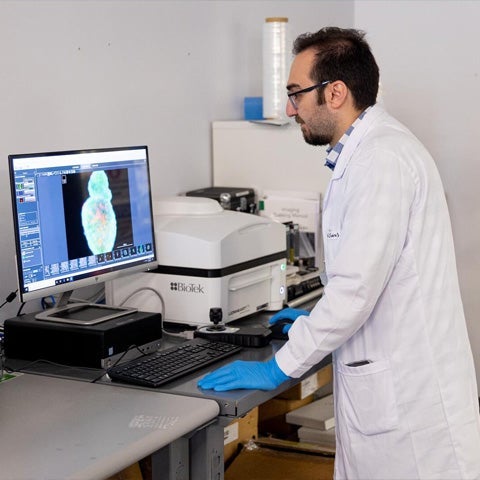
Both co-founders said being plugged into Velocity’s network has helped forge indispensable connections as the company developed its emerging technology.
GraphNovo — Personalizing medicine with AI

Mao and Li foresee practical applications in areas such cancer treatment and vaccine development, highlighting its potential in real-world medical scenarios. Their study, published in Nature Machine Intelligence, reflects the incredible work being done at Waterloo aimed at advancing the intersection of technology and health.
New breast cancer screening method

The team has created a diagnostic device using low-frequency electromagnetic energy, emitted from an antenna similar to a smartphone's. The technology, which operates in just two minutes and is safer than X-rays, utilizes AI to interpret images, identifying tumor size and location even in dense breast tissue. Successful tests on breast phantoms have shown promising results, and the researchers aim to secure funding for human trials, envisioning a globally accessible and convenient diagnostic tool.
Painless diabetes patch

Funded by JDRF and recognized by Johnson & Johnson Scholars Award Program, Poudineh aims to create an affordable, innovative solution that could revolutionize diabetes management, potentially preventing life-threatening complications. Commercialization plans and partnerships with established companies are currently being explored.
PatientCompanion — Connecting patients with nurses

The app, developed based on Lee's observations during volunteer work, aims to streamline communication, ensuring urgent requests are promptly addressed and non-urgent ones are efficiently distributed, ultimately reducing the workload and enhancing efficiency for health-care providers.
Pliantech — Spinal implants

Inspired by NHL player Jack Eichel's spinal disc replacement challenges, the team created a flexible titanium device using bio-design compliant mechanisms and 3D printing. The implant mimics the spine's natural movement, addressing biomechanical challenges in existing artificial discs. Recognized as a winner at the Fall 2023 Velocity Pitch Competition, Pliantech's device sits between vertebrae, offering controlled movement to prevent complications and improve patient outcomes. The startup is utilizing Waterloo’s world-class entrepreneurial ecosystem to advance its innovative solution.
Roga — Wearable wellness device

Co-founders Dr. Alison Smith (PhD ’09) and Ami Lebendiker, who personally experienced anxiety disorders, aspire to obtain medical device status to reach a broader patient population, leveraging Velocity and its programs for support and growth.
Vital Bio — Improving blood diagnostics
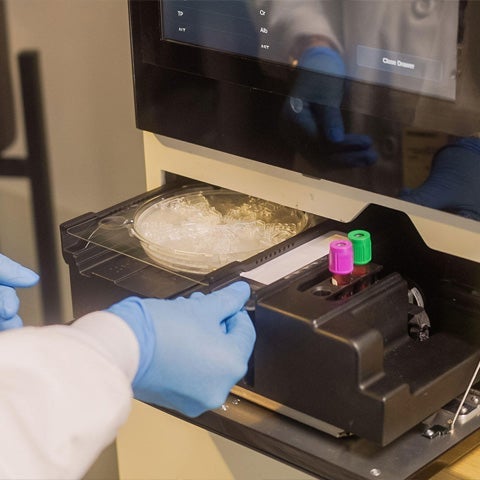
Co-founder and CEO Vasu Nadella envisions the VitalOne transforming diagnostics, making them ubiquitous and enabling new forms of care delivery. The device offers easy-to-use blood diagnostics, providing results in real-time and potentially facilitating immediate health interventions. The company aims to revolutionize routine diagnostics, aligning with its vision of achieving impactful success in patients’ health lives and the health-care system.