Turning climate science into entrepreneurial action
Waterloo PhD candidate combines carbon removal research with entrepreneurship to tackle climate challenges
At the Velocity Pitch Competition, a fellow competitor handed Hannah Rebekah Epstein a piece of biochar. To many, the black log material might have looked unremarkable like the wood it came from.
For Epstein, a PhD candidate in the University of Waterloo’s Faculty of Environment, that material represented the possibility of turning organic waste into “black gold” that can store carbon for the long term while creating value for communities and businesses.
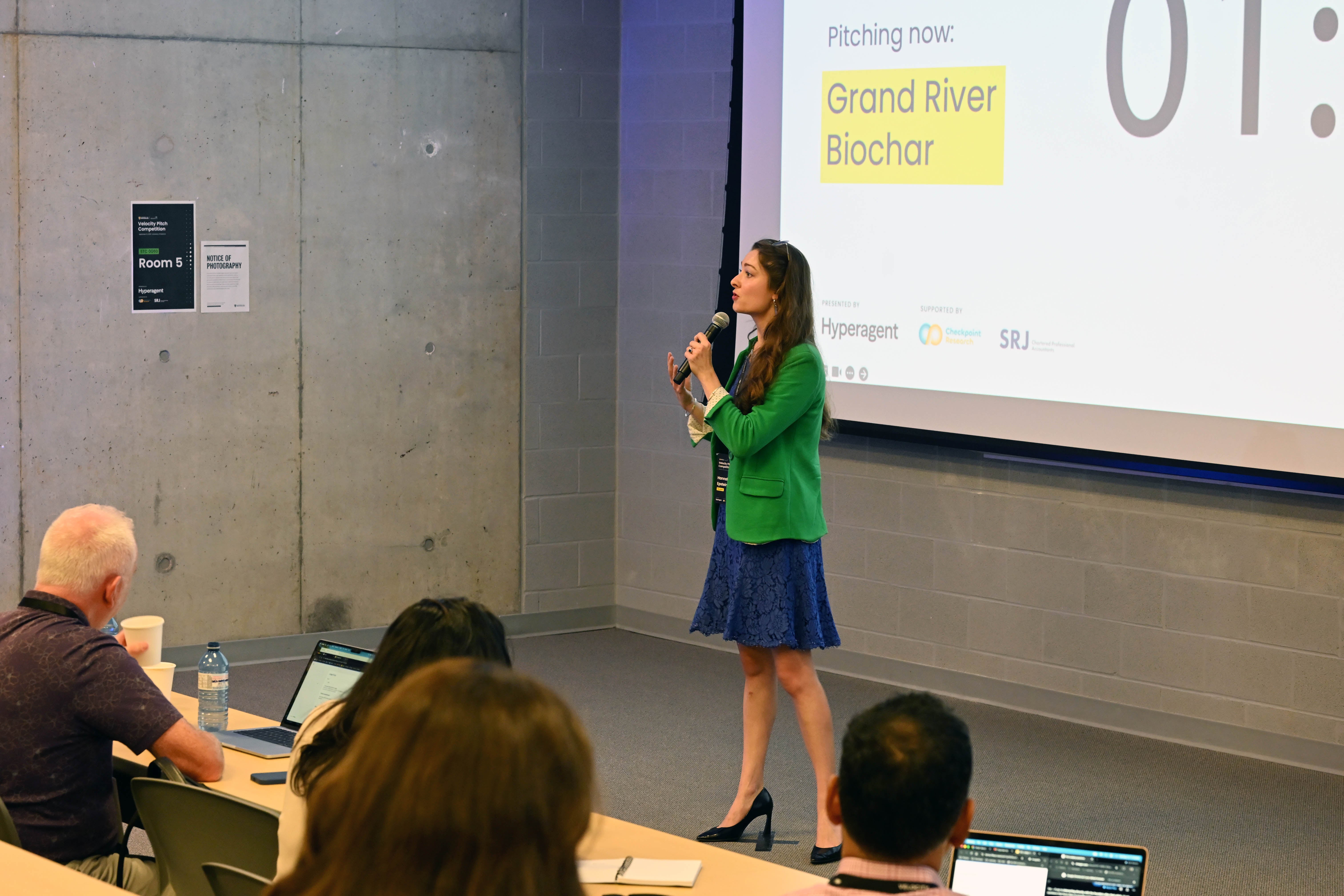
"I had always conceived of myself as an analyst and an advisor. Entrepreneurship challenged me to move beyond studying climate solutions and start building one," Epstein says.
The entrepreneurial path was not part of her original plan.
For years, Epstein saw herself as someone who would contribute through research, analysis and policy. With a background in science and a focus on climate intervention and carbon dioxide removal, she expected to help decision-makers better understand the complex challenges of climate change.
But over time, she realized that she could help create a solution herself.
That realization led to Grand River Biochar. The idea originated from her research studying what a portfolio of carbon removal methods could look like for Canada. Biochar stood out as one of the few durable methods already delivering verified removals, with added regenerative benefits for soil.
“You can take plant waste, bake it at a very high temperature without oxygen, and produce this outrageously useful substance, which people call black gold… The fact that biochar is real gives me hope.”
Turning that concept into a business required an entirely new set of skills, so she turned to Waterloo's entrepreneurial ecosystem.
Through programs and opportunities offered by Velocity, Epstein gained access to mentorship, training and a network of founders tackling ambitious challenges.
“At Velocity, there’s this flywheel of opportunity set up to launch people like me from an idea you kick around with your buddies to something you’re talking to investors about,” Epstein says. “Even when I wasn’t putting a lot of pressure on the system, I was being carried aloft by it.”
Most recently, she participated in Velocity's Cornerstone program, an intensive entrepreneurial sprint designed to help researchers and innovators test assumptions, engage with potential customers and better understand the real-world needs surrounding their ideas. She also placed third in the 2026 Velocity Pitch Competition.
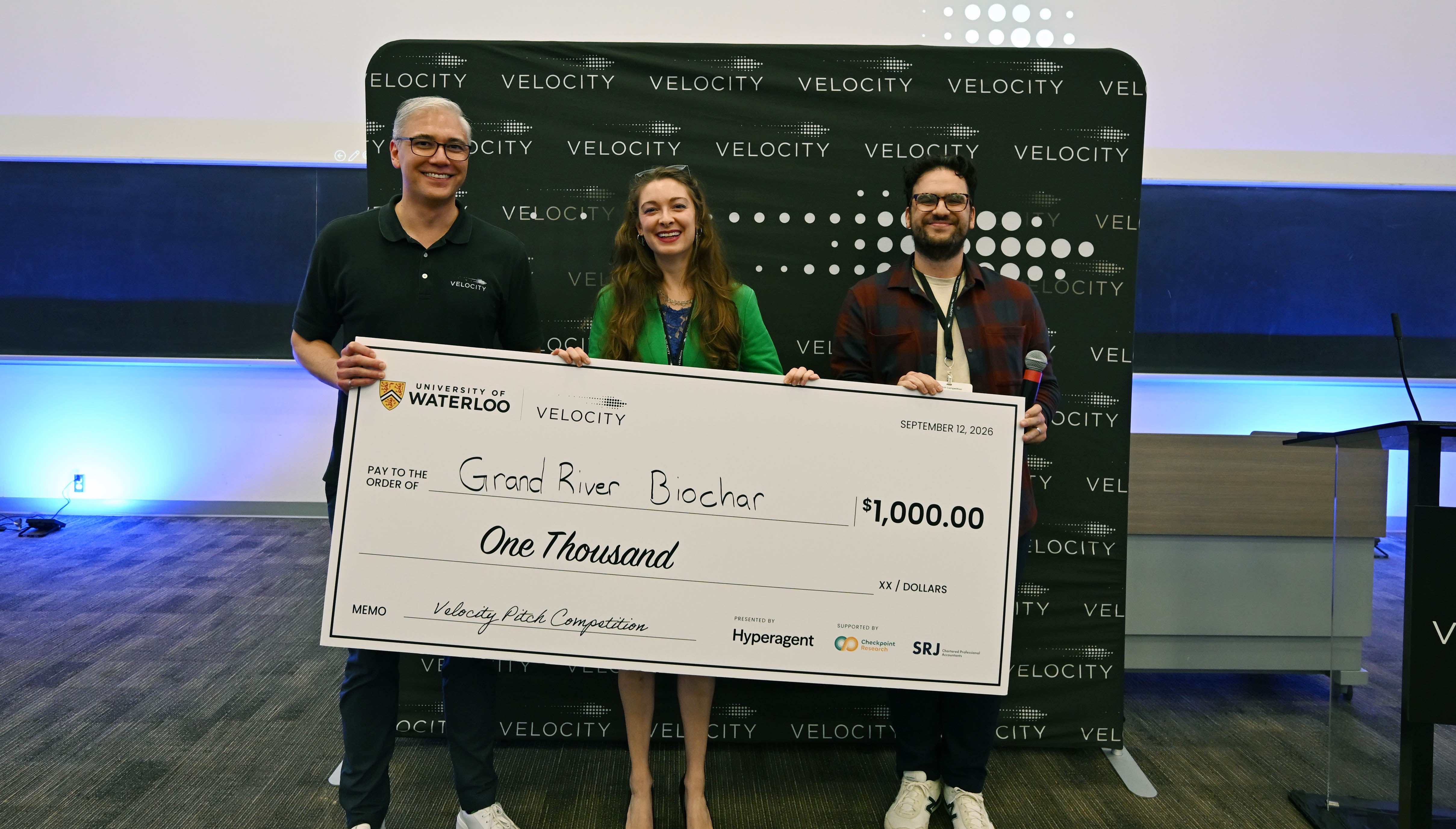
"One of the biggest takeaways of being part of Velocity has been getting out and talking to as many people as possible. That's where you start to understand if your idea has potential."
Connecting world-class research with entrepreneurial action is at the heart of Waterloo’s entrepreneurial ecosystem. Through programs such as Velocity, students and researchers are encouraged not only to generate knowledge but also to translate ideas into ventures that can address real-world challenges.
For Epstein, the intersection of climate science, policy and entrepreneurship offers a unique opportunity to contribute to an issue she cares deeply about.
“I'm still motivated by the same challenge. Removing carbon is my life’s mission. My research asks how Canada can scale up carbon removal over the coming decades. I now view this biochar venture as an opportunity to start removing carbon much sooner.”
As she continues her PhD while growing Grand River Biochar, she remains focused on the potential of biochar to create environmental and economic value from materials that would otherwise go to waste.
That black gold she held at the pitch competition holds great promise for turning research into action and demonstrates that a Waterloo founder can help shape solutions to some of the world's most pressing challenges.
Epstein continues to use her curiosity to learn more about business and connect with a network as keen on her concept as she is. “The entrepreneurial experience has honestly been bonkers. I did not expect to get messages and approaches from people who invest in climate tech.”
While the future of Grand River Biochar is still being written, Epstein is embracing the uncertainty that comes with building something new. As she balances research, entrepreneurship and a growing network of supporters, she remains driven by the belief that innovative solutions can emerge from unexpected places.