Research

Thursday, September 24, 2020

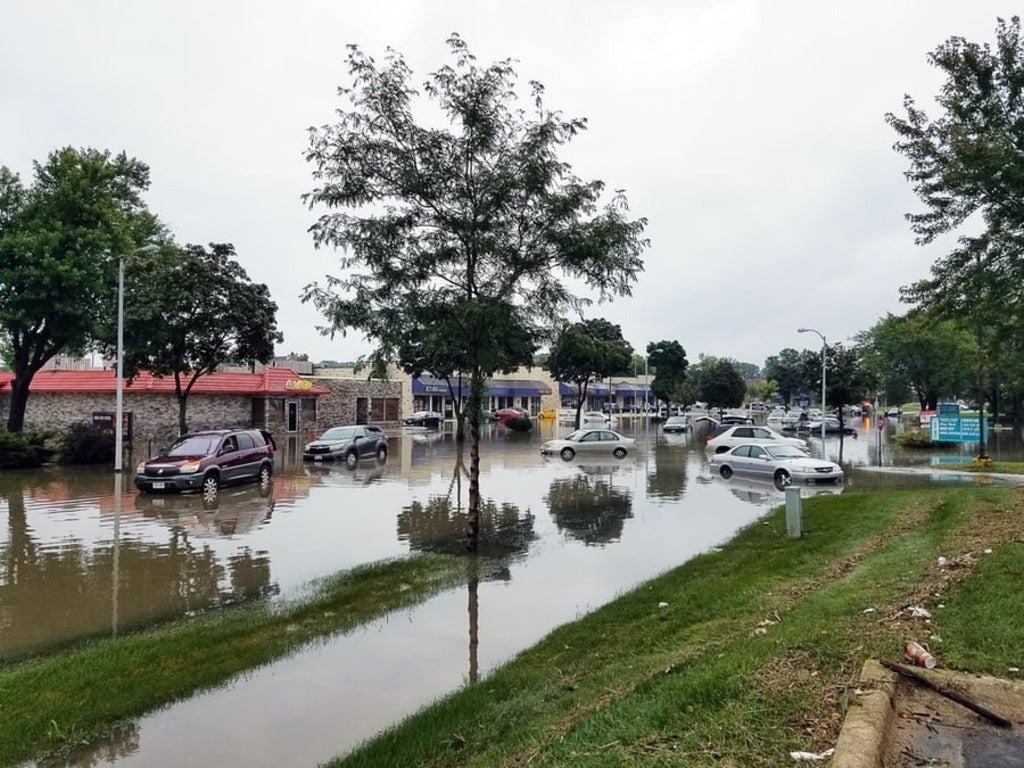
Most Canadians don’t know they are living in high-risk flood areas

by Media Relations

Most Canadians living in flood risk areas do not know their homes are in danger, which could cost Canadian taxpayers billions in population resettlement.

In a survey of 2,500 people living in designated flood-risk areas across the country, only 6 per cent knew their homes were at risk, according to a new report from the University of Waterloo’s Partners for Action, with funding support from The Co-operators Group Ltd. Only a quarter of respondents said their insurance representative had discussed flood coverage options with them.
Wednesday, September 23, 2020

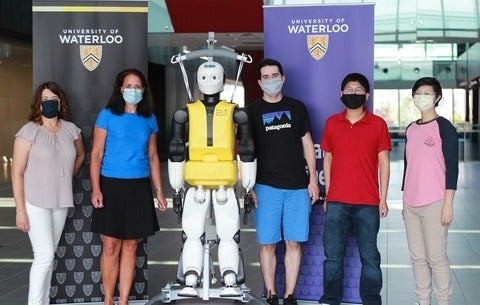
TALOS’s smaller "sibling" makes its robotic debut at Waterloo

by Carol Truemner, Faculty of Engineering

After boarding a plane in Spain and spending over a week on a layover in Paris, France, the much-anticipated REEM-C recently arrived on campus.

Now unpacked, the humanoid robot has started an extensive training program without once breaking a sweat.

At 165 centimetres tall, 80 kilograms in weight and sporting the University’s black and gold colours, REEM-C is described as the slightly smaller and lighter brother of TALOS, the full-size black and purple robot that was greeted with great fanfare at Engineering 7 almost two years ago.

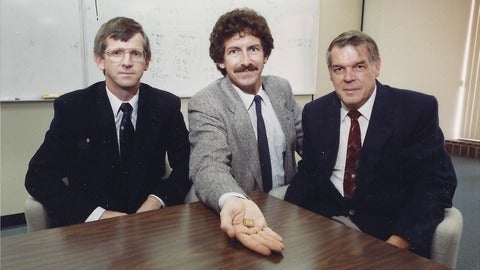
New technology can quickly and accurately monitor glucose levels in people with diabetes without painful finger pricks to draw blood. 

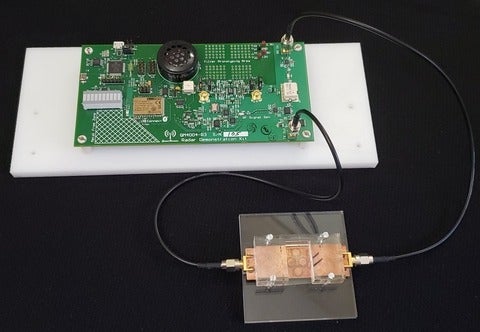
A palm-sized device developed by researchers at the University of Waterloo uses radar and artificial intelligence (AI) to non-invasively read blood inside the human body.

“The key advantage is simply no pricking,” said George Shaker, an engineering professor at Waterloo. “That is extremely important for a lot of people, especially elderly people with very sensitive skin and children who require multiple tests throughout the day.”

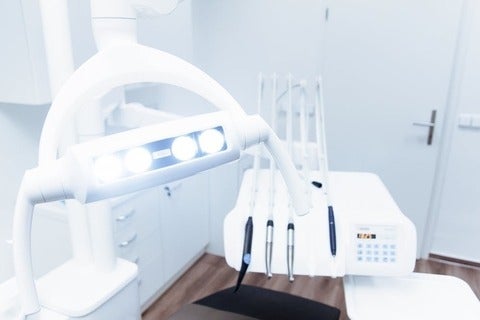
Researchers have discovered that air filtration devices in dental offices could significantly reduce potential COVID-19 transmission through aerosols. 

Chao Tan, director of the University of Waterloo's Green Energy and Pollution Control Research Lab, and his team of researchers looked at the effects of air purification on particles produced by a patient during scaling and other types of dental procedures. 

A policy change that allowed alcohol to be sold in grocery stores in Ontario has led some teens to go from abstaining from alcohol to binge-drinking multiple times per week, a new study has found.

Youth who were originally abstinent were 75 per cent more likely to transition directly to the highest-risk category when alcohol was available in grocery stores, said Mahmood Gohari, a post-doctoral fellow in the School of Public Health and Health Systems at the University of Waterloo.

Researchers have discovered that a single, 20-minute session of non-invasive brain stimulation of the visual cortex can reduce the effects of macular degeneration.

Patients with macular degeneration lose central vision and are forced to rely on peripheral vision. But they can have difficulty segregating an object from others that are in close proximity, a phenomenon called crowding.  This study from the University of Waterloo’s School of Optometry found the use of brain stimulation could help people with macular degeneration recover their vision.

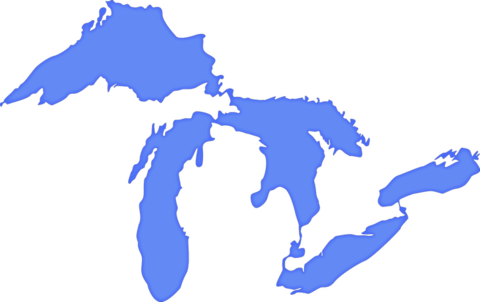
Researchers have developed a new integrated model to evaluate the economic impacts of climate change on the Canadian Great Lakes Basin.

The Great Lakes are the largest freshwater system in the world. But factors like climate change, urbanization, and a growing population are increasing pressure on these valuable resources and may limit their availability for future generations. 

Scientists at the University of Waterloo’s Water Institute developed the new hydro-economic model to make the often unknown and invisible value of water more explicit.

Wednesday, September 9, 2020

Engineering our way through a pandemic

by Mary Wells and Abbey Israel, Faculty of Engineering

As the first wave of the COVID-19 pandemic abates, we have a chance to catch our breath and reflect on the rapid changes our lives have experienced over the past six months. This includes both our work and social lives, and our dependence on science and technology to help us cope in a world where we must remain vigilant as we reopen our shuttered economies and control a second wave.