Research

Monday, March 19, 2018

Muslims face high rates of discrimination in Canada

by Media Relations

One in five Muslim Canadians say they have experienced discrimination due to their religion, ethnicity or culture at least once in the past five years. 

A recent study from the University of Waterloo also found that among the general adult population in each Canadian region, Muslims were the least liked group when compared to caucasians, catholics, Indigenous people, members of the LGBTQ community and racial minorities. 

Friday, March 16, 2018

How does vision impact Paralympic performance?

by Victoria Van Cappellen, Faculty of Science

Imagine standing at the top of a double black diamond ski run, descending 3,000 feet over bumpy and icy terrain, reaching speeds of 80 mph. Now imagine doing all of this blind.

During competition, athletes rely on their skills, fitness, endurance, and mental focus to be successful. However, the only difference with Para sport is that the athletes have a physical, intellectual, or visual impairment.

The University of Waterloo will partner with leading institutes in China to advance research in the areas of connected and autonomous vehicle technology.

The partnership between Waterloo and the Qingdao Academy of Intelligent Industries (QAII) and the State Key Laboratory for Management and Control of Complex Systems (SKL-MCCS) was solidified in an agreement recently signed by all parties.

The centre’s research activities will see automated vehicle testing, human-like autonomous driving, applied artificial intelligence and deep learning in automated driving.

Wednesday, March 14, 2018

Expert Advisory – Tension rises between Britain and Russia

by Media Relations

On Wednesday, Britain announced the expulsion of 23 Russian diplomats having blamed the Kremlin for the attempted murder of a former Russian spy. This marks the biggest expulsion of Russian diplomats from the country since 1985 — marking a return to the large-scale diplomatic ejections that took place during the Cold War.

The Russian Embassy based in the UK has since tweeted: “The temperature of Russia, UK relations drops to -23, but we are not afraid of cold weather.” Russia is also set to expel British diplomats from Moscow.

Wednesday, March 14, 2018

Large numbers of students skipping breakfast

by Media Relations

Despite widespread availability of morning meal programs, a large number of Canadian students are still skipping breakfast, according to a study from the University of Waterloo.

The study looked at the eating habits of 42,000 students from 87 secondary schools in Alberta and Ontario during the 2014/15 school year. It found that 39 percent of students reported eating breakfast fewer than three days in a typical school week.

The findings were consistent with national data that showed nationwide, 48.5 percent of adolescents skipped breakfast at least once a week.

The International group released a new report on Monday which showed that Canadian consumers now owe $1.821-trillion including mortgages as of the fourth-quarter of 2017. 

Robert Kerton – Economics

Robert Kerton is an adjunct professor at Waterloo who specializes in consumer economics, international consumer policy, microeconomics of regulation and public policy. He is past president of the American Council on Consumer Interests and has done extensive advocacy work that contributed to Canada bringing in the Competition Act.

Monday, March 12, 2018

Optimizing Wheelchair Designs for Paralympic Athletes

by Media Relations

Scientists and engineers at the University of Waterloo have developed the first-ever method to systematically optimize wheelchair designs to suit individual athletes and their respective neuro-musculoskeletal (brain-body) systems. 

The new method of wheelchair design optimization is achieved using predictive computer modelling and simulation. The method replaces the conventional trial-and-error approach and can lead to faster and cheaper subject-specific designs.

Friday, March 9, 2018

Studying Alzheimer’s at a molecular level to find a cure

by Nancy Harper, University Communications
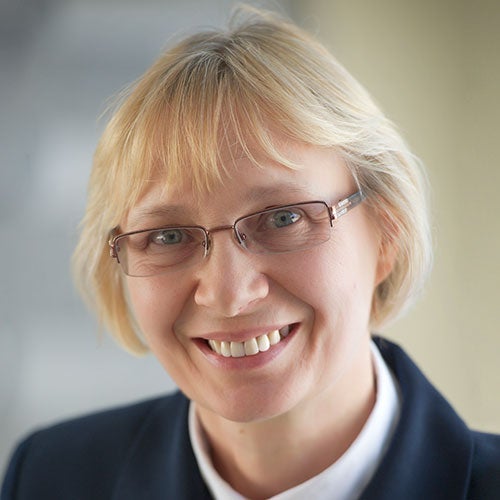
ZOYA LEONENKO

Zoya Leonenko
Professor, Faculty of Science
> Waterloo Institute for Nanotechnology (WIN)

A lack of understanding of Alzheimer’s disease at the molecular level is one of the biggest obstacles to finding a cure, says a Waterloo researcher.