Research

Friday, June 20, 2014

Menthol cigarettes linked to increased smoking among teens

by Media Relations

Teens who use menthol cigarettes smoke more cigarettes per day than their peers who smoke non-menthols, says a new study. The findings from the Propel Centre for Population Health Impact at the University of Waterloo mark the first time that menthol cigarettes have been directly linked to elevated nicotine addiction among youth in Canada.


The University of Waterloo is hosting a workshop to teach researchers from around the world how to build sophisticated brain models. Members of the media and the public are invited to attend tomorrow as participants demonstrate the large-scale brain models they built, running on laptops, robots, and specialized computers simulating neural functions.

A doctoral candidate in the University of Waterloo’s Department of Kinesiology has been awarded a 2014 Women’s Health Scholars Award from the Council of Ontario Universities. The $20,000 award, which is funded by the Ontario Ministry of Health and Long-Term Care, recognizes outstanding research in women’s health issues. 

Kristin Marks researches the ways estrogen affects the synthesis of different fats, and the results of her study will have wide-ranging implications for women’s health. 

The University of Waterloo is hosting the first workshop to chart the future of research at the Experimental Lakes Area (ELA).

The freshwater research facility was reopened in April 2014 by the International Institute for Sustainable Development (IISD) following transfer agreements with the federal, Ontario and Manitoba governments, and is now known as IISD-ELA

Saturday, June 14, 2014

University of Waterloo holds 108th convocation

by Media Relations

More than 5,800 students crossed the stage at the University of Waterloo's 108th convocation, taking place this week. There were 4,878 undergraduate degrees and 974 graduate degrees handed out at ceremonies taking place over five days, ending today.

Wednesday, June 11, 2014

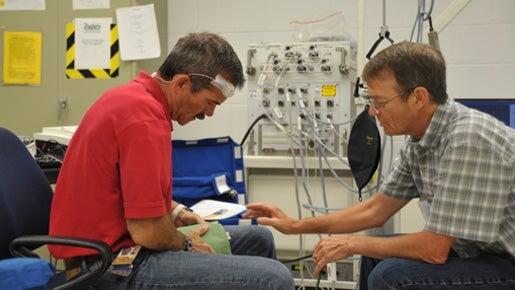
Astronaut health research may reveal secrets of successful aging

by Bill Bean, Marketing and Strategic Communications

Chris Hadfield

Chris Hadfield participates in research happening within the Faculty of Applied Health Sciences.

If you want to speed up the aging process, become an astronaut.

For weeks on end, those in space experience conditions that parallel the impacts of aging: limited mobility and stresses to their heart, muscles and nervous system.

Wednesday, June 11, 2014

Waterloo researchers find “magic” ingredient for quantum computing

by Jodi Szimanski, Institute for Quantum Computing

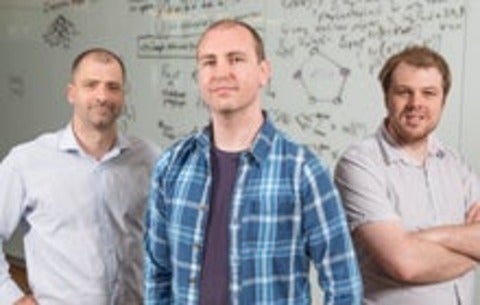
A form of quantum “weirdness” has been found, by researchers at Waterloo’s Institute for Quantum Computing (IQC), to be a key ingredient for building a quantum computer.

In a paper published in the journal Nature, IQC researchers have shown that quantum contextuality is a necessary resource to achieve the “magic” required for universal quantum computation.

Wednesday, June 11, 2014

Chris Hadfield convocation address

by Media Relations

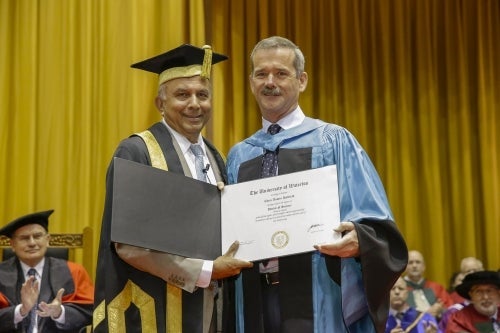
The University of Waterloo awarded Chris Hadfield with an honorary doctor of science degree from the Faculty of Applied Health Sciences on Tuesday, June 10. Following the award of the degree, Hadfield, who joins the University of Waterloo as an adjunct professor later this year, addressed the auditorium:

Chris Hadfield receives his honourary doctor of science degree from Prem Watsa, Chancellor of the University of Waterloo.

Wednesday, June 11, 2014

Researchers find weird magic ingredient for quantum computing

by Media Relations

A form of quantum weirdness is a key ingredient for building quantum computers according to new research from a team at the University of Waterloo’s Institute for Quantum Computing (IQC).

In a new study published in the journal Nature today researchers have shown that a weird aspect of quantum theory called contextuality is a necessary resource to achieve the so-called magic required for universal quantum computation.