Research

Thursday, January 18, 2024

Waterloo researcher recognized for promising osteoarthritis research

by Faculty of Health

Dr. Nikolas Knowles, a researcher in the Department of Kinesiology and Health Sciences, has received a Stars Career Development Award from Arthritis Society Canada in recognition of his research on improving early detection and treatment of shoulder osteoarthritis (OA).


Thursday, January 18, 2024

Can we really trust AI?

by Jordan Flemming, University Relations

The University of Waterloo, in collaboration with the Perimeter Institute, hosted the TRuST Scholarly Network’s Conversations on Artificial Intelligence (AI), a dynamic and engaging discussion that delved into the societal impact of AI. The event was also supported by the Waterloo AI Institute, which is dedicated to developing human-centered AI for social good, fostering trust with industry partners, and scaling responsible solutions to enhance lives.

Wednesday, January 17, 2024

SDG-washing found among Canada's top companies

by Media Relations

Canada's biggest companies often speak of their plans to be more sustainable, but a new study found corporations aren't fully backing up those commitments.  

A team of University of Waterloo researchers concluded that corporate investing in communities fell despite an increase in companies committing to the United Nation's Sustainable Development Goals (SDGs) over the last decade.

Tuesday, January 16, 2024

Engaging undergraduate students in research

by Angelica Marie Sanchez, University Relations

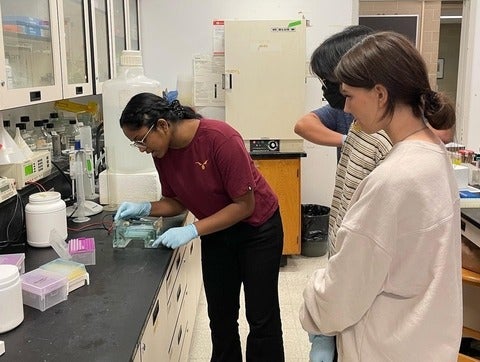
For Ria Menon, a biomedical science student at the University of Waterloo, conducting research plays a large role in her program. But getting involved in research often requires undergraduate students to take 400-level classes, also known as senior thesis courses. 

But if students are lucky enough to know someone who is currently involved in research, those network connections can help them advance in research opportunities earlier in their studies, Menon explains. 

Monday, January 15, 2024

Using idle trucks to power the grid with clean energy

by Media Relations

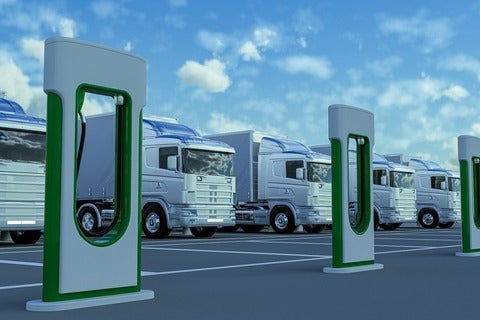
University of Waterloo researchers are tapping into idled electric vehicles to act as mobile generators and help power overworked and aging electricity grids.

After analyzing energy demand on Alberta’s power grid during rush hour, the research proposes an innovative way to replenish electrical grids with power generated from fuel cells in trucks.

“Canada’s power grids need to be upgraded,” said Dr. XiaoYu Wu, lead researcher and a professor in Waterloo’s Department of Mechanical and Mechatronics Engineering.

To advance climate change monitoring and public safety, researchers at the University of Waterloo have developed new tools that bring an unprecedented level of accuracy to identifying lake ice conditions.

The researchers are the first to use machine learning models for processing satellite radar altimetry data that can identify between open water, thin ice, growing ice, or melting ice with 94 per cent accuracy.  

Wednesday, January 10, 2024

Driving up talent for Canada’s electric vehicle sector

by Jordan Flemming, University Relations

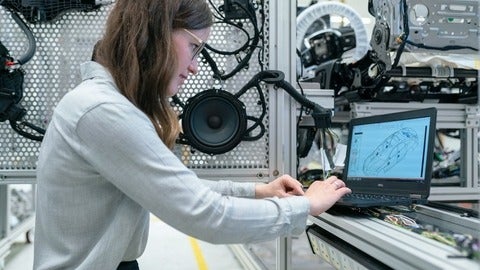
Canadians are buying more electric vehicles (EV) than ever, with one in 10 now owning EVs. The number is set to increase as consumers look for ways to reduce their environmental impact and capitalize on government incentives.

With the growing market share of EVs, there is also an increasing need for talent in the design, development and maintenance of electric vehicles as well as support infrastructure from charging stations, improved battery technology and energy generation.

Tuesday, January 9, 2024

Opinion: From lab coats to advocacy

by Shahan Salim, Faculty of Health

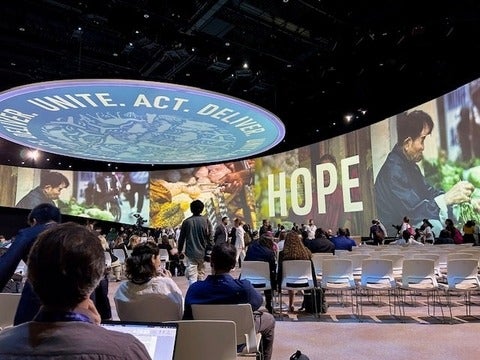
During COP28, as I traversed the intricate maze of the event, my mind grappled with the multifaceted nature of my role as an observer. Initially, I contemplated whether my primary duty lay in monitoring negotiations and ensuring accountability or engaging with diverse stakeholders to explore collaborative opportunities, a realization gradually took hold.

Tuesday, January 9, 2024

New dimension of the genome discovered

by Media Relations

It has long been thought that an organism’s DNA provides clues only about its ancestry and how the various forms of life on Earth are related – the more similar their DNA, the more closely the species are related.

However, using machine learning, researchers at the University of Waterloo have discovered that the DNA of some species called “extremophiles” living in comparably harsh environments is strikingly similar despite these organisms being only very distantly related.