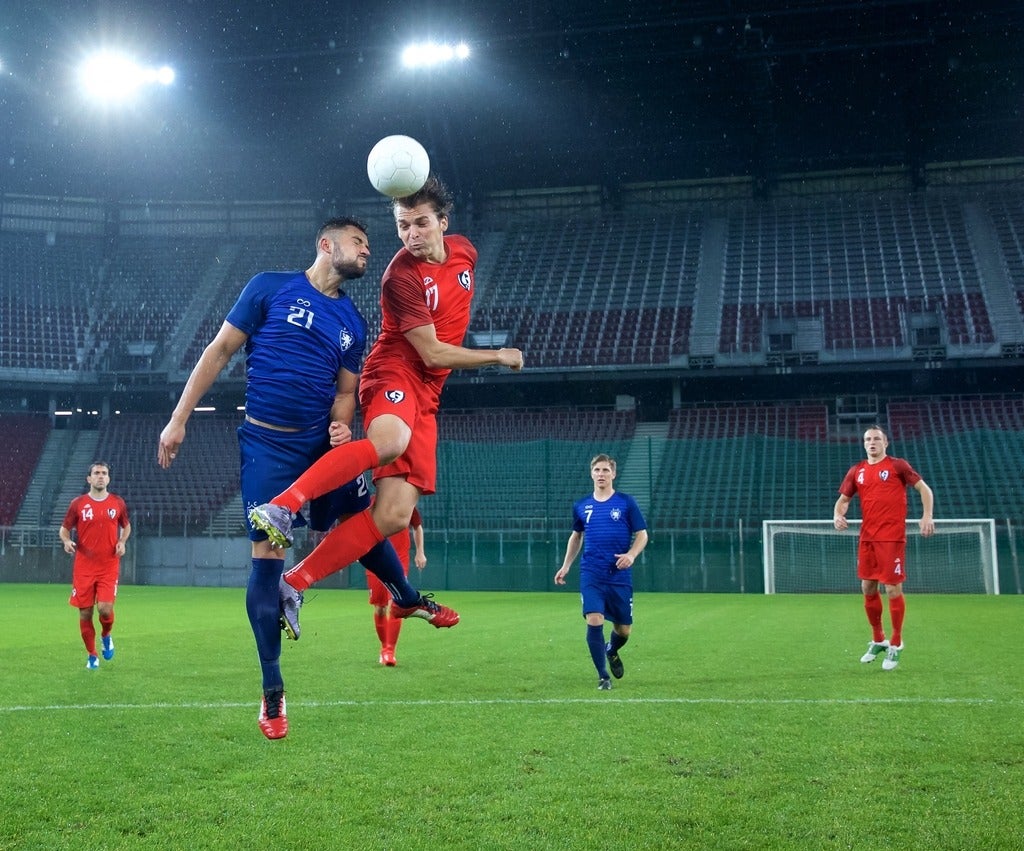
World Cup in Canada sparks opportunity to build safer, more inclusive youth sport
Waterloo researcher says global spotlight should prompt action on equity, access and athlete well-being at the community level
The FIFA World Cup in Canada is igniting excitement and expected to increase participation in soccer nationwide. For Dr. Kaleigh Pennock, a professor in the University of Waterloo’s Department of Recreation and Leisure Studies, the global spotlight also presents a critical opportunity to strengthen inclusion, equity and safety in youth sport.
“With the World Cup in North America this summer, it’s very exciting,” Pennock says. “Amidst that celebration, we still need to look at sport through a critical lens. Is sport inclusive for youth? Is it safe and what kind of risks and harms do we need to think about when we have youth who are participating in sport?"

Major sporting events tend to drive interest and registration at the amateur level, with young athletes eager to emulate what they see on the field. Pennock says that an expected surge in participation places pressure on community sport systems, where most children play.
“With the World Cup, what we see is soccer being played on the world stage at the highest professional elite level,” she says. “But most youth are playing sport at the community level, where the emphasis should be on fun, on inclusion and on participation.”
Ensuring those principles are upheld requires more than enthusiasm. Pennock says local organizations must be prepared with structures that support both access and safety for a growing number of participants.
“For me, I conceptualize safety as the risk of incurring harm,” Pennock says. “It’s important to think about harm not just as physical harm. There are also harms like social and emotional harm that can happen with youth in sports systems where they feel excluded, where there’s maltreatment issues and where they don’t feel like they belong.”
That includes everything from concussion management to fostering inclusive environments where all athletes feel valued. While awareness has improved in recent years, gaps remain.
“We have more knowledge and more protocols in place,” Pennock says, noting measures such as concussion education requirements. “On the other hand, we’re also seeing some significant gaps when it comes to youth safety and the risks they might incur through sport.”
While elite sport can normalize playing through pain or not reporting injuries, Pennock notes these behaviours are already present in youth sport settings.
Research shows that even when young athletes understand concussion risks, they may still choose not to report symptoms due to pressures to stay in the game.
“We might see players not coming off the field or hiding symptoms,” she says. “Those are not things that we want to be bringing down to the youth system level.”
Rather than reinforcing those behaviours, Pennock says the focus should be on building community sport systems that actively discourage them and prioritize athlete well-being.

Equity is also central to the conversation. Research by Pennock and others shows that participation and retention can vary significantly across different groups, particularly for Black and racialized youth.
“We know that Black and racialized and other equity-deserving groups participate in sport at lower rates and also tend to drop out during adolescence,” she says. “We need to rethink what soccer can look like for everybody.”
Cost and access are key barriers. As the sport grows in Canada, expenses tied to equipment, travel and team participation are rising. Pennock emphasizes the need for low-cost or free programming and accessible transportation options to ensure that enthusiasm for the game translates into opportunity.
Pennock says meaningful change requires coordinated action from organizations, coaches and administrators.
“The responsibility for safety in sport can’t just fall on the kids and parents,” she says. “It has to be happening at the organizational level. What do the protocols look like and how are they enforced?”
At its best, the World Cup can serve as a catalyst not only for participation but also for reimagining how sport systems operate.
“If we see an increase in participation, we need to make sure we have those safety protocols in place and that everyone is having a safe and enjoyable experience,” Pennock says. “That is going to require a system-level change.”