
What the lab is
An Applied Research and Deployment Platform
Housed at the Conrad School of Entrepreneurship and Business and rooted in the University of Waterloo ecosystem, the lab focuses on the applied research and responsible deployment of AI in enterprises and institutions. It sits at the intersection of business and entrepreneurship, computer science and engineering, and responsible AI.
Unlike a conventional AI lab that starts with technology and then searches for use cases, the AI Ready Lab starts with organizational challenges and entrepreneurial opportunities — and then builds the appropriate systems around them. It studies and pilots new organizational architectures, then translates those insights into research, training, and advisory offerings. Its primary focus is practical deployment: how AI changes the way firms and institutions operate, compete, and govern.
It is designed to produce three outcomes at once:
1. Actionable knowledge
2. Deployable systems
3. And people who know how to use them well
– through field-informed research, pilot development, industry engagement, executive education, and cross-sector convening.

Vision
To make Waterloo and Canada the global reference point for applied, trusted, and economically impactful AI.

Mission
To research, build, and translate AI systems that help organizations redesign operations, create competitive advantage, and deploy AI responsibly — while developing the human talent required to lead that transition.
Founding Members
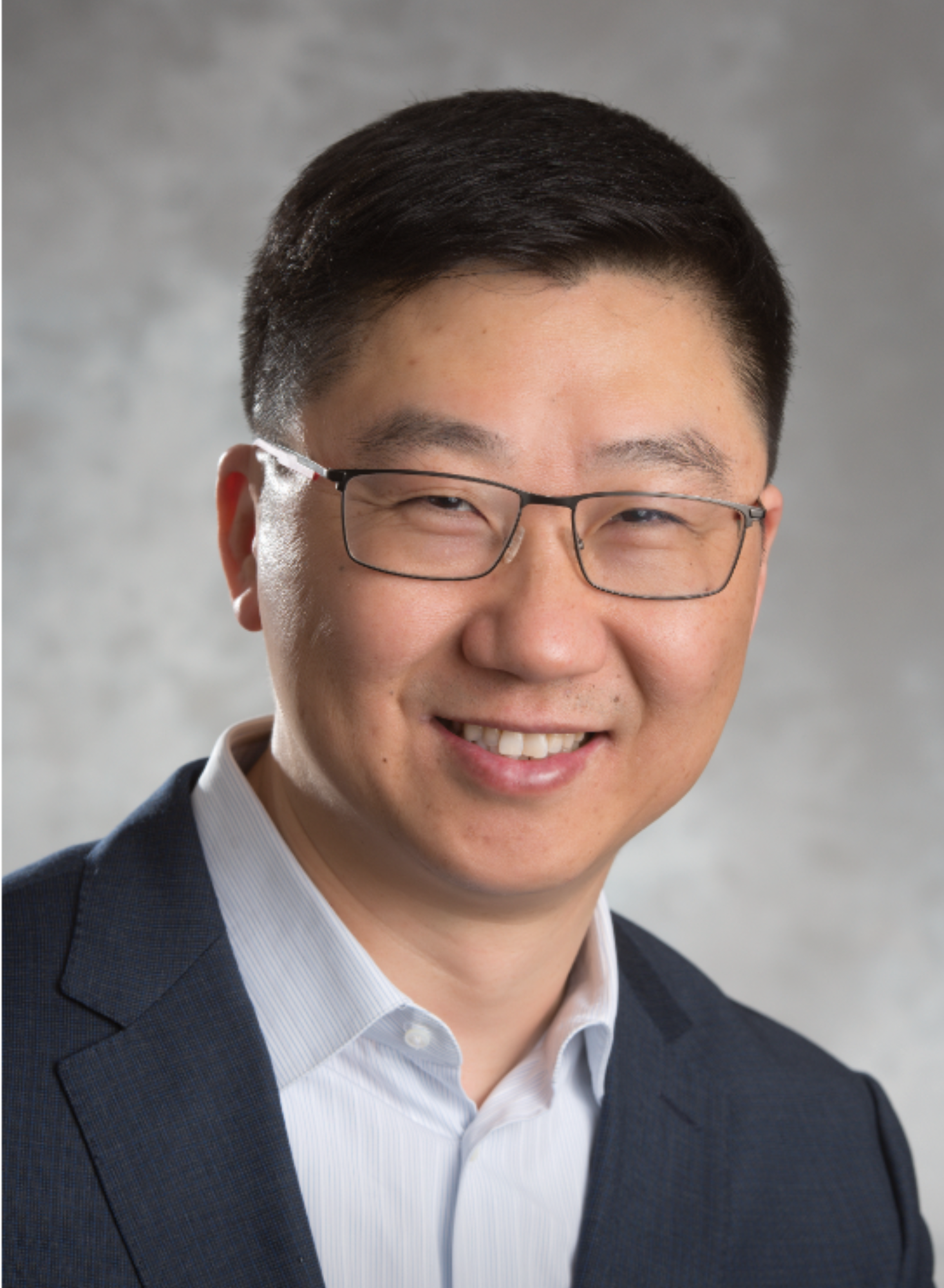
Victor Cui, PhD (Director)
Conrad Research Excellence Chair & Professor of Entrepreneurship, Innovation, and Global Strategy. Cross-appointed to the Cheriton School of Computer Science and the Department of Management Science and Engineering.
Conrad School of Entrepreneurship and Business• Faculty of Engineering
Professor Cui is a thought leader at the intersection of artificial intelligence, technological innovation, and the future of global organizations. His research examines how firms navigate disruptive forces — from AI-driven transformation to geopolitical realignments reshaping globalization. He has published in premier academic journals and been featured in Fortune, BNN Bloomberg, The Globe and Mail, and CBC. He serves on the International Science Council's Global Roster of Experts advising the United Nations, chairs Canada's SSHRC Insight Development Grant competition, edits three leading international journals, and leads AI-enabled personalized education initiatives at Waterloo. He collaborates extensively with government, industry, and academic partners across technology, financial services, healthcare, and pharmaceuticals.

Sharlene He, PhD
Associate Professor and Conrad Research Excellence Chair. Founding member of the Future of Work Institute.
Conrad School of Entrepreneurship and Business• Faculty of Engineering
Professor He's research examines how people make judgments and decisions in uncertain and complex environments, with a growing focus on how AI reshapes these processes. Integrating psychological theory with real-world contexts, she studies when individuals rely on versus resist AI tools across innovation, product choice, and organizational decision-making — and how human creativity and judgment can be supported rather than displaced. Her work informs the design of responsible, human-centered AI systems and innovation practices. She earned her PhD from the Kellogg School of Management, Northwestern University.

Sharon Ferguson, PhD
Assistant Professor in Management Science and Engineering
Management Science & Engineering • Faculty of Engineering
Professor Ferguson's research focuses on AI and the future of work — studying effective teamwork and how AI use helps and harms collaboration. Drawing on Management, Organizational Behaviour, and Psychology, she designs effective collaborative technology and AI interfaces, and has led projects on human–AI collaborative decision-making and student persistence in machine-learning careers. Her work appears in HCI venues such as CHI and CSCW and in engineering-design venues such as Design Science. She completed her PhD at the University of Toronto and is affiliated with the Schwartz Reisman Institute, the Future of Work Institute, and the Games Institute.

Elliot Creager, PhD
Assistant Professor in Electrical and Computer Engineering; Director of the Socially Embedded Machine Intelligence (SEMI) Lab.
Electrical & Computer Engineering • Faculty of Engineering
Professor Creager's research focuses on building reliable and equitable AI systems that promote user data autonomy. He is a Faculty Affiliate of the Vector Institute and the Schwartz Reisman Institute, cross-appointed to Management Science and Engineering and the Cheriton School of Computer Science, and a faculty member of the Waterloo Data and Artificial Intelligence Institute and the Waterloo Cybersecurity and Privacy Institute. He completed his PhD at the University of Toronto in 2023 and was previously a researcher at Google Brain in Toronto.

Joanna Ma, JD
Principal, Smart & Biggar LP. Canadian lawyer and patent agent; US patent agent.
SMART & BIGGAR LP
Dr. Ma holds a B.A.Sc. (Hons.) in Electrical Engineering from Waterloo and a Juris Doctor from the University of British Columbia. Her practice provides strategic advice on developing and growing IP portfolios aligned with business goals, and on commercializing and monetizing those rights. With her technical background she works regularly with software-driven technologies including artificial intelligence, autonomous vehicles, cybersecurity, medical devices, neural networks, and robotics. She has co-authored Canada's chapter in Intellectual Property in Electronics and Software and a chapter on IP protection for engineering and technology startups in Startup Law 101.
Advisory Board
Listed in alphabetical order

Pavol Chvala
Director of AI Innovation & Systems Development.
Information Systems & Technology • University of Waterloo
Pavol leads initiatives focused on artificial intelligence, automation, and software development in support of teaching, learning, and administration. His work includes developing the student portal, supporting key institutional systems, and teaching courses related to AI. He also collaborates on the development of responsible AI principles and actively engages the campus community to help them understand how AI can be best applied in their work. Beyond operational responsibilities, Pavol contributes to advancing institutional readiness for AI adoption through frameworks, experimentation, and knowledge-sharing events. He is passionate about aligning emerging technologies with the University’s academic mission, ensuring they drive innovation while maintaining a focus on privacy, security, and the student experience.

Anne-Marie Fannon
Director of the Work-Learn Institute.
Work-Learn Institute • University of Waterloo
Anne-Marie is an international leader in work-integrated learning strategy and policy. She works at the intersection of higher education, employer engagement, and government to strengthen the systems that connect students to workforce opportunity. Previously, she led Canada’s national WIL association through a period of significant growth, supporting its evolution into a nationally recognized convener and trusted federal partner stewarding substantial government investment in work-integrated learning. Today, through the Work-Learn Institute, she supports institutional and ecosystem development initiatives in 31 countries, advising governments, associations, and universities on building durable employer partnerships and sustainable WIL infrastructure.