Ammonia and hydrochloric acid: Chemistry in Pictures winner
This photo capturing the acid-base reaction between ammonia and hydrochloric acid. Inside the bottle it is the vapours of the acid and the base that react...
Most everyone, young and old, enjoys consuming gummy bears. They are chewy, juicy and sugary sweet! And speaking of sugar, each and every gummy bear is packed full of energy. Just how much can be qualitatively demonstrated by “The Exploding Gummy Bear” as titled by Sonia, or more accurately by “The Rapid Oxidation of Sugar.”
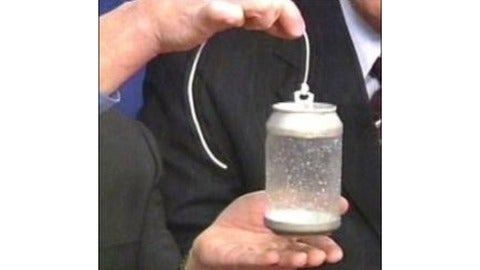
An aluminum can is not just made of aluminum, but it is lined with a plastic film to prevent oxidation of the inside surface by any acid in the soft drink’s contents. In the experiment, by oxidizing the aluminum from the outside, the intact plastic lining can be seen.
This series of articles considers some common organic molecules that we encounter in our everyday lives. Described will be some general chemical information about the organic molecule, how it is useful to us and other interesting facts.
Since 2003, I have been volunteering at the Royal University of Phnom Penh in Cambodia, both during my summer vacations and also during part of my two fellowship leaves.
Demonstrating the magnetic ink used in printing US currency has proven to engage audiences of all ages because of its relevance to everyday life. Nearly everyone has used machines that distribute and/or accept currency but few understand how the machines distinguish between the various denominations. The key is in the face of each denomination.
Your students may find it interesting to compare the acid content of a low-acid apple juice or a low-acid orange juice to that in a regular juice of the same brand. These sample types could be added to an existing acid-base titration experiment, form the basis of a new experiment, or be used as project topics.
Oobleck, a mixture of cornstarch and water, derives its name from the story “Bartholomew and the Oobleck” by Dr. Seuss (Random House), in which the king, tired of the rain, snow, and sleet falling from the sky, wishes for something different. Soon his wish is granted; green, sticky, gooey oobleck falls making a mess of his kingdom, leading the king to regret his wish. Bartholomew saves the day by getting the king to say the magic words, “I’m sorry.”
The small balloon in a syringe for demonstrating Boyle’s law can be substituted with an air-containing, cut and knotted finger of an exam glove.
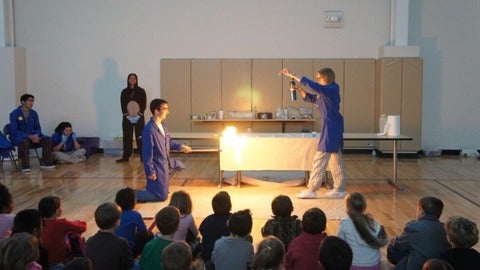
Propane Bubbles continues to be one of our most popular demonstrations among audiences and presenters alike. Propane-filled soap bubbles are generated, released into the air, and then ignited.