
Monday, November 4, 2019
Tough question series – 2010 CHEM 13 NEWS Exam
This is a reprint from the March 2011 issue of Chem 13 News.
This is a reprint from the March 2011 issue of Chem 13 News.

This is a reprint from the December 2011 and January 2012 issue of Chem 13 News.
This is a reprint from the March 2013 issue of Chem 13 News.
This November issue is dedicated to Carey Bissonnette, who sadly passed away in May of this year. Many of you will remember him as the Chem 13 News Exam and Avogadro Exam coordinator as well as for his series "Tough Questions." We have included a heartfelt tribute by Bill Power, Chair of Waterloo's Department of Chemistry, a reprint of Carey's Tough Questions series, as well as tributes from readers.

The alchemists had known since the 1500s that salts could impart various colors to a flame. In the 1700s Andreas Sigismund Marggraf (1709-1782) demonstrated that sodium salts could be differentiated from potassium salts by the former’s yellow color and the latter’s purple hue.

In previous chapters we have seen how chemistry has evolved in stages. First was the world of the ancients with their concept of the four elements — fire, earth, water and air.

The inspiration for making pictures from droplets of chemicals first came from a Chemistry Club session at our school.

Historically, the distinction between sodium and potassium was not made easily. Only gradually was it recognized that there was a difference between “plant alkali” (potash, potassium carbonate), obtained from the ashes of plants, and “mineral alkali” (soda, sodium carbonate), found in salt flats and evaporated seawater.

The stage was now set for a giant leap in the understanding of chemistry. A vast amount of knowledge had been accumulated during the previous several thousand years.
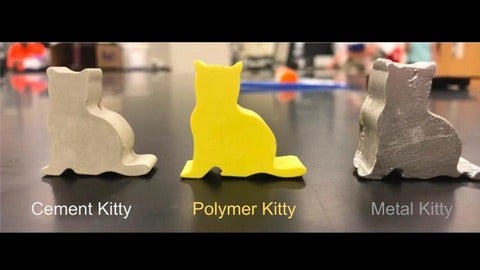
Materials science is the study of our material world. It is using knowledge of the structure, bonding and properties of a substance to optimize its performance in a specific function.