The Waterloo Food Issues Group (WatFIG) invites you to a multidisciplinary graduate student workshop: “Critical Issues facing the Food System in the 21st Century”. It will be held at the Balsillie School of International Affairson Friday, April 11, 2014, room 142 from 9 a.m. to 5 p.m. Professor Tony Weis from the University of Western Ontariowill begin the day as the keynote speaker. His talk will outline some of the contours of his latest book: The Ecological Hoofprint: The Global Burden of Industrial Livestock Production. Sixteen graduate students with diverse disciplinary backgrounds will present their research on food related-issues. It will be a fantastic day! I hope you will join us.
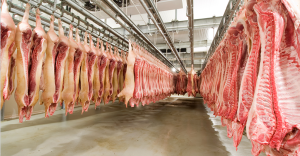
More details on Tony’s talk: “The ecological hoofprint is a conceptual framework for understanding the momentous impacts of the growth and industrialization of livestock production, which commands a large share of the world’s arable land through its heavy pull on grain and oilseed supplies, and is entwined with the ‘meatification’ of diets on a world scale. About a half century ago, in a world of 3 billion people, the average person consumed 23 kg of meat per year. Today, in a world of 7 billion people, the average person consumes 42 kg of meat per year. This trajectory is projected to continue growing significantly in the coming decades, with more than 9 billion people consuming more than 50 kg of meat per year by 2050 – a rise that is a key part of influential (but delusional) calls to double world food production by 2050. Huge inequalities are concealed in this broad picture; for instance, the average Canadian consumes over 100 kg of meat a year.
A central aspect of the analysis focuses on the nature of production in the industrial grain-oilseed-livestock complex, and how political economic imperatives drive processes of radical biological simplification and standardization that have created ‘oceans’ of monocultures dotted with ‘islands’ of densely packed animals. These oceans and islands are physically disarticulated from one another in many ways, and then re-articulated through huge flows of feed, inputs, and wastes, with much useable nutrition burned in the metabolic processes of animals. Intractable biophysical problems are established and overridden, with the ensuing ‘biophysical overrides’ key to understanding resource budgets and pollution loads. The scale and depth at which animal lives are dominated might also be seen to constitute a revolution in inter-species relations.
Ultimately, I argue, the industrialization of livestock is not only deeply unsustainable but constitutes a powerful vector of global inequality and a major aspect of the silent violence of everyday life. The ecological hoofprint attempts to make it clear why confronting the industrial grain-oilseed-livestock complex and the meatification of diets are vital to hopes of building more sustainable, just, and humane agricultural systems”.