2026 GEMM Sensing to Impact Research Symposium
On April 17, 2026, the Global Environmental Measurement and Monitoring initiative hosted the Sensing to Impact: Environmental Measurement and Monitoring Research Symposium at Federation Hall, bringing together University of Waterloo researchers, students, municipal and regional partners, public health representatives, community organizations, and industry to explore how environmental data can better support climate, health, infrastructure, and planning decisions.
Led by Dr. Donna Strickland, the GEMM Director of the University of Waterloo GEMM initiative, the symposium was designed as a working event: not only to showcase research, but to build connections, identify data gaps, and define practical next steps for collaboration. In her opening remarks, Strickland emphasized that although more environmental data exists than ever before, it is often fragmented, difficult to access, or not aligned with the needs of decision-makers. The symposium aimed to address this challenge by connecting researchers in sensing and data science with those collecting, managing, and applying environmental data in real-world contexts.
The morning program, moderated by Dr. Sarah Burch, Executive Director of the Waterloo Climate Institute, focused on public health, extreme weather, air quality, water quality, and stormwater management. Presentations highlighted the role of environmental data in strengthening local adaptive capacity, improving climate-health decision-making, understanding indoor and outdoor pollution, and supporting municipal infrastructure planning. Speakers included Dr. Warren Dodd, Irfhana Zakir Hussain, Dr. Anindya Sen, Dr. Eihab Abdel-Rahman, Dr. Peter Crank, Thiruni Thirimanne, Jack Ha, Dr. Philippe Van Cappellen, and Monica Puopolo and Joel Hussey from the City of Kitchener’s Sanitary and Stormwater Utilities Division.
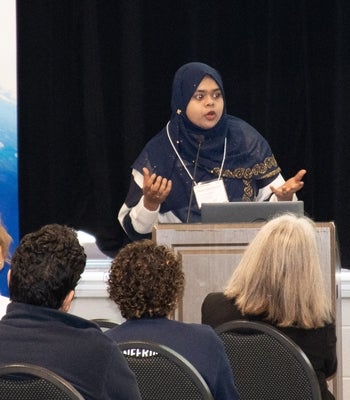
Irfhana Zakir Hussain speaking during morning session.
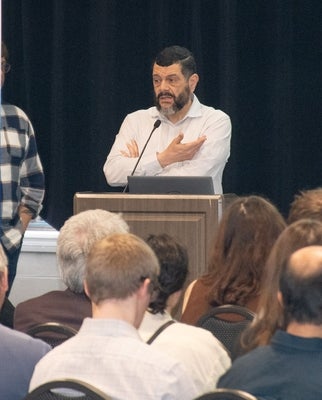
Dr. Eihab Abdel-Rahman speaking during morning session.
Research presentations demonstrated the breadth of Waterloo’s environmental measurement and monitoring expertise. Projects included work on heat vulnerability and adaptive capacity in Waterloo Region, AI-enabled tools for climate-health resilience, sensor-based analysis of indoor pollution, equitable heat resilience for vulnerable populations, municipal data collection and monitoring programs, urban stormwater modelling, flood-risk assessment, and stormwater infrastructure approaches that can deliver both water quality and climate benefits.
A central theme throughout the day was the importance of partnership. Presenters and panelists discussed how environmental sensing and data initiatives can be more effective when research questions are co-designed with municipalities, public health units, community organizations, and other data users from the beginning. Discussions also explored practical barriers, including data-sharing agreements, ethics approvals, procurement processes, staff capacity, data governance, and the challenge of aligning academic and government timelines.
During lunch, participants explored poster presentations and demonstrations covering a wide range of environmental measurement and monitoring topics, including urban overheating, air quality and equity, affordable sensors, campus living labs, water quality tools, transportation and infrastructure sensing, greenhouse gas emissions, urban stormwater ponds, and environmental data workflows.
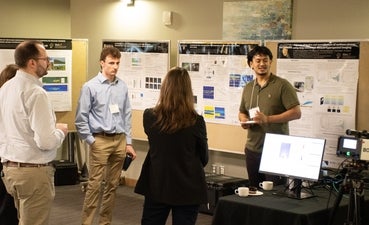
Research group poster presentation.
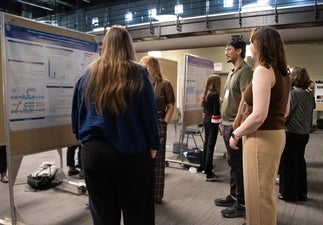
Research Poster Presentations
The afternoon program opened with remarks from Regional Chair Karen Redman and Dr. Leia Minaker, Director of the Future Cities Institute. Minaker highlighted the role of applied research partnerships in addressing urban challenges and shared examples of Future Cities Institute projects that use living lab approaches to generate evidence for planning and policy.
Participants then moved into facilitated breakout groups focused on four themes: identifying environmental data gaps and opportunities; stakeholder engagement; barriers, successes, and failures in research partnerships; and building capacity for future collaboration. Discussions asked participants to consider where local environmental data gaps are most pressing, what datasets remain underused or siloed, how technical data can be translated into usable insights, and what structures would make it easier for the university and community partners to initiate and sustain research collaborations.
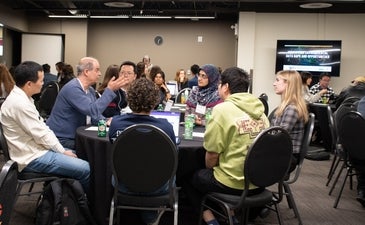
Afternoon breakout groups.
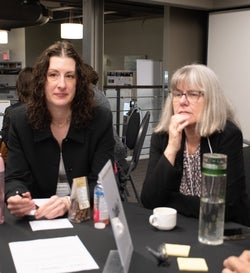
Dr. Leia Minaker and Dr. Donna Strickland participate in the breakout group discussions.
In the closing discussion, participants emphasized that environmental data is essential, but that the way data is connected, shared, interpreted, and applied is equally important. Key themes included the need to bridge disciplines, make data more accessible and relevant for decision-making, strengthen partnerships between universities and community partners, and address ongoing gaps in data coverage, coordination, and capacity.
The symposium marked an important step in GEMM’s broader effort to strengthen environmental sensing and data systems across Waterloo and beyond. Building on the day’s discussions, GEMM will continue working to connect researchers, students, campus units, governments, public health organizations, and community partners; support new research collaborations; and identify practical ways to translate environmental data into climate, health, infrastructure, and sustainability action.
The symposium was made possible with primary support from the Future Cities Institute and the Waterloo Climate Institute, with additional support from the Crankyweather Lab and the University of Waterloo Sustainability Office.