“If you think there’s a chance, it’s worth it, you should go for it”: Q&A with Tony Tang
Math alum reflects on resilience, career reinvention and the value of taking calculated risks.
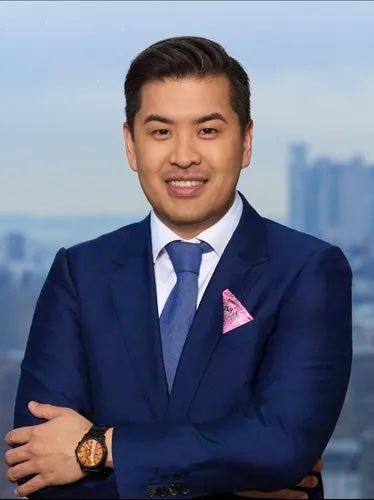
Tony Tang (BMath ’12) has never been afraid to chart his own path.
He was part of the inaugural Financial Analysis and Risk Management (FARM) cohort at the University of Waterloo, but early academic setbacks forced him to reconsider how he approached learning. He embraced campus support resources, gained his footing and began to excel. By graduation, he had won leadership awards, served as co-chair of the Mathematics Graduation Committee and helped steward the Mathematics Endowment Fund.
These lessons in adaptability, resourcefulness and work ethic have helped him build a remarkable career that spans banking, technology, marketing and real estate. After completing a Master’s in Management, Tony worked in analytics and marketing before transitioning into entrepreneurship. Today, he is a full-time real estate agent in New York City at the Corcoran Group, where he also works in property development, house flipping and short-term rentals.
I had the chance to catch up with Tony to discuss his unconventional career journey, the lessons he learned from his undergraduate at Waterloo and the advice he has for students and alumni looking to take their next steps.
Q: Can you tell us about your journey from being a student in the Faculty of Mathematics to where you are in your career today?
Tony: I was born in Scarborough and grew up in the Mississauga area. I studied Financial Analysis and Risk Management at Waterloo under Brett Matheson and was part of the program's inaugural cohort.
My journey at Waterloo wasn't always smooth. During my first year, I failed CS 116 and found myself at risk of failing out of the program. My average was around 70%, and I realized I needed to change how I approached school.
I spent part of that summer relearning how to study and taking advantage of resources such as the Student Success Office and therapy. That experience taught me an important lesson: sometimes, success isn't about working harder at what you're already doing. It's about recognizing what isn't working and being willing to change.
That same summer, in 2009, I received the $10,000 Schwartz/Reisman Travel Award to study Arabic in Israel through a fully funded exchange. It was an incredible opportunity that broadened my perspective and exposed me to a different culture. Today, living and working in New York, where I interact with people from diverse cultural backgrounds, I continue to appreciate that experience.
During my third year, I interned with RBC's Global Asset Management division, where I could apply the analytical skills I had developed at Waterloo.
By my final semester, I had raised my average to 80%. I also became co-chair of the Mathematics Graduation Committee, received the MGC leadership award, and served as a director of the Mathematics Endowment Fund.
After graduating in 2012, I pursued a Master’s in Management at Hult International Business School, specializing in international marketing. That led to an internship at Google, where I worked in customer support and analytics for its Shopping Express function while living in Mountain View and San Francisco.
I subsequently joined Machine Zone, a mobile gaming company, where I used SQL, VBA, and Excel to analyze user acquisition and help drive profitable growth for games such as Game of War and Mobile Strike. The company was acquired by AppLovin in 2021.
I spent the next seven years building my career in marketing, affiliate marketing, and analytics.
Eventually, I wanted to build something of my own. I began investing in real estate, obtained my real estate license in 2021, and transitioned into entrepreneurship.
Today, I'm a full-time real estate agent in New York City with The Corcoran Group. I also pursue property development, house flipping, and short-term rentals.
On paper, these careers might seem unrelated. But the analytical thinking, problem-solving, and discipline I developed at Waterloo remain central to everything I do.
Q: The Faculty of Mathematics is known for its co-op program and strong problem-solving culture. How did your Waterloo experience prepare you for the challenges and opportunities in your professional life?
Tony: I wasn't in the co-op program, so I had to be strategic about finding opportunities to gain professional experience.
I went to Career Services to learn about potential career paths and build connections. Through a work-study opportunity, I also worked as an advertising sales intern at Imprint, which helped me develop my sales skills. I leveraged that experience to pursue internships in banking and government.
One of the biggest lessons I took from Waterloo was how to break down complex problems.
Mathematics teaches you to take a large, intimidating problem, divide it into smaller components, solve each piece, and then bring everything together to understand the bigger picture.
I use that approach every day in real estate.
Buying a home, for example, involves multiple moving parts: financing, property selection, due diligence, inspections, appraisals, negotiations, and closing. Each stage presents its own challenges.
My job is to help clients understand those individual components, make informed decisions, and see how everything fits together. What initially feels overwhelming becomes much more manageable when you approach it systematically.
Waterloo also taught me time management, discipline, and how to work through difficult problems independently. Those skills have proven valuable throughout my career and in my personal life.
Q: Looking back, what are some of your favourite memories from your time in the Faculty of Mathematics?
Tony: One thing I genuinely appreciate is the time spent studying, isolating a problem, and working through it until you understand the solution.
I still use those study habits today. When I prepared for my real estate licensing exams, for example, I relied on the same discipline and approach I developed at Waterloo.
Beyond academics, I enjoyed participating in student activities and being part of the university community.
I'm also grateful for the friendships I made. I still keep in touch with several Waterloo alumni, including friends who now live in New York.
And, of course, you never forget how challenging the Faculty of Mathematics was! That shared experience is something Waterloo graduates can always look back on together.
Q: How has your perspective on your mathematics education changed since graduating?
Tony: The older I get, the more I appreciate the academic rigour of Waterloo.
It instilled in me a strong work ethic and taught me to hold myself to a high standard. My clients often comment on how hard I work, and I believe that discipline is partly a product of my experience at Waterloo.
My upbringing also played an important role. I'm the eldest son of Chinese-Vietnamese refugees, and growing up with a family history shaped by immigration and starting over gave me a strong appreciation for hard work and making the most of opportunities.
Waterloo reinforced those values.
But perhaps the most important lesson was resourcefulness. I learned how to find answers, seek help when I needed it, build relationships, and figure things out even when I didn't have a clear roadmap.
Those abilities have been invaluable as I've moved between industries and built a career on my own terms.
Q: What advice would you give to current Faculty of Mathematics students who are just beginning their own academic and career journeys?
Take calculated risks.
Tony: You have to weigh the potential risks against the potential rewards. If the downside is too great, it may not be worth pursuing. But if you see a genuine opportunity and believe the potential upside justifies the risk, you should consider taking the leap.
When I moved to the United States at 22, I had $100,000 in student debt. That was a significant risk. I didn't know exactly how things would turn out, but I moved forward, adapted, and eventually built a life and career in New York City. Today, I'm a dual U.S. and Canadian citizen.
I've taken risks in real estate, too, including flipping properties in states such as Ohio and Missouri. Every investment comes with uncertainty, and not every decision will work out exactly as planned. But you learn by doing, making mistakes, and adjusting your approach.
The same principle applies to your career. You don't have to figure out your entire future while you're in university. People change careers multiple times, and I certainly have.
Your education is an investment in yourself. Even if your first career doesn't work out, the skills, experience, and relationships you develop can help you move in a different direction.
Entrepreneurship has also taught me the importance of betting on yourself. Building wealth isn't limited to earning a salary; for some people, it also involves building businesses, investing, and creating opportunities of their own. Of course, those paths involve real financial risks, so it's important to understand the downside and make informed decisions.
Not everyone wants to become an entrepreneur, and that's perfectly fine. If you're looking for a more structured career path, focus on developing skills that are in demand.
Artificial intelligence is an important area to explore. Learn how to use AI tools effectively, experiment with platforms such as Claude and Claude Code, and understand how these technologies can help you solve problems and create value.
Finally, don't underestimate the importance of people skills.
Mathematical and analytical abilities are valuable, but success also depends on your ability to communicate, sell ideas, build relationships, network, and work effectively with others.
Technical skills can open doors, but your ability to work with people can determine how far you go.
Ultimately, my advice is simple: stay curious, keep learning, and don't be afraid to take a different path. You don't need to have everything figured out before you begin.
Q: Do you have any tips for our alumni who are buying/selling or considering buying/selling real estate in New York?
Tony: New York's real estate market can be challenging to navigate, particularly for newcomers and international buyers. Having the right professional guidance can make a significant difference.
If you're an immigrant or someone moving to the United States, one of the first things to understand is how the American credit system works.
Your credit history can affect your ability to qualify for a mortgage, obtain financing, and secure favourable lending terms. If you're arriving without an established U.S. credit history, that doesn't necessarily mean homeownership is out of reach, but you'll need to understand your options.
Start building your U.S. credit history as early as possible. Some financial institutions offer programs that help eligible newcomers establish credit, and American Express has offered pathways for certain customers to use their existing international relationship when applying for U.S. products. Eligibility and requirements vary, so investigate your options before relying on a particular program.
When buying property, work with an experienced real estate agent who understands the needs of international buyers and newcomers. You may also need a mortgage professional familiar with your financial circumstances and an attorney who can guide you through the transaction.
If you're selling, understand the tax implications before you list your property. Your citizenship, tax residency, ownership structure, and the circumstances of the sale can all affect your obligations. Foreign sellers may face U.S. tax withholding requirements under FIRPTA, while U.S. tax residents can have different reporting and tax obligations.
These rules can be complex, so consult a qualified tax professional or attorney rather than assuming that citizenship or permanent residency alone determines your tax treatment.
My biggest piece of advice is to surround yourself with professionals who understand your situation. Whether you're buying your first home, relocating to New York, or selling an investment property, the right team can help you navigate the process with greater confidence.
New York real estate can be complicated, but with the right preparation and guidance, you can make informed decisions and find opportunities that align with your goals.