Reimagining ownership online
A conversation with Jess Zhang
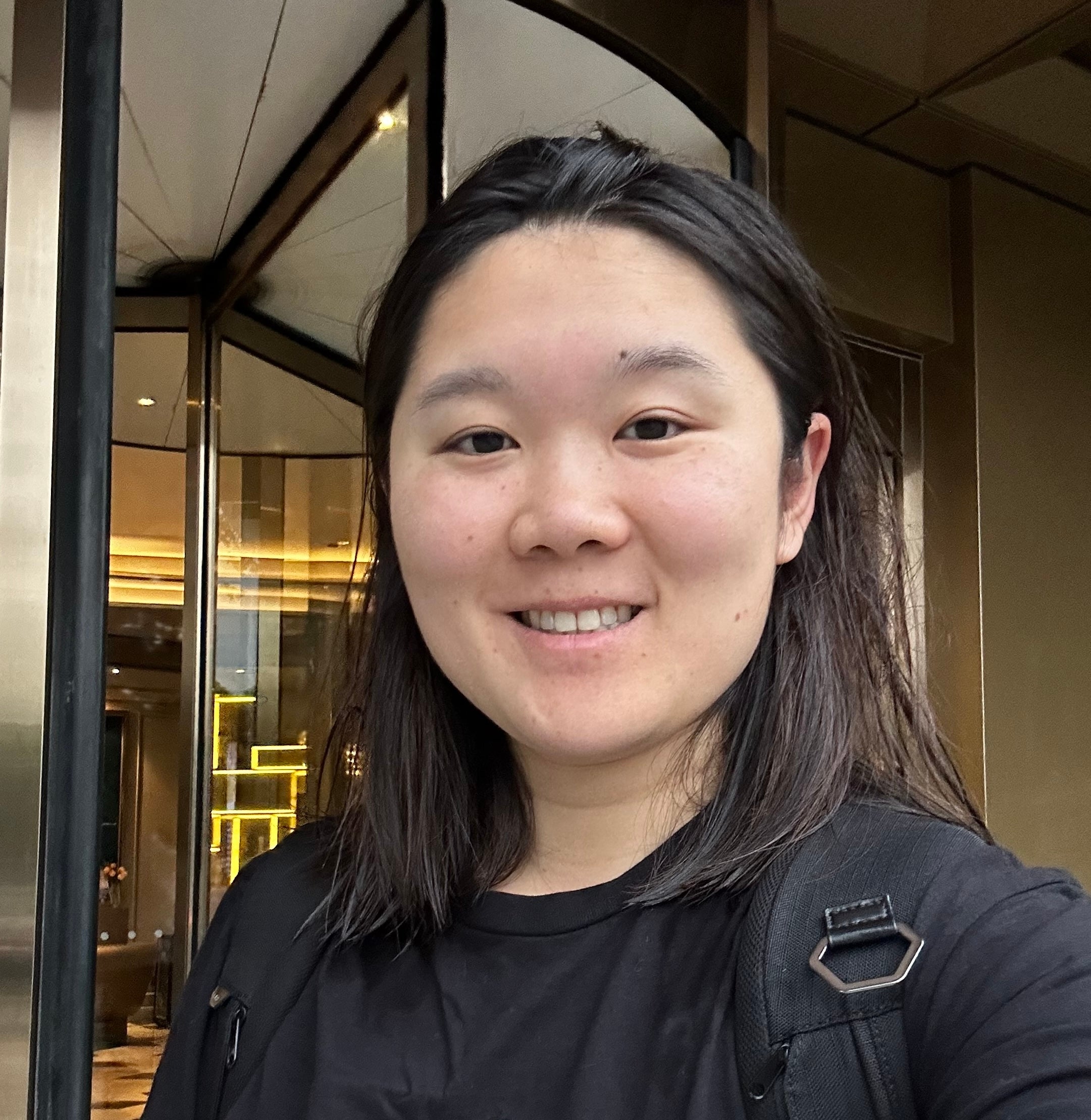
“Silicon Valley loves to romanticize the 21-year-old college dropout founder,” says Jess Zhang (BMath), former founder of Blockus. But she wants students to know this isn’t the only path to entrepreneurship—in fact, it may not even be the best one.
Before launching her own company, Jess spent seven years working in the tech industry, including data science roles at Kik, Airbnb and Roblox, an experience that proved essential to her path as a founder. It not only built her skills and knowledge, but also exposed her to real-world industry challenges, including the problem that would define her venture.
During her time at Roblox, where she was the first senior data scientist on the Roblox Developers team and led a team of 10, Jess witnessed the rise of online gaming ecosystems and was struck by the incredible creativity they unleashed. She remembers one user painstakingly recreating their entire high school campus in Roblox during the pandemic. Yet she was bothered by a fundamental flaw: creators had limited ownership and control over what they built on the platform.
The emergence of blockchain and Web3 offered a solution. Realizing that true digital ownership was possible, Jess founded Blockus in 2022, an all-in-one ecosystem that helped game developers integrate Web3 features such as wallets, marketplaces and payments without rebuilding their games, and give players full control over their digital assets. After turning down Y Combinator to join a16z Crypto Startup Accelerator, Jess closed an oversubscribed $4 million pre-seed round in March 2024, and Blockus went on to work with Sony’s Soneium blockchain ecosystem. Blockus ultimately shut down, which Jess attributes to market timing. Throughout, Jess saw Blockus as part of a larger movement, one that uses blockchain and Web3 technologies to build greater social connectedness.
Today, Jess is building her next venture, Canoe, which is focused on creating a privacy-by-default internet.
We had the chance to talk to Jess about her time at Waterloo, her commitment to helping women+ in STEM fields and her journey building Blockus.
Q: What attracted you to the University of Waterloo for your undergraduate degree?
Jess: I knew about co-op from my classmates as a great option, but what really drew me was doing well as a high school student on one of the Centre for Education in Mathematics and Computing’s math contests. I had the second-highest score nationally. Because of that, Waterloo invited me to a week-long summer camp hosted at St. Jerome’s. It was an amazing experience where I got to hang out with the Math Olympiad team.
I was 15 at the time. Two years later, when it was time to apply at 17, I received six or seven different offers of admission for different programs at schools like University of Toronto, TMU, and others. But I felt a connection to Waterloo because I had already been there and met some of the professors. I received a small scholarship and, combined with the co-op program, it just made the most sense.
Q: Tell me a bit about your time at Waterloo. What stood out for you as valuable, or had a lasting impact on you today?
Jess: It was a very competitive program, but the co-op helps you get a sense of the real world. You bring that experience back to class, and you take the Waterloo brand back out into the workforce. It’s a very positive, reinforcing cycle.
In terms of classes, my most memorable was MATH 145 (Advanced Linear Algebra) with Professor Alfred Menezes. The encryption part of that class really intrigued me. I also shared professors and TAs with Vitalik Buterin, co-founder of Ethereum, so it’s cool to feel part of that lineage of influence.
I was also very active in student clubs. I was involved with Women in Math, the Actuarial Science Club, and the Mathematical Finance Club. I never really thought of it as volunteering back then; it was just a great way to hang out, organize and build leadership.
It was a strange full-circle moment when I listened to Stanford Professor Dan Boneh in LA in 2023 as part of the a16z Crypto Startup Accelerator curriculum. Who knew my first-year math materials would one day show up in my startup incubator! I mentioned elliptic curve cryptography and Professor Alfred Menezes, and he gave a nod of recognition. It felt like a cosmically fated mathematician moment.
Q: Did you always see yourself becoming an entrepreneur, and how did your journey evolve after graduation?
Jess: I actually wanted to start my own company right after I graduated. If there had been a viable opportunity, I probably would have jumped on it. But at the time, multiple factors held me back: the venture capital system in Canada was much smaller, I didn't have prior tech industry experience and, quite frankly, being a woman, fewer doors opened automatically. It was always on my mind, though. It took me seven years of working in tech first, but I eventually did it.
Q: What was the specific insight or problem that led you to create Blockus?
Jess: There were a few main forces coming together. First, I saw the evolution of social networks turning into gaming metaverse worlds, similar to what Roblox is doing. That felt like an inevitable trend that someone needed to unlock.
Second, the emergence of blockchain technology and Web3 introduced the idea of digital ownership. That really resonated with me because when I worked at Roblox, I saw users spend so much time building incredible experiences—like someone replicating their entire high school campus on Roblox during COVID. That is amazing intellectual property and a cool memory, but the user doesn't actually own it. It felt natural that intellectual work on the internet should be ownable, just like software engineers, lawyers or consultants get paid for their expertise. When NFTs peaked in 2021, it proved that IP ownership on the internet is real, and that you can mint and hold onto digital assets. I saw all those forces converging and realized I needed to make Blockus happen.
Q: How would you explain Blockus to someone encountering it for the first time?
Jess: The mission of Blockus was seamless Web3 gaming. We made it seamless for game studios to integrate onto the blockchain, and simple for players to play those blockchain-based games.
Without digging into heavy technical jargon, we provided the infrastructure for games to bring their in-game economies, assets and ownership onto the blockchain so they were recorded forever. For players, we enabled them to truly own the time, effort, and work they put into a game.
Q: What differentiated Blockus from others in the blockchain infrastructure space?
Jess: Most infrastructure solutions in the blockchain space are very pointed and singular. You’ll hear companies say they are the best wallet infrastructure provider, the best NFT marketplace, or the best stablecoin payment rail. They point to all industries generally.
Blockus provided an all-in-one solution that was squarely targeted at game studios. We only supported games—it was our bread and butter. Compared to older, established competitors in the space, we represented a much newer generation of technology. We started in 2022, which allowed us to be on the cutting edge without the heavy tech debt or rigid, finite tokenomics models that limit older ecosystems.
Q: You attended the a16z Crypto Startup Accelerator. What was that experience like?
Jess: It was honestly the best experience ever. We participated in the spring of 2023, right as in-person events returned post-COVID. The a16z team brought out every major operator in crypto. I got to meet absolute legends in the space, like Anatoly Yakovenko (co-founder of Solana), Jing Wang (co-founder of Optimism), Brian Pellegrino (CEO of LayerZero), who actually became an angel investor in us. Because it was based in LA, we even got to visit the Riot Games campus. It was an incredible debut into the crypto ecosystem.
Q: In March 2024, Blockus raised $4 million in pre-seed funding. How did that come about?
Jess: That funding was led by a VC with strong Canadian roots: Andre Charoo at Maple VC. He exclusively backs founders with Canadian ties. A partner at Greylock had initially noticed me at a networking event in New York and sent a feeler email out through his network. Andre picked up on it, looked me up on LinkedIn, got an introduction through a couple of mutual connections, and locked it down. By the time he funded Blockus, we had actually been building a relationship for a year and a half. He watched my progress, and after the a16z incubator, he made the call to bet on us.
Q: What advice would you give to a student or recent graduate who wants to follow an entrepreneurial path?
Jess: My biggest piece of advice is that it is not too late. Silicon Valley loves to romanticize the 21-year-old college dropout founder, but you can absolutely build a great career path in tech before starting a company. I worked in tech for seven years across four different companies of varying scales—from a 40-person startup to a 4,000-person corporation.
That operator experience is incredibly valuable. When you hit a roadblock while starting your own company, you can pattern-match and think, "I saw that mistake made at my previous company; let's not do that." It also provides you with financial stability. VCs often glorify living on a shoestring budget, but I see founders overextend themselves, live in poverty, and risk harming their own health if it doesn't work out. Entrepreneurship inherently requires a massive leap of faith and a willingness to take risks, but getting industry experience first is a massive benefit.
Q: What was the grand vision and impact you wanted Blockus to have on the world?
Jess: The long-term vision of Blockus was to interconnect the open economy. Our world is trending toward a worrying place where people are becoming more disconnected, insular, and less collaborative. I see blockchain and Web3 as a globalizing force that can interconnect all of us. Because blockchain is decentralized, censorship-resistant, and free for anyone to use, it serves as a global, single source of truth that no single entity can shut down. Ultimately, I wanted to leverage this technology so people could have fun through play and connect with each other in a meaningful way, leading to a happier, more connected world.
Q: What advice do you have for women navigating the tech and startup culture today?
Jess: Luckily, explicit harassment and discrimination have gotten better because there is now a heavy social cost attached to it. What women still lack today is access to the "back-room," locker-room style boys' clubs—the casual golfing conversations where the real ins and outs of business happen. Because I didn't have access to that, I felt like I had to bash through concrete walls headfirst a thousand times to move things forward, which was incredibly painful.
We need to create spaces for women to have transparent conversations about the mechanics of entrepreneurship: how to fundraise, how to de-escalate challenges, and how to operate effectively. Sometimes male leaders nowadays hesitate to mentor younger women out of caution, but that is a gap we can and should bridge.
Q: What has your experience been like as a woman in math and tech? What has that journey been like for you and what obstacles did you encounter?
Jess: It was an absolutely wonderful, intellectually stimulating experience being a woman in math at Waterloo. My friends and I were competitive, but about all the right things—academic pursuits, landing research positions, and getting jobs.
However, leaving school and high tech and entering the broader public sphere was a very different story. I witnessed rampant misogyny and hostility out in the world. In terms of mentorship, most of my mentors have been men simply because of a numbers problem—men still hold the vast majority of leadership positions. But the female figures in my career have shown up in moments of true difficulty, reaching out to share similar experiences. Those moments make you feel incredibly visible and seen. I would love to do the same for the next generation.