Microplastics fingerprint library
KEY INSIGHTS
-
Identifying plastic types is essential for understanding risk and sources: Microplastics are not all the same. Different plastic types move, break down, and interact with ecosystems and people in different ways. Accurate identification is critical for risk assessment and pollution prevention.
-
Machine learning enables accurate identification at scale: The Smith Research Group developed machine-learning models that can identify microplastics from Raman spectra with very high accuracy, even when samples are degraded or produce weak signals. These tools allow identification at a scale and consistency not previously possible.
-
Open, high-quality reference data is a major breakthrough: By creating and sharing large, standardized Raman spectral libraries, the team addressed a key barrier in the field. Open-access datasets make advanced microplastics identification possible for researchers without access to specialized instruments.
-
New methods overcome long-standing identification challenges: Expanded spectral ranges and layered models improve discrimination between chemically similar plastics and enable identification of copolymers, which are especially difficult to classify using traditional approaches.
-
Better identification supports better decisions: Reliable plastic identification improves monitoring, helps trace pollution back to sources, and supports more targeted and effective water-quality management and plastic-reduction policies.
WHY THIS MATTERS FOR MONITORING, POLICY, AND RESEARCH
-
Improves confidence in microplastics data: Standardized identification methods reduce uncertainty and improve comparability across studies, regions, and time.
-
Enables source tracking and targeted action: Knowing what types of plastics are present helps identify dominant sources, such as packaging, textiles, or industrial materials.
-
Expands access to advanced tools: Open datasets and models lower technical and financial barriers, allowing more institutions to participate in high-quality microplastics research.

RESEARCH PROCESS
The Smith Research Group set out to address a major gap in microplastics research: the lack of reliable, accessible tools for identifying plastic types in complex environmental samples. Microplastics are often small, weathered, and mixed with natural materials, producing noisy or incomplete chemical signals that are difficult to interpret.
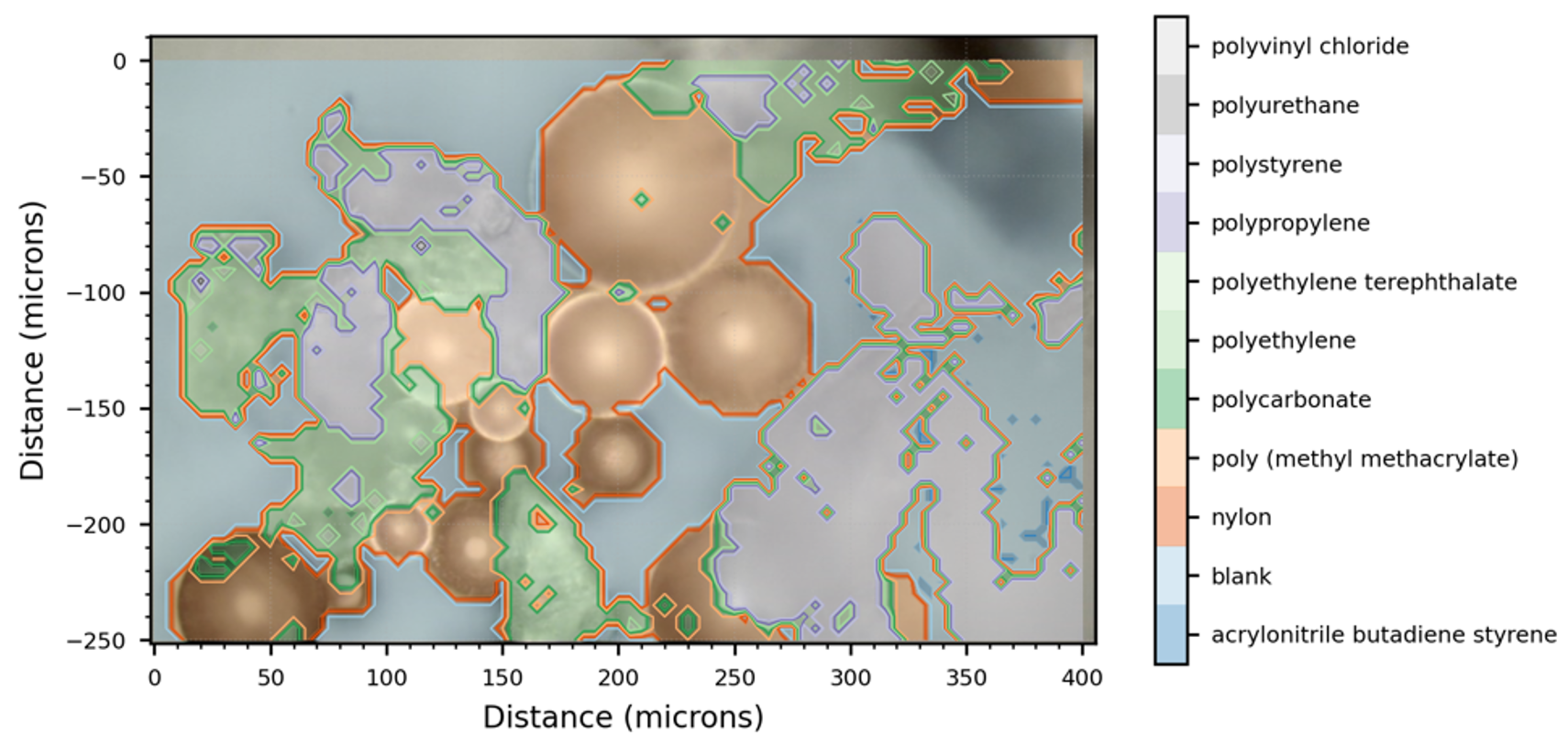
To overcome this, the team built one of the most comprehensive Raman spectral libraries for plastics and developed machine-learning models trained on thousands of spectra. They demonstrated that combining high-quality reference data with advanced analytics allows for accurate identification even under real-world conditions.
Further innovations included expanding the usable spectral range, developing layered models to identify copolymers, and creating open datasets designed specifically for training and testing machine-learning approaches. These advances establish a strong foundation for consistent, scalable microplastics monitoring across freshwater and wastewater systems.
RESEARCHER PROFILES & PARTNER ENGAGEMENT

Prof. Rodney D. L. Smith
Professor of Chemistry, University of Waterloo
Expert in spectroscopy, data standards, and environmental analytics, with a strong focus on open science and reproducible microplastics research.

Úna Hogan
PhD Researcher, University of Waterloo
Leads development of machine-learning models and open datasets for microplastics identification using Raman spectroscopy. Recipient of multiple best-poster awards for this work.

Benjamin Lei
Undergraduate Research Assistant, University of Waterloo: Contributed to the development and validation of machine-learning models for microplastics identification using Raman spectroscopy, with a focus on customizable and scalable analytical tools.
Key collaborators and partners
H. Ben Voss, Avery E. Bec, Xinyi Feng, and members of the Microplastics Fingerprinting Project contributed to model development, dataset creation, and community engagement through workshops and national conferences.
KEY PUBLICATIONS & DATASETS
Lei, B., Hogan, Ú. E., et al. (2022). Customizable Machine-Learning Models for Rapid Microplastic Identification Using Raman Microscopy. Analytical Chemistry, 94, 17011–17019.
Hogan, Ú. E., Voss, H. B., Lei, B., Smith, R. D. L. (2025). Integrating C–H Information to Improve Machine Learning Classification Models for Microplastic Identification from Raman Spectra. Analytical Chemistry, 97, 2214–2222.
Hogan, Ú. E. et al. (2026). Raman spectra for plastics identification (RaSPI) and Raman maps for plastics identification (RaMPI) datasets. Scientific Data (under review).
Smith, R. D. L. et al. (2023–2026). Open microplastics identification datasets. Borealis Dataverse. https://doi.org/10.5683/SP3/8UQQQN, https://doi.org/10.5683/SP3/KUS7OB, https://doi.org/10.5683/SP3/LSN0R0.
DATA MANAGEMENT
- Synthesized the microplastics literature to evaluate data sharing practices in microplastics research and identified key gaps, building on findings from Current State of Microplastic Pollution Research Data: Trends in Availability and Sources of Open Data.
- Developed recommendations to improve alignment with FAIR (Findable, Accessible, Interoperable, Reusable) data principles, informed by community guidance such as Workshop Report: Maximizing the Value of Environmental Microplastics Data.
- Developed an Excel-based microplastics metadata template aligned with the Water X framework, providing a transferable structure that can be applied across multiple data portals to support standardized and interoperable data reporting.
- Established a standardized operating procedure (SOP) for microplastic extraction from water, sediment, soil, and atmospheric deposition samples, informed by best practices. The SOP can be used by others to provide consistent guidance for sample preparation, extraction, and characterization, improving methodological consistency and reproducibility across studies.
- Made project data openly accessible in Federated Research Data Repository, enabling reuse, comparison, and synthesis by the broader research community.
These efforts in data management puts us one step closer to help support the development of robust, comparable datasets needed to inform evidence-based policy, regulatory standards, and environmental monitoring programs for microplastic pollution.


RESEARCHER PROFILES

Dr. Bhaleka Persaud
Senior Research Data Management Specialist, University of Waterloo

Dr. Shuhuan Li
Multi-Scale Environmental Particle Analysis Laboratory Manager, University of Waterloo

Tia Jenkins
Undergraduate Research Assistant, University of Waterloo