Understanding microplastics biodegradation
KEY INSIGHTS
-
Polyethylene is highly resistant to biological breakdown: Despite being the most common plastic found in the environment, polyethylene (PE) is very difficult for enzymes to degrade, even under controlled laboratory conditions.
-
Commonly used enzymes are largely ineffective: Most commercially available oxidative enzymes showed little to no ability to oxidize or break down polyethylene, with only very limited activity observed for manganese peroxidase.
-
Some past studies may overestimate plastic degradation: High-temperature NMR analysis revealed that earlier reports likely overstated the extent of polyethylene oxidation, highlighting the need for more rigorous analytical methods.
-
Better tools are needed to study biodegradation: High-temperature NMR proved to be a powerful and reliable method for identifying true chemical changes in plastics and distinguishing real degradation from surface effects or artifacts.
-
Biological recognition of plastics is possible: Short peptides can bind to different plastic types, opening new possibilities for identifying and sensing microplastics using biologically inspired tools.
WHY THIS MATTERS FOR MONITORING, POLICY, AND RESEARCH
-
Clarifies realistic expectations for biodegradation: The findings show that natural or enzyme-based breakdown of polyethylene is likely much slower and more limited than often assumed, which is critical for setting realistic timelines and policies around plastic persistence.
-
Improves the quality of microplastics research: By demonstrating the value of high-temperature NMR, this work helps establish more reliable standards for studying plastic degradation and avoids over-interpreting weak or indirect signals.
-
Supports innovation in detection technologies: Peptide-based probes provide a new, biologically inspired approach for identifying plastic types in complex environmental samples, complementing existing spectroscopic methods.

RESEARCH PROCESS
This research focused on two connected challenges in microplastics science: understanding whether plastics can be biologically degraded and developing new ways to detect and identify them. The first project examined polyethylene, the most widely produced plastic and one of the most common microplastics found in the environment. The team created chemically oxidized polyethylene standards using metal-based catalysts and used high-temperature nuclear magnetic resonance (NMR) to precisely identify chemical changes in the polymer structure.
These well-characterized standards were then used to test whether commercially available oxidative enzymes could degrade polyethylene. A range of enzymes and redox mediators were screened, but results showed that most enzymes had little effect on the polymer. High-temperature NMR made it possible to directly measure oxidation products, revealing that true degradation was far more limited than previously suggested in the literature.
The second project explored a different biological interaction with plastics: binding rather than degradation. The team designed and synthesized fluorescently labelled peptides known to interact with specific plastic types. Systematic screening and computational modelling showed how peptide structure influences binding strength and selectivity, providing detailed insight into how biological molecules recognize plastic surfaces at the molecular level.
RESEARCHER PROFILES

Prof. John F. Honek
Professor of Chemistry, University of Waterloo: Expert in enzymology and chemical biology, overseeing research on plastic–biomolecule interactions and advancing rigorous analytical approaches to microplastics research.
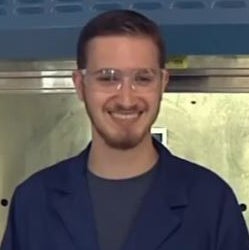
Alex Waldie
MSc Researcher, Honek Laboratory: Led experimental work on enzymatic polyethylene oxidation and peptide-based microplastics detection. Author of the MSc thesis “Enzymatic Oxidation of Polyethylene & Peptide-Based Detection of Microplastics” (2024).

Prof. Philippe Van Cappellen
Professor of Earth and Environmental Sciences, University of Waterloo: Expert in environmental and aquatic chemistry, specializing in contaminant fate and transport, sustainable water management, pollutant legacies, and urban water systems.

Erin Griffiths
MSc Researcher, Ecohydrology Research Group: Author of MSC thesis "Degradation of Polyethylene Terephthalate (PET) and Polyamide (PA)" (2024).
KEY PUBLICATIONS & OUTPUTS
Waldie, A., Honek, J. F. Commercial Screening of Oxidative Enzymes: Analysis of Polyethylene Degradative Potential. Manuscript in preparation, Journal of Hazardous Materials.
Waldie, A., Honek, J. F. Peptide-Based Affinity Probes for Plastic Surfaces. Manuscript in preparation, Journal of Peptide Science.
Waldie, A. (2024). Enzymatic Oxidation of Polyethylene & Peptide-Based Detection of Microplastics. MSc Thesis, University of Waterloo.
Griffiths, E. (2024). Degradation of Polyethylene Terephthalate (PET) and Polyamide (PA). MSc Thesis, University of Waterloo.