Science

Monday, November 20, 2023

Driving toward the future

by Karen Kawawada , School of Optometry & Vision Science

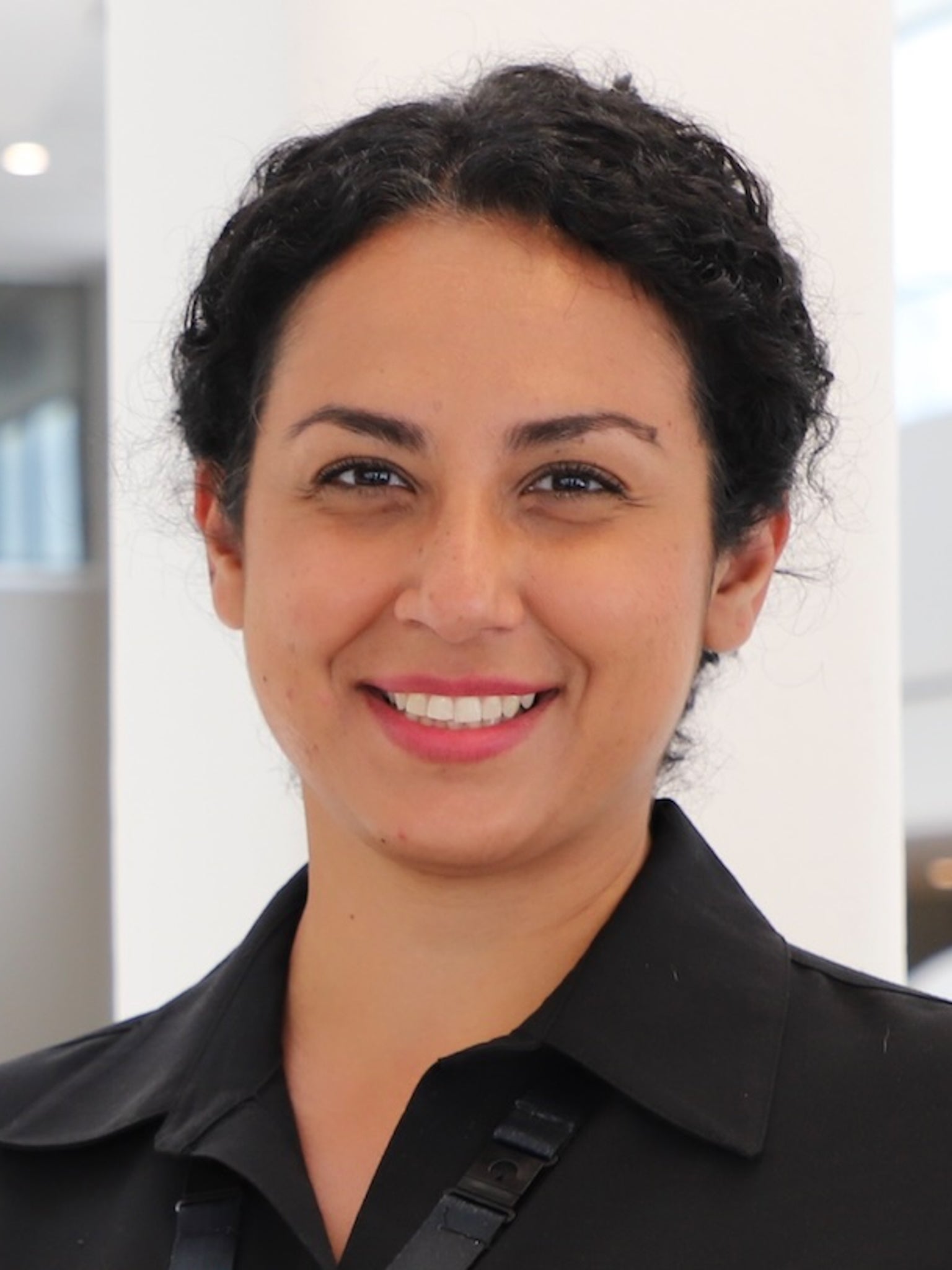
Ahmad Mahfoud has experienced many hardships and losses as a refugee from Syria. Now, though, thanks in part to the Waterloo Eye Institute at the University of Waterloo School of Optometry and Vision Science, he’s on the cusp of gaining something he never thought he’d have – a driver’s license.

Wednesday, October 18, 2023

Learning beyond the classroom

by Sharon McFarlane, Faculty of Science

It’s convocation season again — a time when our graduating students reflect and feel a sense of pride for completing their post-secondary academic journey. For many of our graduating students, their time at Waterloo has included a level of learning that amplifies regular classroom instruction, and this statement is true for graduating biology science student, Tharindya Abeyratne. Her co-op work placements and involvement in student-led extracurricular activities have proven to be just as valuable and rewarding as her time in the classroom.

Wednesday, August 23, 2023

Cosmological survey collaborations honoured by the European Physical Society

by Mike Brown, Perimeter Institute

The SDSS/BOSS/eBOSS collaborations have been awarded the 2023 Giuseppe and Vanna Cocconi Prize of the European Physical Society, recognizing an outstanding contribution to particle astrophysics and cosmology in the last 15 years.

Waterloo professor Will Percival and colleagues Kyle Dawson (University of Utah) and Daniel Eisenstein (Harvard University) accepted the award on behalf of the collaborations.

Thursday, June 1, 2023

Reaching for the unknown dark universe

by Jon Parsons, University Relations

Dr. Will Percival is a primary science coordinator for the Euclid space mission, set to launch from Cape Canaveral this July.

Percival is the Mike and Ophelia Lazaridis Distinguished Chair in Astrophysics, director of the Waterloo Centre for Astrophysics and a full professor in the Department of Physics and Astronomy.

As Percival explains, the Euclid satellite and the mission it will undertake are designed to solve a specific problem in astrophysics and cosmology. 

Tuesday, May 2, 2023

Mealworms: an ethical solution to cell growth

by Milana Madzarac, School of Pharmacy

Nicholas Cheng (MSc in Pharmacy in progress) won the Winter 2023 Social Impact Fund Grand Prize for his project Entomatia, which uses food waste as feed for mealworms to extract a serum to replace fetal bovine serum (FBS).

The $10,000 prize from the GreenHouse Social Impact Fund will be used for infrastructure costs and to generate a prototype serum for further scale-up.

Tuesday, April 18, 2023

Connecting through volunteer work

by Milana Madzarac, School of Pharmacy

Helping to develop future pharmacists plays an important role in Puja Sharma’s (PharmD ’15) life. She is a pharmacist at Baxter CIVA Pharmacy Services and first applied to be a PharmD interviewer during her last two years at Waterloo Pharmacy.

PharmD interviewers help to interview new prospective students looking to start a doctoral degree.

“Volunteering at the School gives me a sense of wholeness,” says Sharma. “I’m fortunate that I am able to make a difference by giving back in such a positive way to our profession.”

Tuesday, March 28, 2023

Inspiring the next generation of pharmacists

by Milana Madzarac, School of Pharmacy

Every March since 2016, students from Waterloo’s School of Pharmacy have been volunteering and visiting Region of Waterloo schools to educate the younger generation on what pharmacists do during Pharmacy Appreciation Month (PAM).

This year during PAM, 30 pharmacy students volunteered and presented to more than 400 elementary students across nine schools in the region.

Tuesday, March 28, 2023

The importance of knowledge translation in health care

by Milana Madzarac, School of Pharmacy

In an age of misinformation, knowledge translation (KT) is an increasingly important way to communicate research to the audiences who need it.

Knowledge translation links the creation of knowledge from research areas to real-world situations. With increased specialization and the level of disciplinary-specific training required to engage with research findings, KT is a purposeful approach to bridging communication gaps between disciplines and with public audiences.