Lessons from an economist
Waterloo alum Jennifer Lee shares six lessons on navigating uncertainty, broadening your perspectives and making sense of a changing economy

For Jennifer Lee (BA ’91), understanding the economy has always started with curiosity. As a child, she remembers peering over the kitchen table as her father studied stock market tables in the daily newspaper. His explanations of how markets worked sparked an early interest in finance that eventually led Lee to study economics at the University of Waterloo.
More than three decades later, curiosity remains central to her work as Senior Economist and Managing Director at Bank of Montreal (BMO) Capital Markets. Amid trade tensions, shifting markets and constant headlines, she has learned that making sense of uncertainty means asking fundamental questions: What is happening, why does it matter and what might come next?
From challenging assumptions to preparing for the unexpected, Lee shares six lessons for navigating change and making informed decisions when the path ahead isn’t always clear.
1. Don’t let the headline tell the whole story
Headlines are constantly changing, and even Lee admits it can be difficult not to get caught up in the daily noise. But one headline or economic indicator rarely tells the whole story.
Lee points to Canada-U.S. trade tensions as an example. While tariffs initially raised fears that Canada’s trade-dependent economy could fall into recession, businesses have had time to adapt and develop alternative plans to navigate changing conditions.
From an economist’s perspective, the lesson is to look beyond the immediate reaction and consider how businesses, governments and consumers are responding before drawing conclusions about what comes next. For individuals, that means keeping the latest headlines in perspective and focus on the factors you can control, including your own financial circumstances.
2. Prepare for the unexpected, don’t try to predict it
While headlines can change quickly, Lee’s next lesson is to be prepared when circumstances do too. She recommends planning early and considering scenarios that could affect your finances. What happens if someone in your household loses their job? What if an unexpected expense arises?
Lee compares the approach to “stress testing” in banking by considering how changing circumstances could affect financial plans. As her mother used to remind her, “not every day is a sunny day.” The goal isn’t to predict exactly when the rain will come, but to be prepared when it does.
3. Never assume today’s reality is permanent
Being prepared also means recognizing that the assumptions behind our plans can change. Before COVID-19, for example, cross-border workers had little reason to imagine the Canada-U.S. border could suddenly close. Today, shifting trade relations are once again challenging expectations.
For businesses, Lee says flexibility and diversification of customers and suppliers can help them withstand economic shocks. Individuals can apply a similar principle by planning for different scenarios and seeking professional financial advice, particularly when making long-term decisions.
“Everyone is going to struggle, unfortunately,” Lee explains. “But the ones that will emerge stronger are the ones that have flexibility built into their strategies.”
4. Look for patterns, not just numbers
Economists examine countless indicators to understand the bigger picture, but employment is one Lee watches closely because jobs influence consumers’ ability and confidence to spend. By comparing multiple employment indicators, a bigger sample size, Lee looks for patterns to better understand what is really happening in the economy.
“At the end of the day, it’s consumers that are driving the Canadian economy,” Lee says, noting consumer spending accounts for roughly two-thirds of economic growth. That makes the health of the job market an important window into consumer confidence and the overall health of the broader economy.
5. Keep asking questions, and get uncomfortable
One of Lee’s most enduring lessons came from her first mentor, Dr. Sherry Cooper, one of the first female chief economists on Bay Street: never be afraid to ask questions.
Watching Cooper openly ask questions when she didn’t know the answer taught Lee that curiosity isn’t a weakness or a sign that you don’t belong in the conversation. If you’re wondering something, chances are someone else is too. Asking questions can challenge assumptions, uncover what you might be missing and ultimately lead to a better understanding.
It is also very important to get out of one’s comfort zone. She credits BMO’s current Chief Economist, Douglas Porter, with pushing her to get out and be uncomfortable, which helped build her confidence in public speaking.
6. Look outside your own perspective
Curiosity also means being willing to consider viewpoints beyond your own. Whether assessing economic conditions or understanding how people are experiencing them, Lee values seeking different perspectives and remaining open to ideas that challenge her thinking.
For her, looking at an issue from multiple angles can reveal something that might otherwise be missed. Just as economists consider more than one indicator to understand the economy, broadening your perspective can lead to a fuller understanding of the world around you.
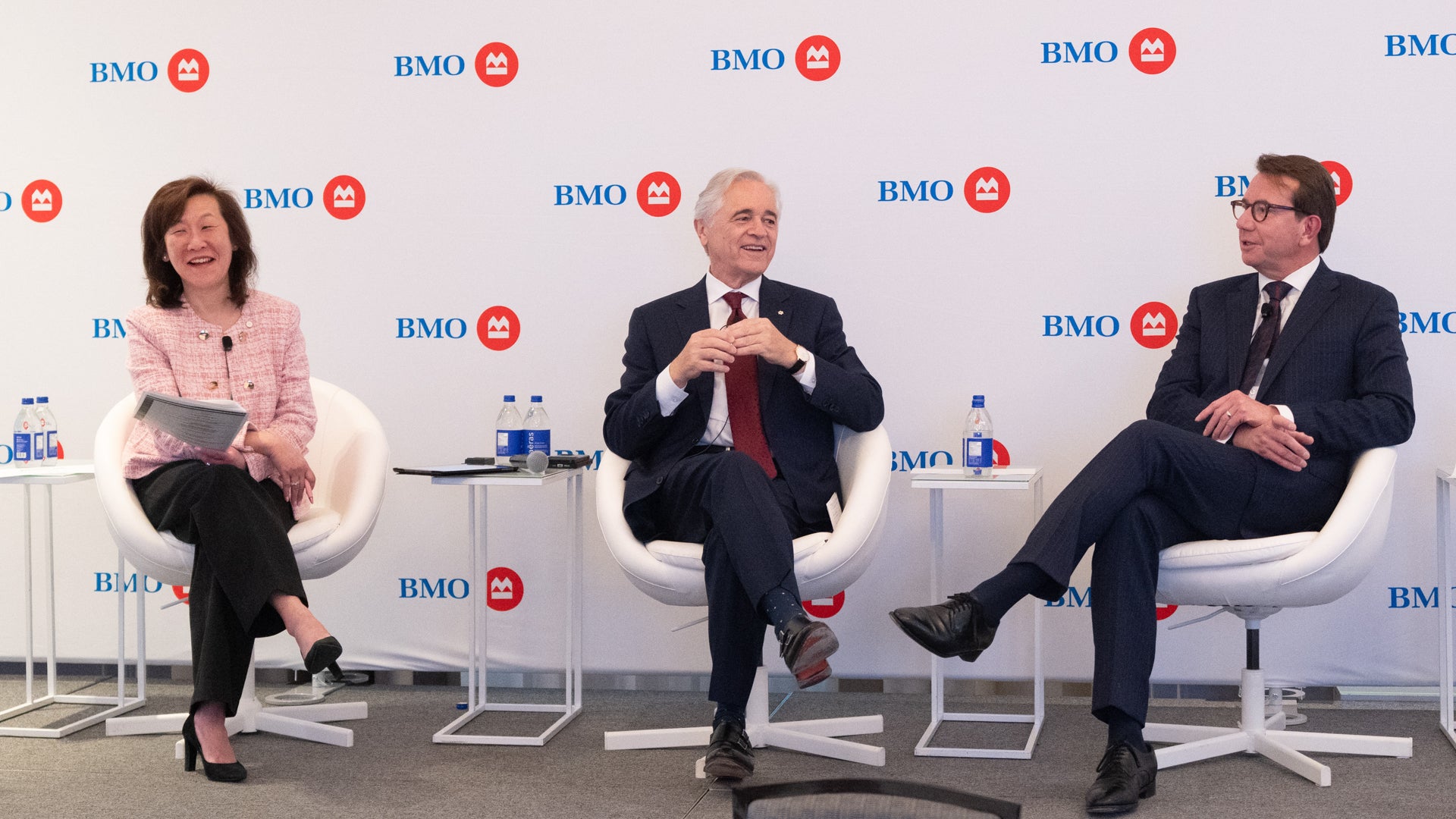
Lee has carried that curiosity throughout her three-decade career at BMO Capital Markets, becoming known for her expert analysis on the U.S. economy and commentary on global financial markets and economic activity. Recently, Focus Economics named Lee among the top 73 economists worth following in 2026 from its global network of more than 1,200 analysts. She also regularly shares her insights through media appearances, including as a frequent guest on Bloomberg.
Beyond her professional work, Lee is passionate about making complex financial and economic topics more accessible. Through financial literacy and economic education, she helps audiences better understand the forces shaping the economy and what they can mean for everyday life.