
Friday, March 25, 2022
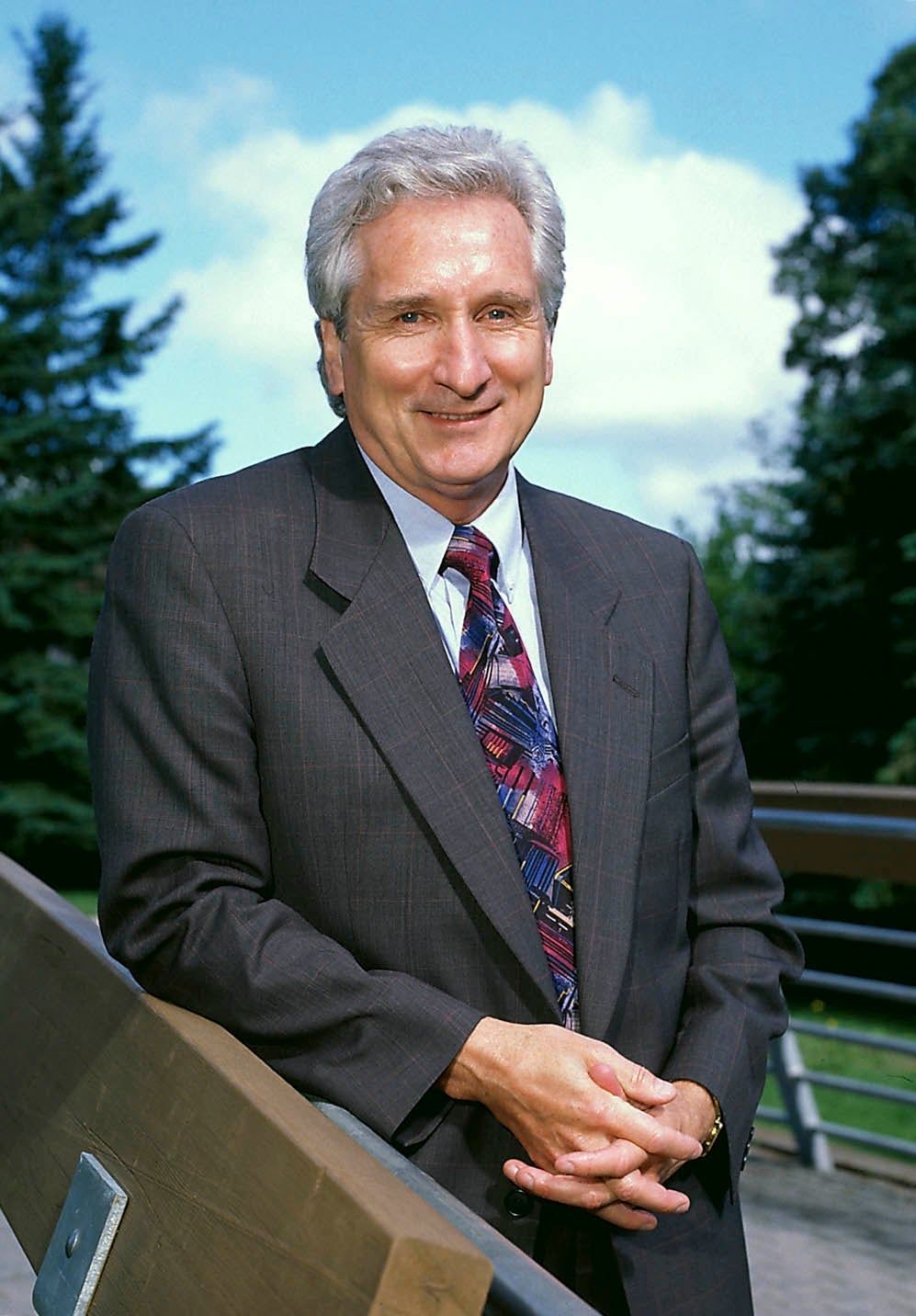
University marks passing of James Downey, president emeritus

Demonstrating their impressive engineering design and debating skills, Waterloo Engineering students won the most first-place awards of any school participating in this year’s Canadian Engineering Competition (CEC).
Undergraduate teams captured three top prizes and one third-place finish in the remote competition hosted by the University of New Brunswick this month.

March 21 is the International Day for the Elimination of Racial Discrimination. It is an opportunity to reflect on the actions we can take to advance anti-racism, equity and inclusion, not just today, but throughout the year.
As places of higher learning, universities have an obligation and opportunity to take leadership in this area. We play an important role in educating our students and the public about the inequalities and injustices that continue to pervade society. We also have a responsibility to address these issues on our own campuses and in our communities.

A recent publication, co-authored by Dawn Parker of the Environment’s School of Planning and Waterloo’s Institute for Complexity and Innovation, reveals 10 facts that help explain the fundamental challenges of achieving sustainability in land use, and point toward solutions.
Published in Proceedings of the National Academy of Sciences of the United States of America, the article applied the expertise of 50 leading land use scientists from 20 countries and highlights key questions whose answers are essential to understand and address land systems pressures.

Russian President Vladimir Putin has publicly claimed Ukraine is not a country. History says otherwise. Ian Milligan is an associate professor at the University of Waterloo whose research focuses on ways historians can use web archives, as well as the impact of digital sources on historical practice. He weighs in on Russia trying to erase Ukrainian history and what Ukraine can do to stop it.
Why is data a potential casualty of this invasion?
War is bad for information preservation.

What a milestone achievement for Madeline Schizas, a student of Urban Planning at the Faculty of Environment, Waterloo! She competed at the Beijing 2022 Winter Olympics recording a personal best of 69.60 points in the women’s short program portion.
Schizas is a competitive skater. The 19-year-old from Oakville, Ontario in her first Olympics accomplishment lifted Canada to fourth from sixth and moved the country into the five-team final round of the figure skating.

Fueled by passion for the final frontier, UW Orbital is building a satellite members hope will someday blast off into space.
The year-old student team is working on CubeSat, a fully functioning satellite, for research in earth-centred orbit, called Eternium-III, and to compete in 2023’s Canadian Satellite Design Challenge.

A terrible tragedy is unfolding before the world as President Putin, the leader of a militarized totalitarian regime, continues his unprovoked assault on Ukraine and its people.
University of Waterloo is unwavering in our solidarity with the innocent victims of this invasion, and we stand in support of those who are calling for an end to the invasion.

Given the current conflict in Ukraine, the University of Waterloo offers its full support to any students, staff or faculty who may be affected by these events. More so, we offer our deepest sympathy to those who may be dealing with the loss of a friend, research colleague or family member in Ukraine.
If you or someone you know is affected by this tragic event and need support, there is help available. Please contact any of the following resources:


Anne-Marie Fannon
> Director, Work-Learn Institute