Future students

Thursday, April 24, 2025

Automation isn’t replacing auditors, it’s rewriting the job description

by Rachel Doherty, School of Accounting and Finance

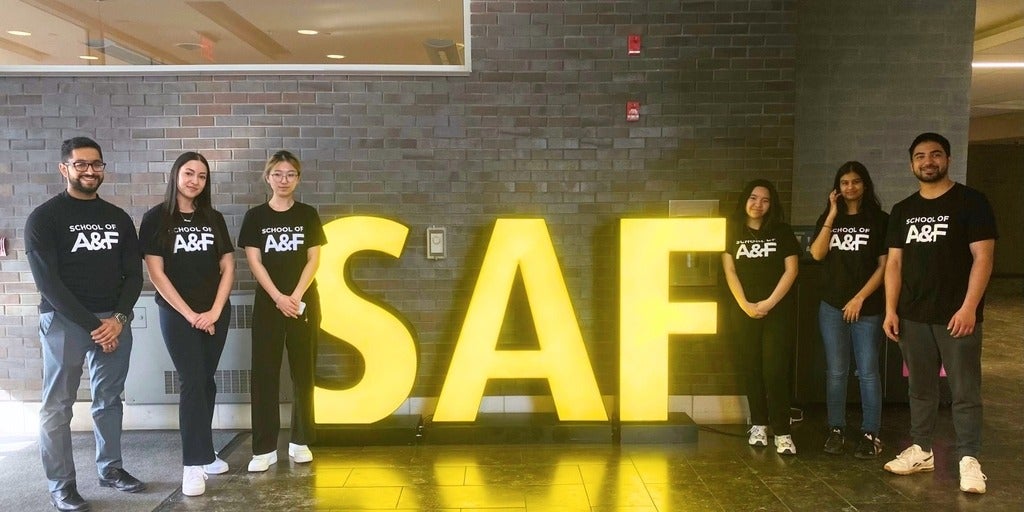
As automation and artificial intelligence (AI) continue to reshape the workforce, the University of Waterloo is at the forefront of finding solutions for this challenge. With the increasing value placed on hands-on data analytics training, the School of Accounting and Finance (SAF) at Waterloo recently hired a new faculty member to specifically lead a new project-based AI course. This means that students won’t just learn about technology, they’ll be solving real problems with it.  
Tuesday, April 22, 2025

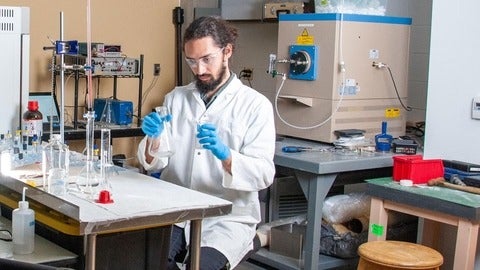
Turning saltwater into solar power

by University Relations

Waterloo researchers, students and alumni are leading innovations to solve the climate crisis by developing sustainable technologies today for the future, and Keith Cleland (MASc ’22) is no exception. 

His passion for environmental sustainability and expertise in electrochemistry converged to launch Aqua-Cell Energy Inc. — a startup dedicated to designing affordable and safe energy storage solutions for commercial and industrial solar power.  

Thursday, April 17, 2025

Measuring methane to protect communities

by Clarissa Charles, Faculty of Engineering

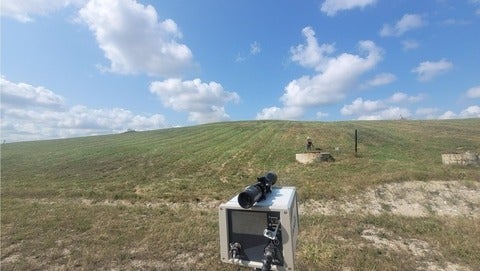
Waterloo researchers are at the forefront of responding to the climate crisis with purpose-driven research and technology, including an interdisciplinary team who are in the field measuring methane emissions to support Canada’s net-zero gas emissions goals. 

Wednesday, April 16, 2025

Driving economic growth in creative industries

by University Relations and Faculty of Arts

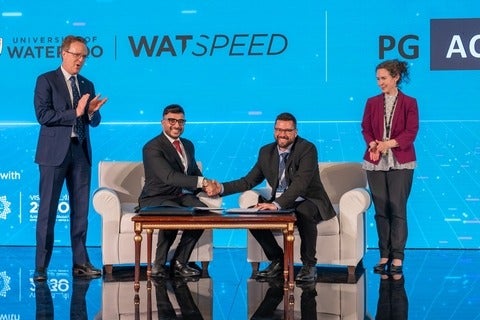
WatSPEED, the University of Waterloo’s professional, and executive and corporate education arm, announced a multi-year partnership agreement with Progressive Generation (PG) Holding represented by PG Studios at the Education Global Exhibition (EDGEx) assembly in Riyadh, Saudi Arabia. The partnership will offer co-branded animation certificate programs designed to equip students in Jordan and Saudi Arabia with the skills and knowledge to excel in competitive global markets.

Tuesday, April 15, 2025

Starting businesses from research for real-world impact

by Charlotte Danby, Faculty of Engineering

When University of Waterloo professor Dr. Carolyn Ren was a child, her father came home one day with a tape cassette recorder. This was China in the early 1980s and such devices were hard to come by, particularly in their rural village. Everyone was curious to see it, no one more so than Ren who was transfixed by its ability to play music as if by magic. She had to understand how it worked so took the device apart. Unfortunately, she couldn’t put it back together again. Determined to never get stuck in such a situation again, the young Ren set her sights on becoming an engineer.  

Friday, April 11, 2025

Six award-winning solutions for urban challenges

by Skyler Hammond, Future Cities Institute

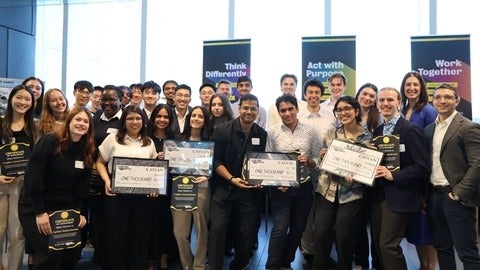
From AI-powered civic tools to sustainable housing solutions, University of Waterloo students came together to present interdisciplinary projects tackling real-world issues at this year's i-Capstone symposium. 

Friday, April 11, 2025

A bold prediction on tariffs

by Dr. Victor Cui, Faculty of Engineering

U.S. President Donald Trump has launched an unprecedented tariff war against more than 180 countries – what I call “World War Trade” (WWT). I argue that from a competitive dynamics perspective, it’s a strategy that has some merit – for Canada. 

Friday, April 11, 2025

Transforming vaccine production for faster outbreak control

by Nicola Kelly, Faculty of Engineering

A University of Waterloo professor is part of an international coalition revolutionizing vaccine production with new health-care technology. The tech aims to support local vaccine production, cutting  the vaccine production time from nine days to just one day, and save millions of lives and dollars as a result.   

Monday, April 7, 2025

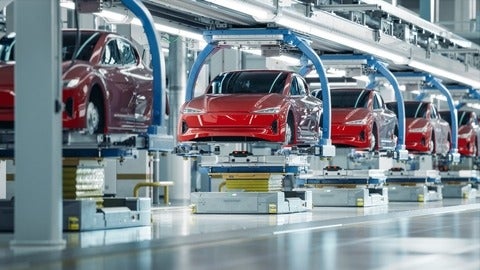
Protecting autonomous vehicle drivers from cyberattacks

by Charlotte Danby & Jack Weatherston, Faculty of Engineering

The increasing integration of cars with advanced technologies such as artificial intelligence (AI) means fully autonomous vehicles (AVs) will likely be a reality by 2050, if not sooner. These self-driving vehicles will not just operate with minimal human intervention, they will make “decisions” to adapt and react to changing situations on the road. Human drivers will literally take a back seat.