Welcome to a new academic year, and the 2024 fall term
I hope each of you had an opportunity to enjoy the summer months.
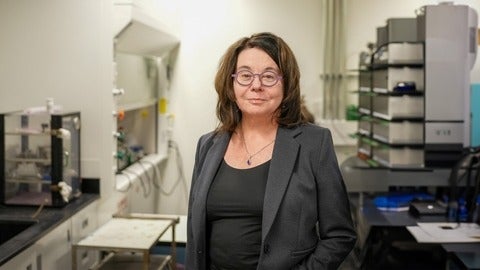
For an energy scientist, few things are more prestigious than receiving a Royal Society U.K. Hughes Medal. Named after Welsh-American scientist and musician David E. Hughes, who invented the first working radio communication system and the first microphone, the Hughes Medal is awarded yearly for outstanding contributions in the field of energy. Although the medal is rarely given to someone outside of the U.K., this year, Dr.
Six recipients of the Loran Scholars Foundation have travelled across Canada to pursue their academic careers at the University of Waterloo.
The Loran Scholars Foundation looks beyond marks when selecting their candidates — Loran Scholars are students who demonstrate integrity, courage, curiosity and a commitment to service.
Loran Scholars will receive awards worth up to $100,000 over four years to support their studies, as they continue to embrace the challenge of making the world a better place for all.
A team of undergraduate Computer Science students placed in the top eight at a recent AI Hackathon with “Skyline,” a project that uses demographic data and machine learning to simulate cities and use these patterns to optimize its transit infrastructure.
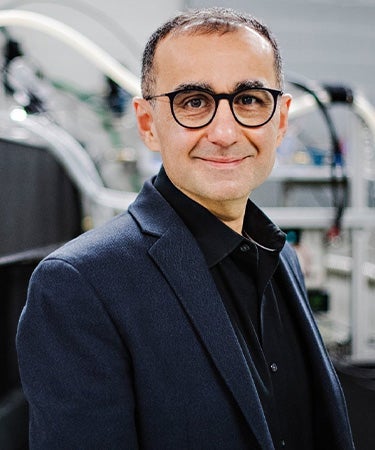
Dynamic nuclear polarization (DNP) has revolutionized the field of nanoscale nuclear magnetic resonance (NMR), making it possible to study a wider range of materials, biomolecules and complex dynamic processes such as how proteins fold and change shape inside a cell.

Dr. Raffi Budakian
University of Waterloo researchers take pride in identifying and solving significant, complex challenges facing humanity and our planet.
Recently, the Canadian Institutes for Health Research (CIHR) announced that seven Waterloo researchers will receive funding to carry out ground-breaking work to improve our nation’s health and strengthen our health care system.
The CIHR is Canada's leading federal funding agency, collaborating with partners and researchers to support health-care discoveries and innovations.
Now that ground has been broken on the Waterloo Eye Institute and construction is about to start in earnest, the University of Waterloo School of Optometry and Vision Science is moving its Waterloo campus clinic and all its specialty services to a convenient nearby location.
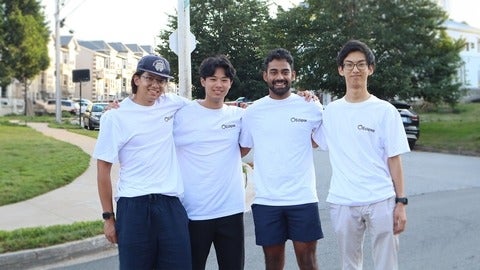
Overwhelmed with credit card options and obscure information, four young co-founders started Eclipse, which just released a new product to help users manage their finances and maximize rewards.
Co-founder, Mingchung Xia, a third-year computer science student at the University of Waterloo and his high school friends, Krish Kodali, Luke Wang and Nathan Chao, created a smart digital wallet that recommends the best card to use at every payment and provides personalized card suggestions, like Apple Pay but with more advanced features.
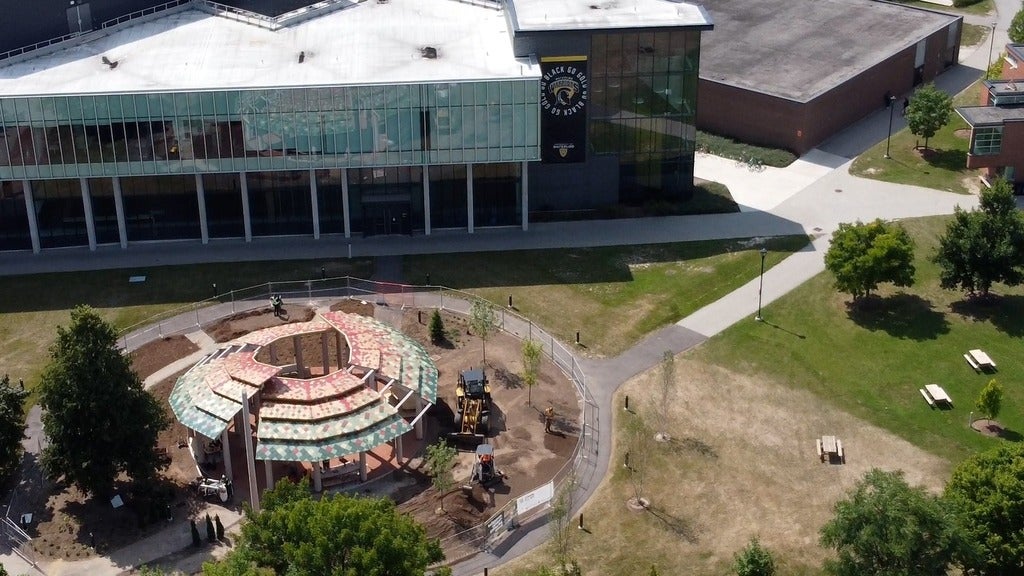
The "Solving the crisis:" series explores the pressing challenges of our time, including climate change, access to health care, housing affordability and more. Each article highlights how Waterloo, a hub of research, innovation and creative thinking, is uniquely positioned to address these issues. Through this series, we highlight the dedication of researchers to tackling global crises and shaping a better future for all.
As leaders in innovation, University of Waterloo students approach challenges differently in pursuit of solutions for a complex future.
Recently, a team of 11 undergraduate students at Waterloo participated in Canada’s first microgravity research competition for students, the Canadian Reduced Gravity Experiment Design Challenge (CAN-RGX), where they presented their research at the Canadian Space Agency headquarters in Longueuil, Quebec and won the Overall Excellence Award.