Finding balance while working from home

Alexis Joy Nagum
Executive Communications Coordinator
When it comes to work, I'm someone who thrives with plans and routines.


Alexis Joy Nagum
Executive Communications Coordinator
When it comes to work, I'm someone who thrives with plans and routines.

Ryan Aldous
Former public affairs coordinator, Univeristy of Waterloo
When the COVID-19 pandemic first hit, I was concerned about my job security.
The start of the Spring Term, at the height of COVID, had instructors moving their courses to a remote format with students spread across time zones. It changed delivery, assignments and testing as in the case of Anton Mosunov, an award-winning lecturer in the Faculty of Mathematics who altered the MATH 135 midterm to an oral exam.
The internet’s cultural record has been growing at an unprecedented rate, accumulating hundreds of billions of webpages. Unless we have a way to retrieve those pages, that history could be lost. Enter Ian Milligan, a professor in the Department of History and an advocate of web archiving. He is exploring petabytes of cultural heritage data and making it accessible to the public.
“Data is rapidly becoming the building blocks of our histories — more specifically the histories of the 1990s and 2000s. We need to establish ways to work with that information,” Milligan says.
As a little girl, Sophie Janszen-Spitman had always been good at math. She liked participating in math contests, but as she progressed through high school, she noticed fewer and fewer girls participating alongside her.

Sophie Janszen-Spitman, current student
What would our shelter-in-place COVID-19 experiences be like in Canada without engineering technology advancements such as smart phones, Zoom, Amazon or Netflix? What would the mortality outcomes of COVID-19 be without technology advances in health care that have allowed us to decode the novel Coronavirus genome in a month, access geospatial information systems to help pinpoint areas of infection and the use of ventilators to treat critical patients?
In a world where just about everyone has a smartphone it also means that almost everyone has become an amateur photographer. In 2019, more than 657 billion smartphone photographs were taken – and many of them blurry. But help is on the way. A promising new student venture, Scope, is hoping their invention of a new type of optical zoom lens system with electronically tunable optical power will help people take better photos while reducing the battery use, costs, and processing power of smartphones.

April 19 to 25 is National Volunteer Week, a time to recognize volunteers for all that they do.
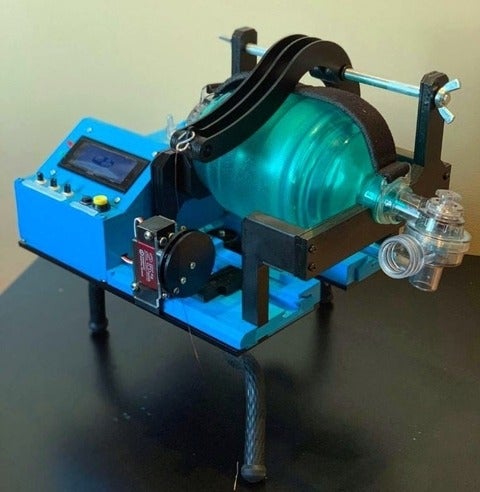
It began as a few words on a sticky note while a team of engineering students at the University of Waterloo brainstormed ideas for their fourth-year design project.
Now, little more than six months later, the students have a working prototype of a portable, low-cost ventilator they hope could soon help save lives on the front lines of the COVID-19 crisis.
“It’s a total fluke, but our project couldn’t be any more relevant than it is today,” says Connor Simmons, one of four team members from the mechatronics and mechanical engineering programs.
A quick pivot and a string of long days allowed Waterloo Engineering to connect with prospective students even as the coronavirus crisis picked up steam last month.
Instead of welcoming applicants and their families to the usual campus-wide open house during the March break - one of countless events cancelled as strict social distancing measures took effect - staff were able to send out more than 12,000 personalized emails with links to online videos.