Skip to main Skip to footer
University of Waterloo
  • Admissions
  • About Waterloo
  • Faculties & academics
  • Offices & services
  • Support Waterloo
  • COVID-19
Search
  • Home
  • 1974-75 Waterloo Warriors Mens Basketball season
  • AI Workshop Fall 2024
  • Real Research
  • The Sultans of String musical performance
  • Admissions
  • About Waterloo
  • Faculties & academics
  • Offices & services
  • Support Waterloo
  • COVID-19
Waterloo News
Chemical composition of a lithium-ion battery
August 23, 2012

Building better batteries

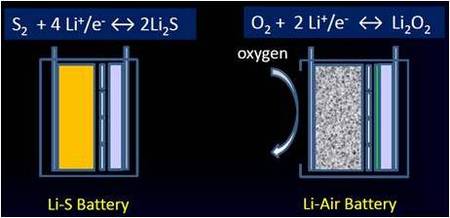
Canada Research Chair Linda Nazar is turning her attention to lithium-sulfur (Li-S) and lithium-oxygen (Li-O2) batteries. Because of their energy density, they have the potential to achieve a far higher energy density than their lithium-ion counterparts.
By WISE Team Waterloo Institute for Sustainable Energy
Engineering
Science
Advancements in Big and Small Manufacturing
Research
  • Share

Diagram describing chemicals contained in different batteries

Plug-in hybrid electric vehicles and pure electric vehicles are better for the planet. They generate less pollution and less greenhouse gas emissions.

So why don't we see more of them on the roads? Blame the battery. The lithium-ion versions currently used simply don't have the capacity that drivers want. A Nissan Leaf, for example, can travel only 100 miles on a single charge.

Full story at the Waterloo Institute for Sustainable Energy (WISE)

Tags

Engineering
Science
Advancements in Big and Small Manufacturing
Research

Related stories

  • Waterloop team at work on pod

    Read more

    Waterloop looks forward to next round of competition

    Student Hyperloop team returns from competition with fresh ideas for their high-speed pod

  • University of Waterloo sign

    Read more

    University of Waterloo awarded funding to expand access to the Internet

    Research at the University of Waterloo that has the potential to affordably connect billions of new users to the Internet via intelligent antennas will receive $6.1 million in joint funding from C-COM Satellite Systems Inc. (C-COM) and the federal government

  • Waterloop prototype pod

    Read more

    Hyperloop Challenge: Waterloop to unveil levitation video on campus

    The Waterloo student team building the world’s first functional pneumatic hyperloop levitation system will share major milestone

  • Share via Facebook
  • Share via Twitter
  • Share via Google+
  • Share via LinkedIn
  • Share via Email
  • TOP
  • Share
Waterloo news

Find an expert

Contact Media Relations


University of Waterloo
43.471468
-80.544205
200 University Avenue West
Waterloo, ON, Canada  N2L 3G1
+1 519 888 4567
  • Contact Waterloo
  • Maps & Directions
  • WatSAFE
  • Accessibility
  • Privacy
  • Copyright
  • Media
  • Careers
  • Feedback
@uwaterloo social directory

The University of Waterloo acknowledges that much of our work takes place on the traditional territory of the Neutral, Anishinaabeg, and Haudenosaunee peoples. Our main campus is situated on the Haldimand Tract, the land granted to the Six Nations that includes six miles on each side of the Grand River. Our active work toward reconciliation takes place across our campuses through research, learning, teaching, and community building, and is co-ordinated within the Office of Indigenous Relations.