The Faculty of Environment unveils Moccasin Identifier Treaty Marker
A permanent installation creates space for learning, reflection and treaty awareness
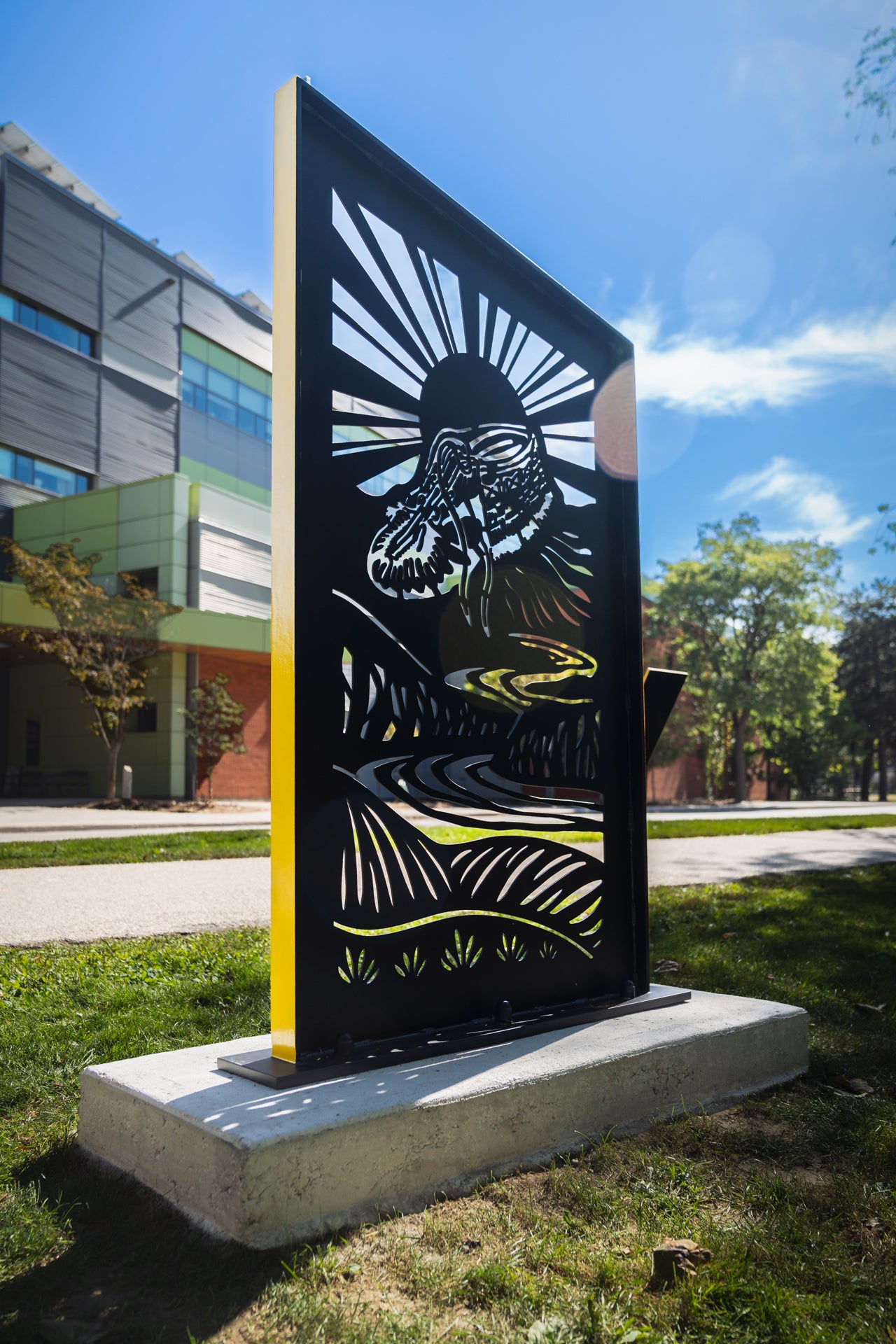
A new permanent art installation at the University of Waterloo is creating space for treaty awareness within the Faculty of Environment and across campus. Developed in partnership with the Moccasin Identifier team and co-designed with the University’s Creative Studio, the Moccasin Identifier Treaty Marker serves as a visible reminder of Indigenous histories, treaty relationships and the ongoing presence of First Nations, Métis and Inuit peoples on these lands.
Founded by Carolyn King in partnership with Mississaugas of the Credit First Nation and the Green Belt Foundation, Moccasin Identifier is a First Nations-led initiative dedicated to deepening understanding of Indigenous Treaties, histories and relationships to the land.
Inspired by the initiative’s educational mission, Amanda St. Marie and Neil Carnegie worked closely with the Moccasin Identifier team over the past few years to bring a permanent treaty marker to Waterloo. The project emerged from a shared vision to create a lasting and highly visible reminder of treaty relationships and the University’s ongoing commitment to reconciliation.
“We are thrilled to see the Moccasin Identifier established at the University of Waterloo as a permanent foundation for treaty education. By etching these historic footprints into the campus landscape, we are not just honouring the past — we are grounding future generations in the shared responsibility of our treaty relationships and building a visible path forward together,” says Laurie Froman, Executive Director, Moccasin Identifier.


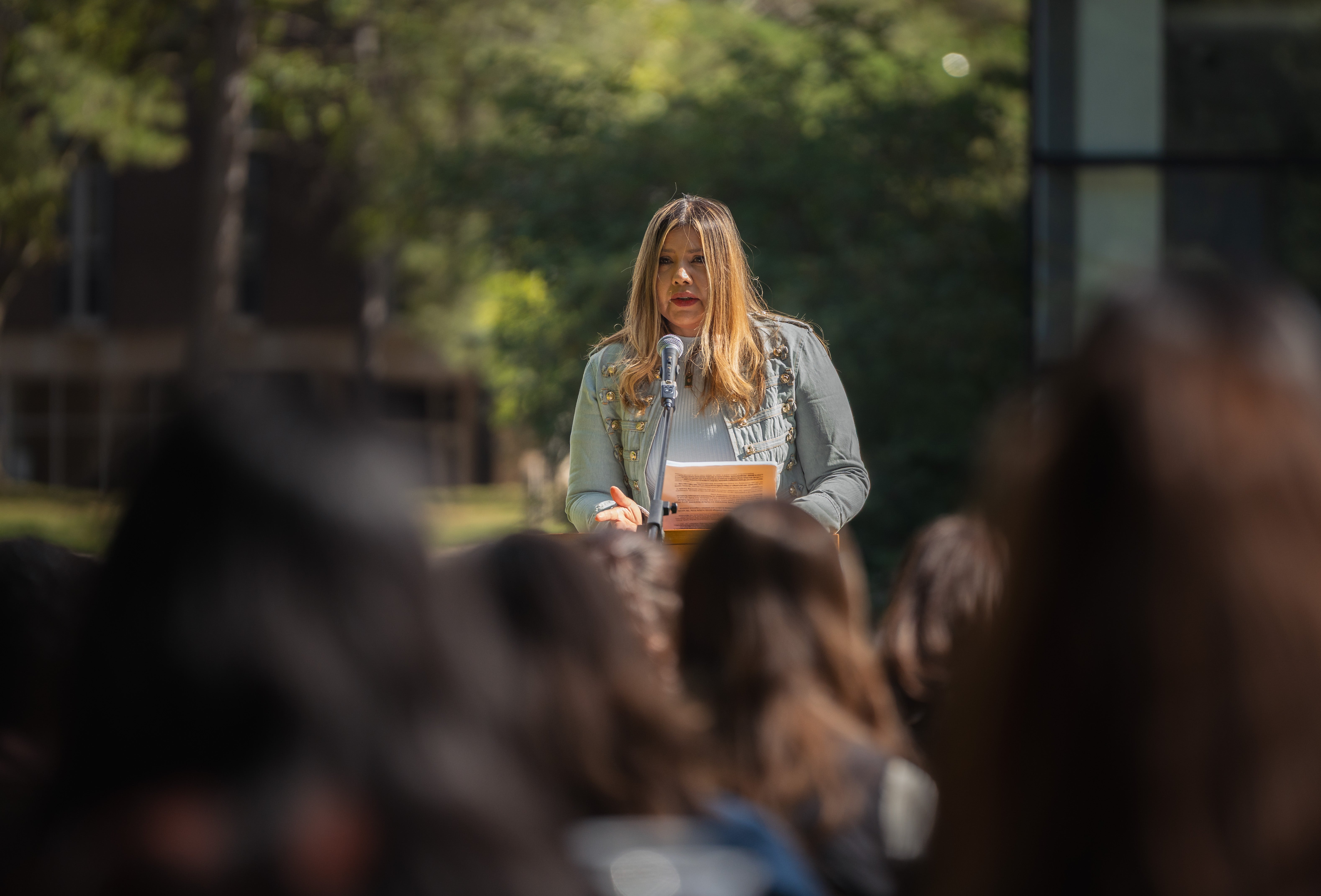
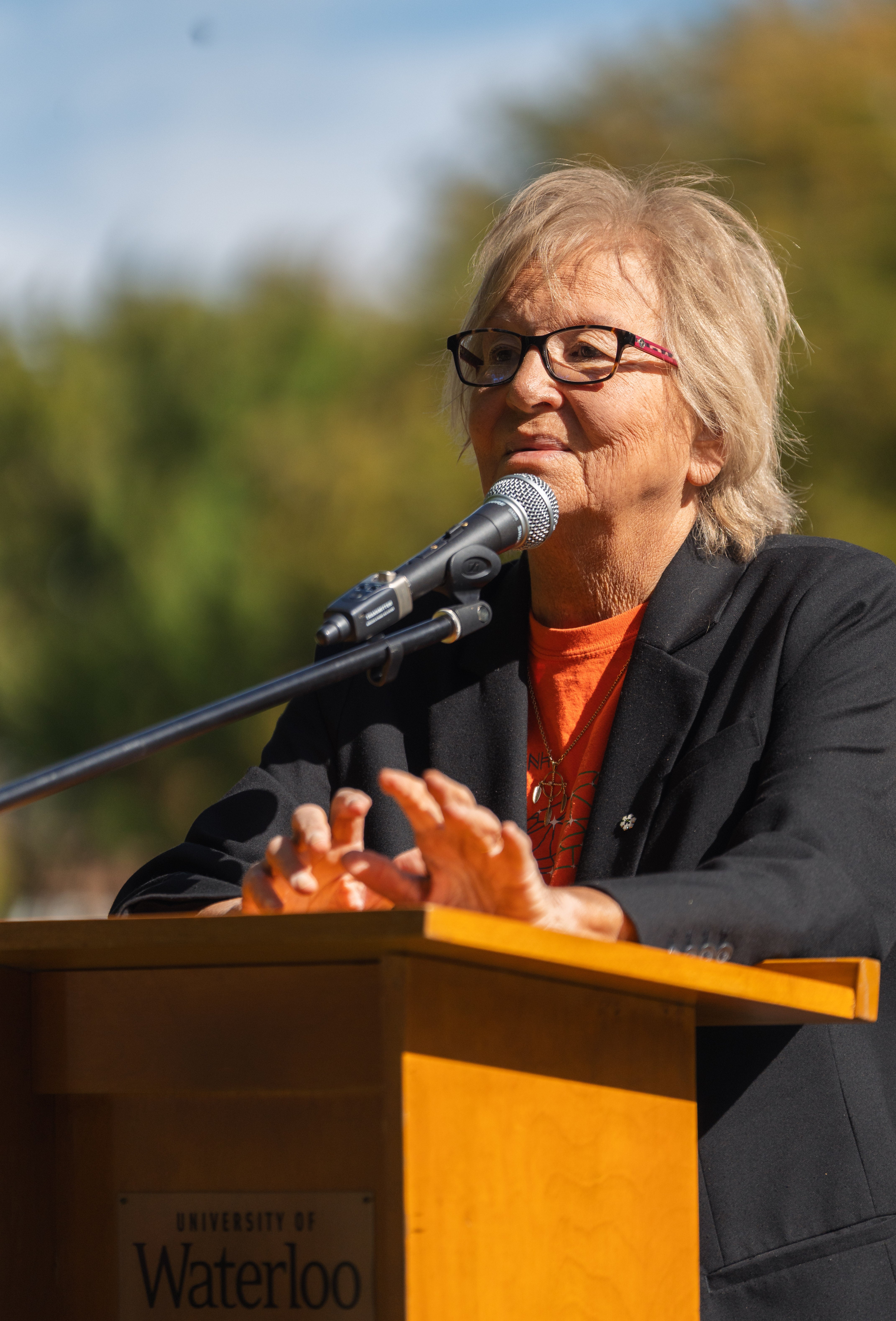
Laurie Froman (left), Executive Director, Moccasin Identifier, and Founder Carolyn King (right) speaking to the Waterloo community on the significance of the Moccasin Identifier.
Located in the green space across from Environment 3, the installation is situated on the traditional territory of the Mississaugas of the Credit First Nation and within the Haldimand Tract, the land granted to the Six Nations of the Grand River under the Haldimand Proclamation. Among the first installations of its kind at a Canadian university, the treaty marker reflects a growing commitment to making Indigenous presence and treaty relationships visible in public spaces.
Inspired by the natural landscape of the Waterloo region, the custom-designed installation incorporates weather-resistant steel and a QR code that connects visitors to educational resources exploring treaty relationships and Indigenous histories. Together, these elements encourage members of the Waterloo community to be active participants in ongoing learning, helping to strengthen reconciliation and treaty education as continuous practices rather than one-time conversations.

Drumming by Indigenous Women's Hand Drum Group, Aki Ogichidaa Kwewak N'Gamowak (Earth Warrior Women Singers), during the welcome ceremony at the Moccasin Identifier treaty marker unveiling.
“The Moccasin Identifier Treaty Marker transforms our territorial acknowledgement into a physical presence that people can see, experience and reflect on every day,” says Amanda St. Marie, Associate Director, Environment Indigenous and Strategic Initiatives. “It’s a powerful example of what our campus can become when Indigenous histories, treaty relationships and ways of knowing are meaningfully reflected in the spaces where we learn, work and gather. My hope is that, over time, other faculties will have their own treaty markers, creating a pathway that leads to the Gathering Space.”
St. Marie’s vision reflects Environment’s broader commitment to Indigenous engagement, education and reconciliation. As students and visitors encounter the treaty marker in the years ahead, organizers hope it will serve as a lasting reminder that reconciliation begins with recognition, understanding and a willingness to learn. By making treaty awareness visible within the campus landscape, the installation invites members of the Waterloo community to reflect on their relationship to these lands and consider how they can advance reconciliation on campus and in their everyday lives.
Banner image: (from left to right) Elder Myeengun Henry, Carolyn King, Neil Carnegie, John Lewis, Laurie Froman and Amanda St. Marie. Photo credit: Harminder Phull, Faculty of Environment.