A love letter in colour
Waterloo alum Rachel Jung (They/Them) designs spaces where people feel seen, building a community centred on care, affirmation and belonging
For Rachel Jung (BA ’23), art is not just about what people see — it’s about what they feel and who feels seen. While at the University of Waterloo, that philosophy came to life through The Great Gaggle, a vibrant installation in the Student Life Centre’s Black and Gold room that invites students to see themselves, and each other, reflected in its array of colours, forms and designs.
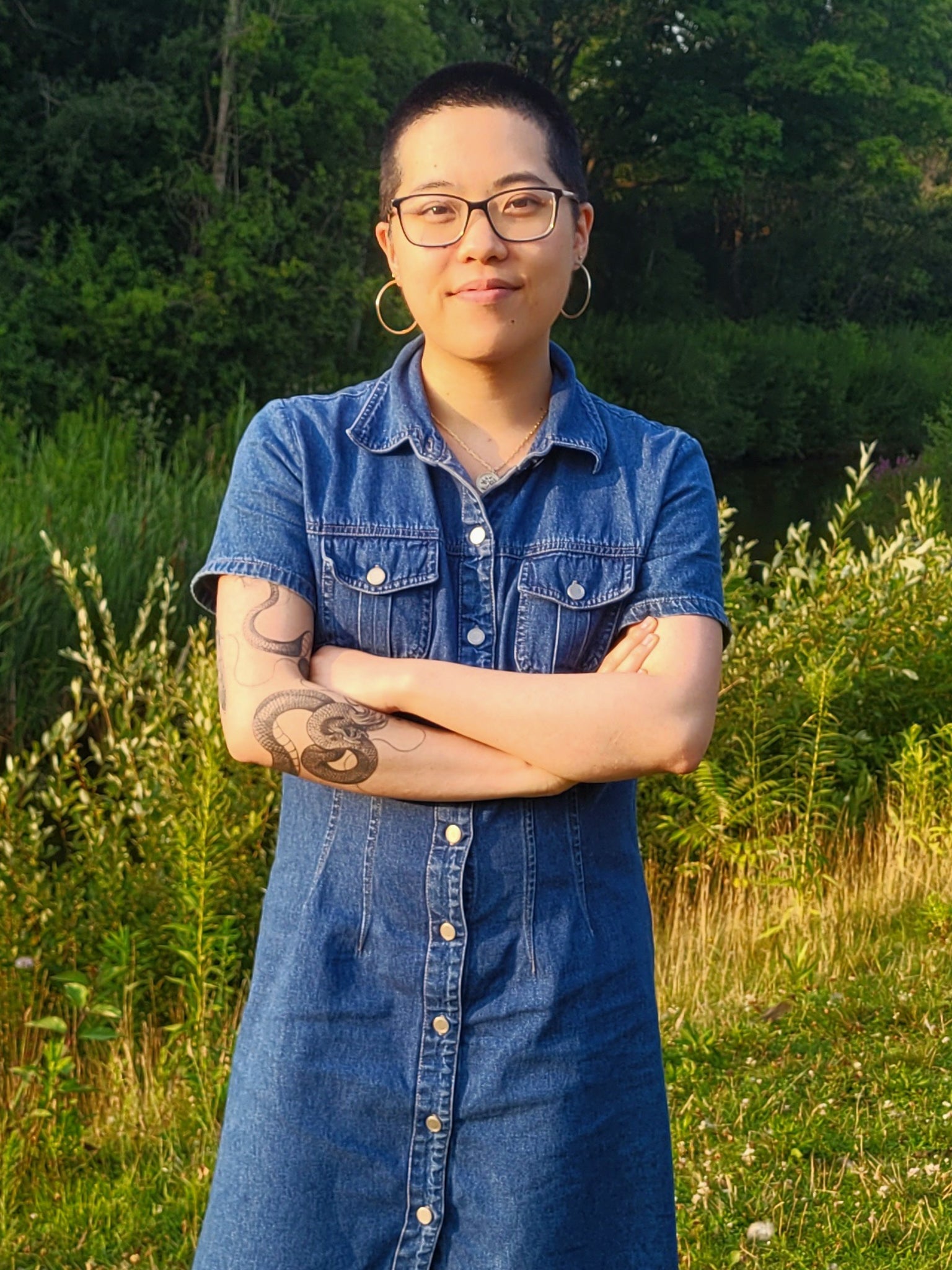
Rachel Jung (They/Them)
Each year, a rainbow-coloured version returns as a flock across campus lawns, bringing renewed joy and visibility. These are key elements of Jung’s work, where representation and community remain at the heart of their artistic process.
“Each Pride, I reflect on what visibility really means for our community,” Jung says. “It can feel very intense and vulnerable, especially in today’s political climate. But it can also be powerful. Through my work, I hope to create connection for students, staff and the broader community, and help people define what Pride means to them.”
“Queerness informs so many parts of who I am, especially my sense of empathy, collaboration and creativity. It’s allowed me to break the mould in how I live and design, freeing me to approach creativity in new ways and connect more deeply with myself and others.”
Grounded in empathy, Jung’s work acknowledges the harm and challenges many communities face, while intentionally holding space for difficult lived experiences and offering hope. It is an approach shaped by their relationship to queerness, community and the belief that art can be both honest and healing.
While they recognize the pressure for creativity to conform, whether to algorithms or expectations of what will succeed, they see art instead as a fundamentally human response to the world. They believe creativity is not only a form of expression, but a way of problem-solving, communicating, questioning and making sense of lived experiences.
“It feels like a love letter — creating work that sparks joy and reaches people who are looking for that light,” Jung says.
For Jung, creativity is deeply tied to self-discovery, a process of finding both one’s voice and the language through which it can manifest.
“When you’re facing that pressure, it becomes even more important to do what feels creatively fulfilling. What feels true to me is supported by the people around me, and that’s what keeps me going.”
Now a Multimedia and Design Specialist with the UWaterloo Life team, Jung has returned to Waterloo to continue creating spaces where art isn’t just seen but felt. In this creative role, they have also mentored a co-op student, a moment that feels full circle, having once been in that position themselves.
Stepping into leadership was initially daunting, Jung has developed an approach grounded in care and representation, shaped in part by the absence of queer and racialized mentors during their own co-op experience. In becoming the person they didn’t once see, Jung has found a deeper sense of purpose, by supporting and uplifting the next generation of Waterloo students.
That same approach carries in their creative work on campus. One example is their contribution to Be You, a Campus Wellness initiative developed in collaboration with UWaterloo Life to reduce stigma around mental health, provide resources while affirming the diverse identities and lived experiences of students across campus. For Jung, the impact of the campaign lies not only in its visibility, but in how it meets students where they are.
“The university experience can be a very pivotal time in people’s lives,” Jung says, reflecting on their own undergraduate years marked by significant transitions and evolving relationships with work, family, friends, community and even themselves. “When I think about Be You, I think about the weight students carry as they navigate so many parts of their lives, and how heavy and isolating that experience can be. I hope it sines a light on their efforts, both inside and outside of the classroom, and how that effort shapes their journey at Waterloo.”
Across other projects, Jung’s work continues to centre care, creativity and community. From designing marketing materials and wall murals for the International Experience Centre to contributing to the Community Leadership Certificate — both recognized by the Canadian Association of College and University Student Services — their work reflects a consistent commitment to creating spaces of belonging.
Most recently, Jung was invited to design merchandise for the Hat Tile Collection released by the W Store based on the Einstein Tile, a 13-sided shape discovered by Dr. Craig Kaplan and his collaborators.
“I hope my work helps people recognize their own capacity to be changemakers,” Jung says. “Pride is a time to reflect on the power of community. Not just visibility, but what it means to truly see and support another.”
As an alum and now a creative at Waterloo, Jung sees their role as keeping doors open and creating space for others to follow. They hope their work serves as a reminder of what’s possible. Especially for the many queer, racialized and marginalized creatives who will pass through those doors, opening countless others and helping shape a campus rooted in care, affirmation and belonging.
Banner caption: Collage of Rachel Jung's art work featuring The Great Gaggle art installation (left) and wall mural in the International Experience Centre (right). Photo credit for banner image: Rachel Jung, UWaterloo Life.