Damage to boreal peatlands fast-tracks climate change
Clear-cutting in peatlands during oil and gas exploration led to 300 per cent more methane emissions
A new study reveals that for the first time, areas of Canada's boreal peatlands damaged by oil and gas exploration have failed to recover as scientists and companies predicted and instead led to a tripling of their methane emissions, with global implications.
Long paths called seismic lines are cut into the landscape to accommodate surveying equipment. Researchers from the Faculty of Environment at the University of Waterloo measured methane gas from plant stems or the soil surface. They discovered that methane emissions in seismic lines were 300 per cent higher in the bogs and were close to 200 in the fens, compared to emissions from undisturbed sections of peatland.
Methane is a potent greenhouse gas that traps heat in the atmosphere, and as global warming accelerates, changing conditions in boreal peatlands will increase the rate of climate change and the scale of its devastating effects. The impact is already unprecedented, with the network of seismic lines in Alberta extensive enough to wrap around the Earth nine times. Similar damage occurs across the boreal regions in the United States, Russia and Scandinavia.
“We all think of CO2 as the bad guy, but methane is approximately 80 times more potent,” said Dr. Percy Korsah, postdoctoral scholar in the Wetland Soils and Greenhouse Gas Exchange Lab at Waterloo. “That’s the danger here because without reparations, the increased methane emissions will continue to get worse.”
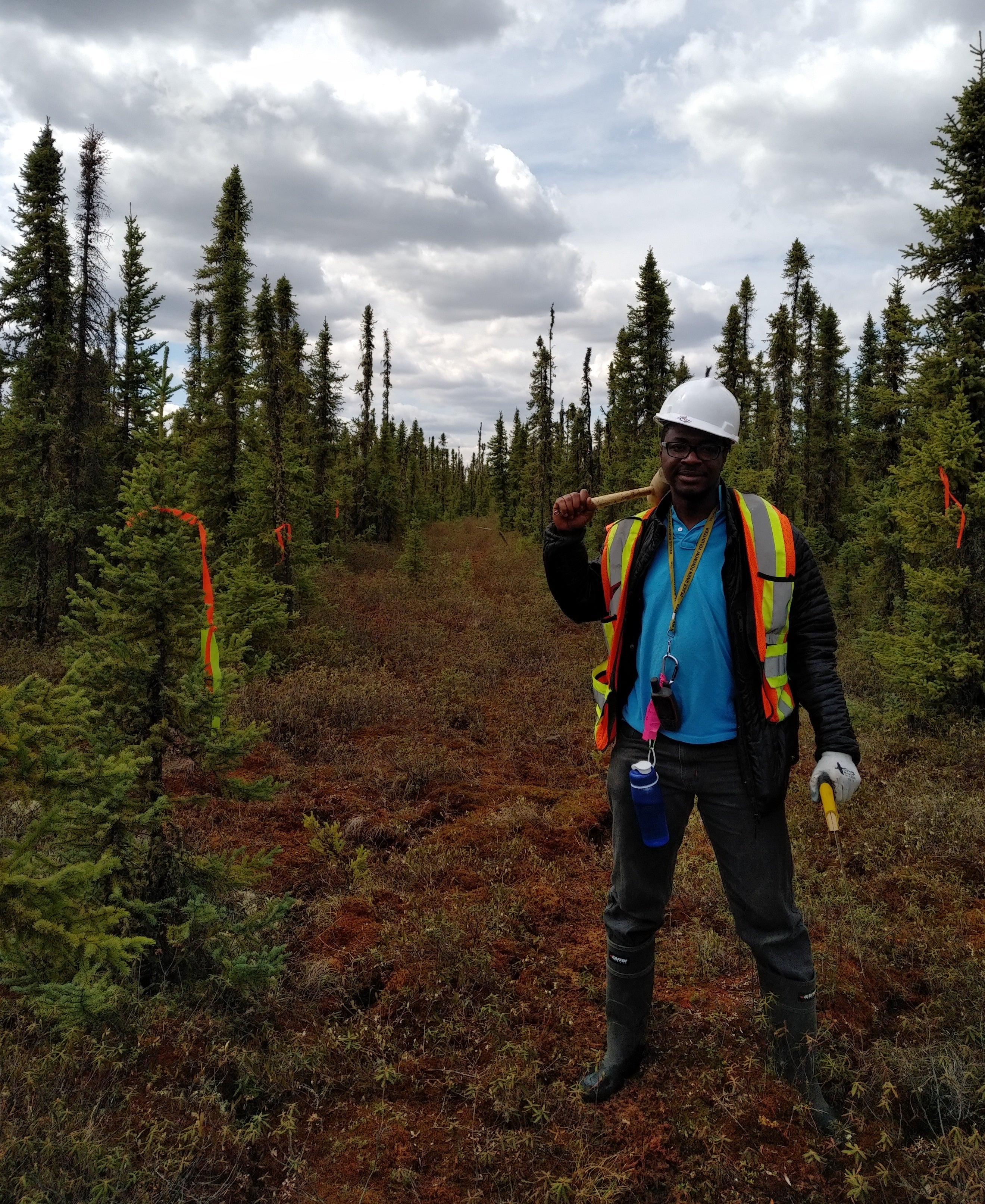
Dr. Percy Korsah measured increased methane emissions from peatlands clear-cut for oil and gas exploration (University of Waterloo).
Moving forward, the researchers in the lab and collaborators across Canada are developing and testing restoration techniques on some seismic-line sites. However, the researchers note that while oil and gas companies are required to restore the land surface once construction is complete, seismic lines have never been included in these restoration efforts because the common belief was that they would grow back.
"In this moment, when there is excitement about profits from resource development projects, we need to ensure that our decisions fully consider the environmental impacts," said Dr. Maria Strack, Waterloo professor and Canada Research Chair in Wetland Climate Solutions. "Greenhouse gas emissions and the costs of restoration could make these projects no longer viable or practical."
The study, Increased methane emissions from boreal peatlands following linear disturbances, appears in Communications Earth & Environment, a Nature publication.