Sustainable Futures

Wednesday, May 15, 2024

Using AI to improve building energy use and comfort

by Media Relations

University of Waterloo researchers have developed a new method that can lead to significant energy savings in buildings. The team identified 28 major heat loss regions in a multi-unit residential building with the most severe ones being at wall intersections and around windows. A potential energy savings of 25 per cent is expected if 70 per cent of the discovered regions are fixed.    
Wednesday, May 15, 2024

Breaking barriers for local climate action with open-source data

by Angelica Marie Sanchez, University Relations

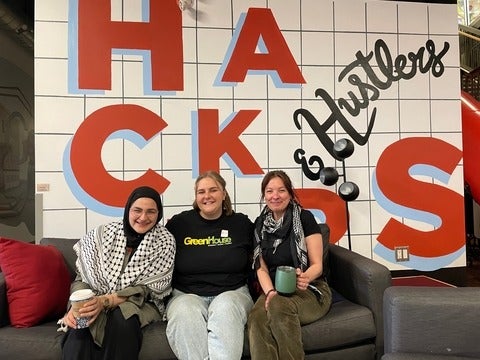
On May 11, University of Waterloo students were invited to participate in the GOODHack24 challenge held at Communitech in downtown Kitchener. The hackathon challenge offered a space for students to brainstorm, explore and develop innovative solutions at the intersection of open data, technology and local sustainable resources to support affected communities experiencing heat inequity.  

GOODHack24 was co-hosted by the City of Kitchener, Go Open Data (GOOD) and GreenHouse, a social incubator at United College. 

Tuesday, April 30, 2024

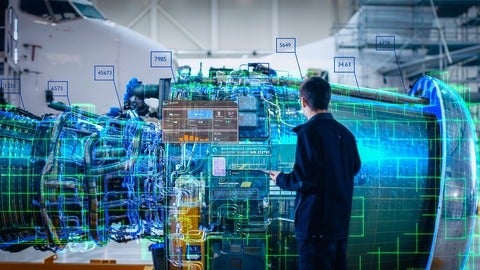
Math professor’s algorithms could solve the problem of ice buildup on planes

by Waterloo Institute for Sustainable Aeronautics

The build-up of ice on an airplane in flight can seriously impair its ability to fly and, in extreme cases, lead to catastrophe. In Dr. David Del Rey Fernández's lab, algorithms and software are being developed to understand these processes and enhance future aircraft designs to prevent negative outcomes.

Friday, April 26, 2024

Designing for a sustainable future using quantum technologies

by Angelica Marie Sanchez, University Relations

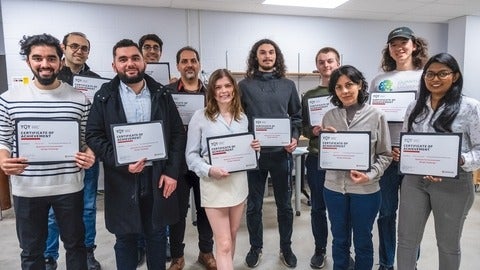
On April 18, Transformative Quantum Technologies (TQT) awarded six research teams and their design ideas for the Quantum for Environment (Q4Environment) Design Challenge, whose green-tech solutions address global environmental issues. Ideas included using quantum computing to improve medical devices, and sensors that can detect microplastics and toxic nanomaterials in our oceans. 

Friday, April 26, 2024

A mission to create a better future

by Darren McAlmont, Waterloo Magazine

Transforming community spaces 

Dr. Troy Glover (PhD ’00) has dedicated his career to exploring transformative placemaking, which he describes as the aspirational efforts to convert urban spaces into meaningful places. These initiatives aim to encourage positive social interactions and enhance the quality of community life. 

A lack of connectedness and loneliness can severely affect people’s health. “Research reveals the mortality impact on lonely and disconnected individuals is comparable to smoking 15 cigarettes a day,” Glover said. 

Thursday, April 25, 2024

New Velocity publication celebrates rich tech landscape at Waterloo

by Jordan Flemming, University Relations

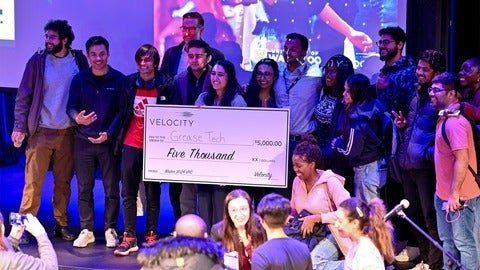
Velocity, the University of Waterloo's largest entrepreneurship program, has released its first edition of Momentum. The publication showcases strong engagement from entrepreneurially minded students and the achievements of those students and other startup founders.

Thursday, April 25, 2024

Global Futures in Focus: Uncovering today’s challenges and tomorrow’s solutions

by Megan Vander Woude, Office of Advancement

In the midst of a rapidly changing world, how can we ensure a prosperous future for humanity and our planet? A new podcast hosted by University of Waterloo chancellor Dominic Barton, called Global Futures in Focus, explores this question and more.

Wednesday, April 24, 2024

Transforming environmental studies into global climate action with AI solution

by Jordan Flemming, University Relations
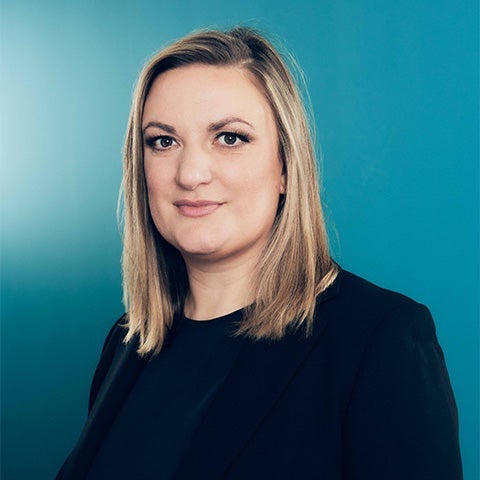
Laura Zizzo

Laura Zizzo
Co-Founder and CEO, Manifest Climate

Laura Zizzo (BES ’04) is co-founder and CEO of Manifest Climate, which offers a software solution that utilizes artificial intelligence to assist organizations in understanding and preparing for climate-related risks by analyzing their climate strategies and comparing them with publicly available global standards and the practices of their peers.