Shaping a sustainable future
A new University of Waterloo initiative aims to shape the future of sustainability for the benefit of the environment, economy and society.
A new University of Waterloo initiative aims to shape the future of sustainability for the benefit of the environment, economy, and society.
A new study led from the University of Waterloo discovered greenhouse gas production is significantly less when biobased residues like compost replaces widely used nitrogen fertilizer during spring freeze-thaw events in cold temperate regions.
“In cold temperate regions like Canada, spring freeze-thaw events contribute significantly to greenhouse gas production which further exacerbates climate change,” said study lead Emmanuel Badewa, a PhD student from Waterloo’s School of Environment, Resources and Sustainability (SERS).
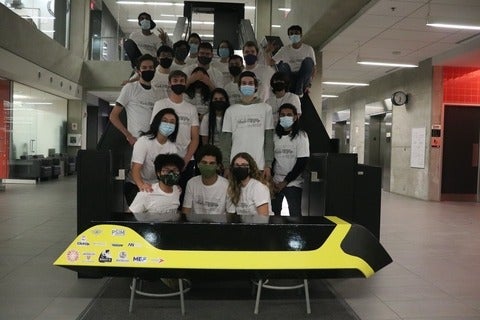
What if I told you that university students were creating the transportation technology of the future? Would you believe this technology will travel faster than a Boeing 747 aircraft, all the while getting power from an electric motor and solar panels?
A new report warns extreme heat is set to cause devastating climate-related suffering in Canada, that if left unchecked, will surpass the 595 heat-related fatalities reported by British Columbia's coroner in 2021, and 86 lives lost in Quebec in 2018.
Many view the first Earth Day as the beginning of the modern environmental movement. Sarah Burch, a professor at the University of Waterloo and Canada Research Chair in Sustainability Governance and Innovation, discusses its relevance more than 50 years on. She is the executive director of Waterloo's Interdisciplinary Centre on Climate Change and a lead author of the recently released report of the Intergovernmental Panel on Climate Change (IPCC), the UN body that assesses the science related to our changing climate.
Linda Mortsch, Robert McLeman and Luna Khirfan are University of Waterloo Interdisciplinary Centre on Climate Change (IC3) members and lead authors in the recently published Climate Change 2022: Impacts, Adaptation and Vulnerability report for the Intergovernmental Panel on Climate Change’s sixth major assessment. The findings of this assessment on the science of climate change are clear — urgent action is required to deal with the increasing risks of a warming planet.
Diversity in STEM is expanding with help from one of Canada’s largest financial institutions.
With a contribution of $1.04 million to the University of Waterloo, Scotiabank is providing support for talented researchers and students, including scholarships for students who are underrepresented in STEM fields. The investment is part of ScotiaRISE, the bank’s 10-year, $500 million initiative to promote economic resilience among disadvantaged groups.
Today the planet is straining under the weight of human development and governments and institutions are searching for innovative answers to protect our planet.

Kelsey Leonard
Professor, Faculty of Environment
> Canada Research Chair in Indigenous Waters, Climate and Sustainability
> Water Institute

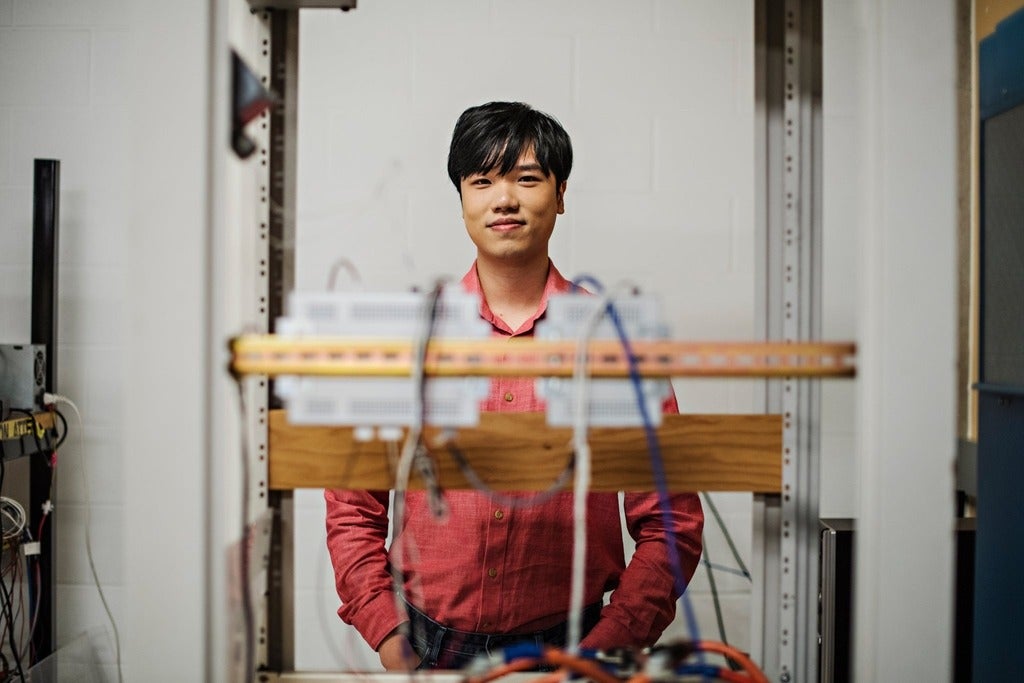
Manh-Kien Tran (BASc ’18, MASc ’20)
PhD student, Faculty of Engineering
> Vanier Canada Graduate Scholarship recipient