Sustainable Futures

Wednesday, January 29, 2025

Tentewatenikonhra’khánion

by Wendy Philpott, Faculty of Arts
talena atfield

Dr. Talena Atfield
Professor, History
> Canada Research Chair, Tentewatenikonhra'khánion

Dr. Talena Atfield’s work to restore and regenerate Hodinohso:ni cultural knowledges starts with the title of her Canada Research Chair: Tentewatenikonhra’khánion, which translates to “We Will Put Our Minds Together.”
Wednesday, January 29, 2025

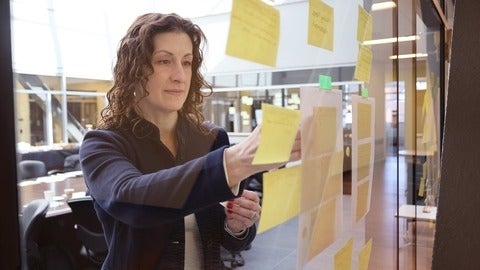
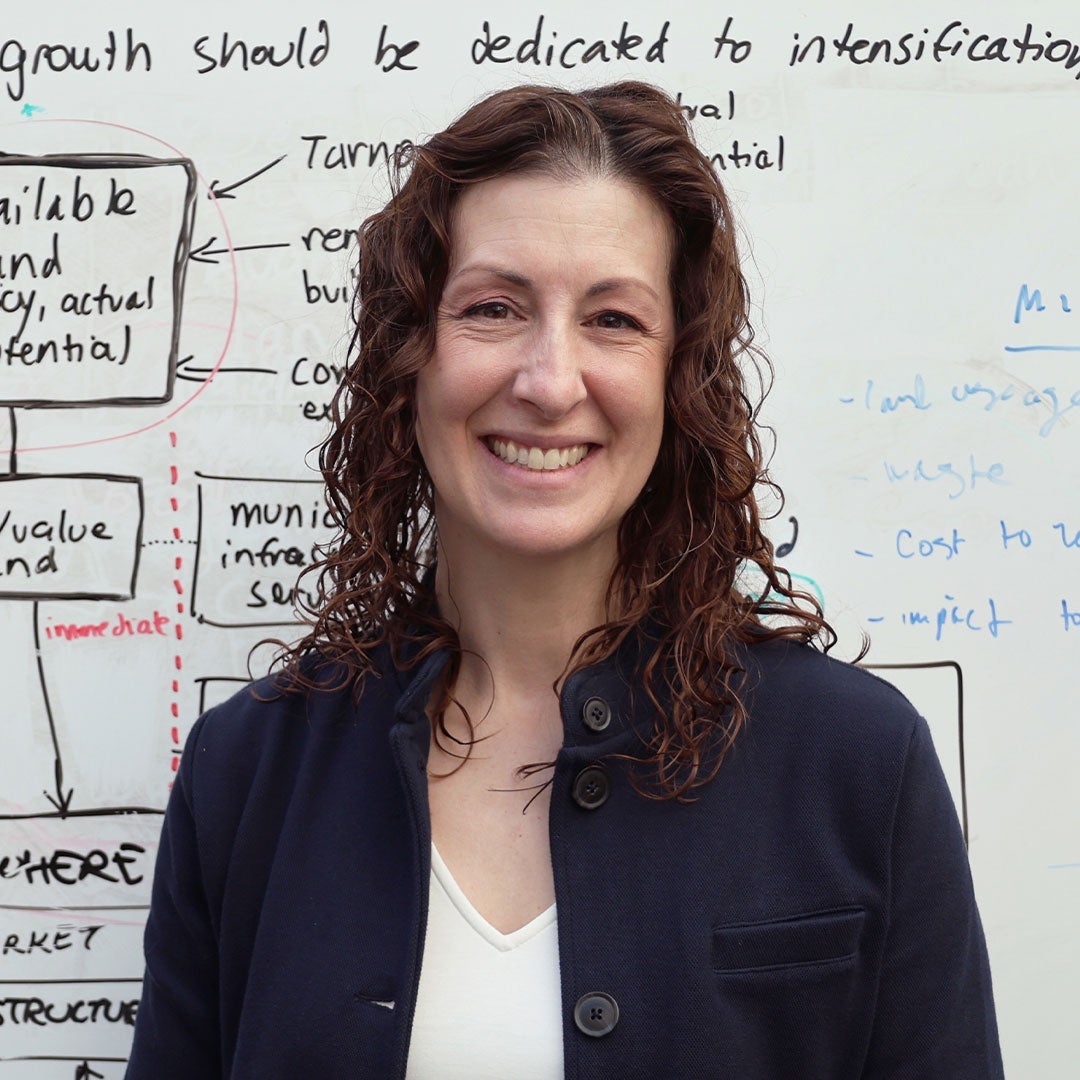
New institute helps local governments build better cities

by Chantal Vallis, Faculty of Environment
leia minaker

Dr. Leia Minaker
Professor, School of Planning
> Future Cities Institute

Cities drive the global economy and are home to vibrant and diverse communities. Yet they’re also facing complex challenges. From rising housing costs and aging infrastructure to climate change, the disruptive impacts of technology and an aging population, the need to address overlapping issues has never been higher.

The new guide, Getting Nature into Financial Reporting, authored by the University of Waterloo's Intact Centre on Climate Adaptation, and supported by the Standards Council of Canada, KPMG LLP and Natural Assets Initiative, was developed with over 120 experts across the country. The guide outlines how local governments of all sizes can start integrating nature into their financial reports today.

Wednesday, January 15, 2025

From co-op to world-class research expert

by Darren McAlmont, University Relations

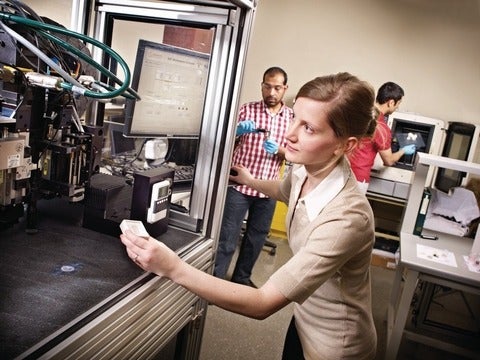
When Dr. Mihaela Vlasea’s (BASc ’08, PhD ’14) high school teacher encouraged her to apply to Waterloo’s inaugural mechatronics program, she didn’t imagine that less than 20 years later, she’d be a renowned expert in additive manufacturing (3D printing). 

“I didn't really know what mechatronics was, and there was nothing to base my enthusiasm around at that time,” she says, “but I was really intrigued that Waterloo had put this together because every time they put a new program together, it skyrockets into success.” 

Thursday, December 19, 2024

O Christmas tree! Growing climate solutions for farmers

by Chantal Vallis, Faculty of Environment

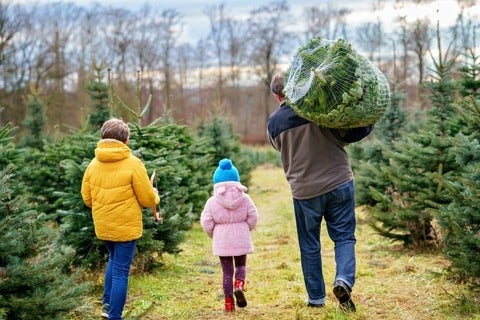
Choosing a real Christmas tree is a cherished tradition in many families and a proven environmentally friendly choice. But like all agriculture sectors, Canadian Christmas tree farmers are facing the impacts of climate change on their growing operations.

Pests plague both the trees and farmers who work the land. Rising temperatures affect summer labour conditions, extreme storm events have triggered crop losses, and reduced snowfall in winter impacts families' experiences when selecting and bringing home their trees during the holiday season.

Monday, December 16, 2024

Waterloo researchers awarded more than $10 million

by University Relations

Twenty-two researchers at the University of Waterloo have been awarded more than $10 million to support their research from the Ontario Research Fund (ORF).  

The ORF Research Excellence program provides up to one-third of the total value of a research project with major strategic value to the province.  

When choosing a Christmas tree, the decision between real and artificial trees should go beyond personal preference and tradition. Dr. Kelsey Leonard, an assistant professor and Director of the Christmas Tree Lab, discusses the importance of considering the environmental impact when deciding between real and fake Christmas trees.

Which Christmas tree (real or fake) is better for the environment?

Friday, December 6, 2024

Waterloo students and alumni named among Forbes 30 Under 30

by Darren McAlmont, University Relations

University of Waterloo students and alumni are changing the game by launching companies with global impact for humanity and our planet. Their remarkable achievements have earned them spots on this year’s illustrious Forbes’ 30 Under 30 list.  

The annual list highlights young entrepreneurs who are making a difference in their fields. Waterloo-linked founders were named in artificial intelligence (AI), green tech, education, food and drink and manufacturing categories. 

Friday, December 6, 2024

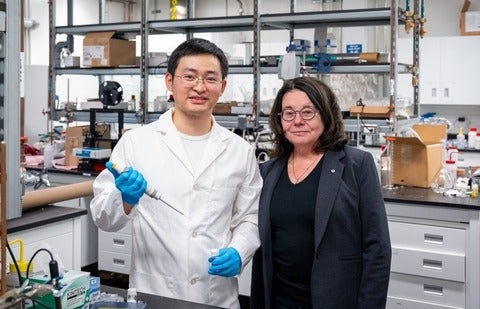
Magnesium electrolyte sparks next generation battery design

by Media Relations

University of Waterloo researchers have made a key breakthrough in developing next-generation batteries that are made using magnesium instead of lithium.

When the idea to create batteries using magnesium was first shared in a seminal academic paper in 2000, that novel design didn’t provide enough voltage to compete with lithium-ion batteries, which are predominantly used in the marketplace. Magnesium is much more abundant and less costly than lithium, which would help further sustainable energy storage.