Community

Wednesday, November 29, 2017

Blueprint helps not-for-profits with tech

by Carol Truemner, Faculty of Engineering

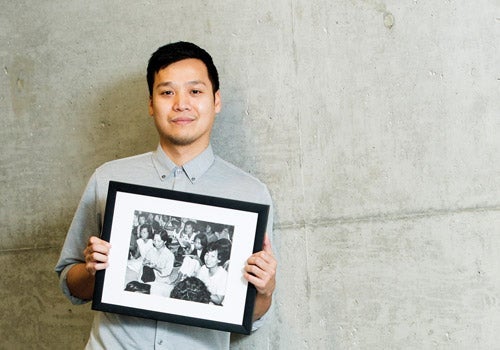
When Luisa San Martin heard about Blueprint on a co-op term at Google in Seattle, she knew the student team was the ideal fit for Waterloo. Started at UC Berkeley in 2012, Blueprint partners with not-for-profit organizations to create technology such as websites, mobile applications and analysis tools — all free of charge.

“Some of my fellow interns at Google were members of the team in California,” says San Martin, a software engineering student.  “When I found out more about it, I thought it was a really cool idea and one that I wanted to bring to Waterloo.”
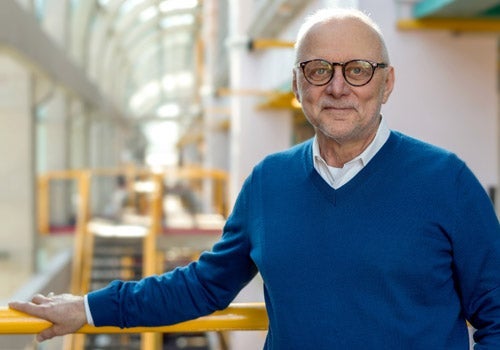
Feridun Hamdullahpur, president and vice-chancellor of the University of Waterloo, signed three agreements last week expanding the institution’s teaching and research partnerships with two universities in Hong Kong.

Two of the agreements are with the Hong Kong University of Science and Technology (HKUST) and include a strategic partnership agreement as well as a memorandum of understanding to increase collaboration.

Waterloo also signed an agreement with Hong Kong’s Lingnan University, where the two institutions have agreed to start an undergraduate exchange program.

Tuesday, November 7, 2017

Eyeing the chance to finally go downhill on concrete toboggan

by Brian Caldwell, Faculty of Engineering

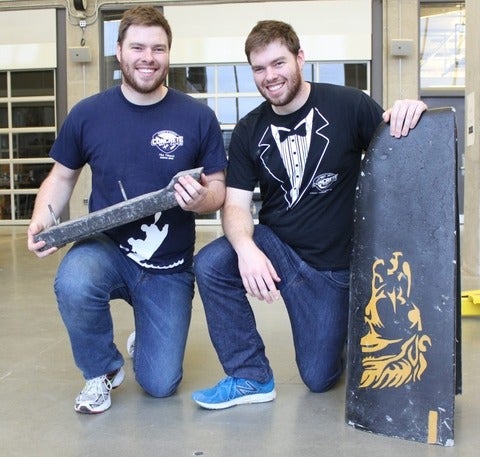
There is at least one advantage – and a bit of drawback – to being former rugby players and identical twin brothers on a concrete toboggan team.

Size, strength and symmetry make Russell and Graham Giles ideal pushers to get a 300-pound contraption with five helmeted passengers off to a fast, straight start at annual races.

And the drawback?

Their usefulness at the top of the hill means the Cambridge brothers have never actually got to ride in a toboggan with a concrete sliding surface as it hit speeds of up to 50 km/h on the way down.

The study, which appears in the Journal of Environmental Quality, describes how the researchers tested private, rural groundwater wells in the Nottawasaga River Watershed for four artificial sweeteners as a way to detect groundwater impacted by human wastewater being released by septic systems in the area.

Artificial sweeteners are ideal human wastewater tracers as they exit the human body essentially unchanged and are not completely removed by most wastewater treatment processes.  Human wastewater contains relatively high concentrations of artificial sweeteners.