Global Futures

Friday, July 19, 2024

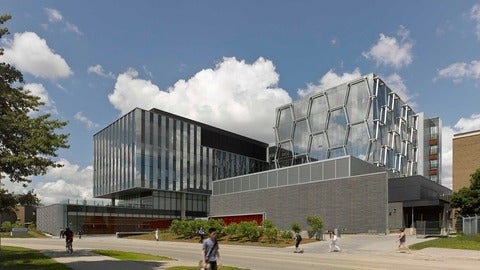
Solving the crisis: Rising urban temperatures

by Jordan Flemming, University Relations

The "Solving the crisis:" series explores the pressing challenges of our time, including climate change, access to health care, housing affordability and more. Each article highlights how Waterloo, a hub of research, innovation and creative thinking, is uniquely positioned to address these issues. Through this series, we highlight the dedication of researchers to tackling global crises and shaping a better future for all.

Wednesday, July 17, 2024

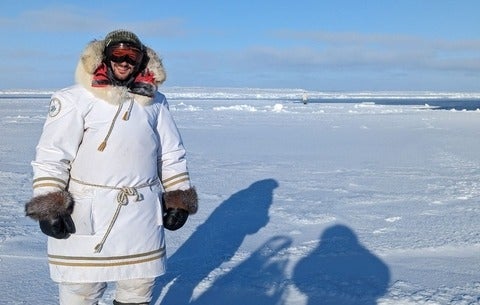
Combining Indigenous knowledge and AI to support safer on-ice travel

by Val Maloney, Faculty of Engineering

Warming temperatures mean shorter ice seasons in Sanikiluaq, Nunavut. As a result, the stretches of landfast ice formed from frozen seawater that Inuit use to travel and hunt on are increasingly unpredictable and unsafe.  

Polynyas, areas of open water and thin ice, occur where ocean currents or wind prevent pack ice from forming. They’re typically found in the same locations each year enabling travellers to plan their routes safely. But climate change is affecting this predictability, causing smaller, unexpected polynyas that make travelling across the pack ice risky.  

Tuesday, July 2, 2024

Regulations grounded in research are saving lives by adding restrictions to tobacco

by Jordan Flemming, University Relations

According to Health Canada, about 48,000 people in Canada die from tobacco use each year. Research has shown that tobacco use is a leading cause of preventable diseases and deaths worldwide and efforts to reduce tobacco consumption through regulation and policy measures have significantly contributed to public health improvements.

Strategies supported by science, like the work carried out by Dr. David Hammond and Dr. Geoffrey Fong here at the University of Waterloo, aim to save lives by reducing tobacco-related diseases and promoting public health.

Tuesday, June 25, 2024

Centring underrepresented populations in pharmacy research

by Milana Madzarac, Faculty of Science

Underrepresented populations have been historically excluded from clinical trials including women, racial and ethnic minority groups, and pregnant, lactating, pediatric and geriatric populations. While the importance of including these groups in clinical trials are slowly being recognized and remedied, there are still questions in how currently prescribed drugs affect these populations, including the safety and efficacy of the medications. 

Mira Maximos

Monday, June 24, 2024

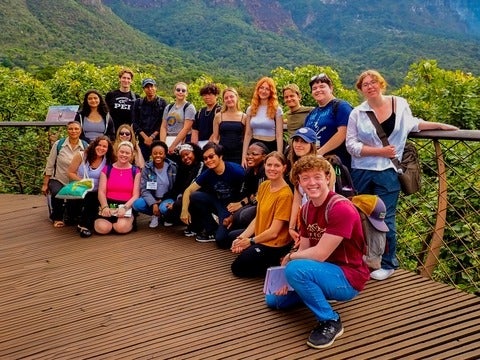
Indigenous students tackle climate change in South Africa

by Emily Brant, Office of Indigenous Relations

A group of Indigenous students from the University of Waterloo were among a delegation who visited Cape Town, South Africa this spring to gain international perspectives on environmental issues.

Monday, June 24, 2024

Launching future space explorers

by Charlotte Danby, Faculty of Engineering

A team of five Indigenous students from the University of Waterloo participated in the First Nations Launch, an annual high-power rocket competition sponsored by NASA’s Wisconsin Space Grant Consortium (WSGC), designed to provide a unique aerospace learning experience.  

Friday, June 14, 2024

From volunteering to product pitches

by Jack Weatherston, Faculty of Engineering

When Raven Sim receives her degree this June, it will mean the fulfilment of a long-held ambition. "I’ve known I wanted to be at Waterloo for computer engineering since Grade 4" Sim says. Her interest in the subject was ignited during an engineering summer camp and was later cemented when she learned about Waterloo’s co-op program.  

Friday, June 7, 2024

Local leaders break ground on the Waterloo Eye Institute

by Karen Kawawada and Claire Mastrangelo, School of Optometry and Vision Science

The University of Waterloo has broken ground on the Waterloo Eye Institute (WEI), the School of Optometry and Vision Science’s new centre of excellence in vision research, optometric education and patient care. 

Tuesday, June 4, 2024

Government of Canada invests $18.4 million in quantum research at Waterloo

by Elizabeth Kleisath and Samantha Clark, Institute for Quantum Computing

The Institute for Quantum Computing (IQC) at the University of Waterloo is pleased to congratulate IQC Canada Inc. for receiving $18.4 million in funding over the next five years, from Innovation, Science and Economic Development (ISED) Canada’s  Strategic Science Fund (SSF). 

Monday, May 27, 2024

‘In Africa’s youth, the future of science’

by Melodie Roschman, Faculty of Mathematics

On May 27, 2024, delegates from the African Institute for Mathematical Sciences (AIMS) met with representatives of the Centre for Education in Math and Computing (CEMC) and the larger Faculty of Mathematics to celebrate a new phase in their continuing partnership. This represents one of more than 300 partnerships that Waterloo holds with universities and research institutions in more than 50 countries worldwide.