Health Futures

Thursday, February 22, 2024

New technique can quickly detect fentanyl and other opioids

by Media Relations

University of Waterloo researchers have developed a new blood testing method that can detect potent opioids much faster than traditional approaches and potentially save lives.

The method, the latest effort by Waterloo researchers and entrepreneurs to lead health innovation in Canada, can simultaneously analyze 96 blood samples that could contain opioids such as fentanyl in under three minutes – twice as quickly as other techniques.

Wednesday, February 21, 2024

Outstanding plastic waste research earns prestigious Polanyi Prize

by Nicola Kelly, Faculty of Engineering

As the planet faces the pressing challenge of reducing plastic waste in the environment, new strategies for managing plastic waste are urgently needed. One of the biggest roadblocks to addressing the plastic waste crisis is the use of thermosets and rubbers — a class of non-recyclable plastics widely used in infrastructure, automobiles, planes, adhesives, 3D printing and chemical industries.

Tuesday, February 20, 2024

Researchers are using RNA in a new approach to fight HIV

by Media Relations

Society learned about the value of mRNA during the COVID-19 pandemic when we saw scientists and medical professionals harness its power to deliver a vaccine for the virus within a year.

Now, University of Waterloo pharmacy associate professor Emmanuel Ho has developed a novel nanomedicine loaded with genetic material called small interfering RNAs (siRNA) to fight human immunodeficiency virus (HIV) using gene therapy. These siRNAs regulate which genes or proteins are turned on or off in our cells and showed a 73 per cent reduction in HIV replication.


Monday, February 12, 2024

Can hydrogels help mend a broken heart?

by Media Relations

You can mend a broken heart this Valentine’s Day now that researchers invented a new hydrogel that can be used to heal damaged heart tissue and improve cancer treatments.  

University of Waterloo chemical engineering researcher Dr. Elisabeth Prince teamed up with researchers from the University of Toronto and Duke University to design the synthetic material made using cellulose nanocrystals, which are derived from wood pulp. The material is engineered to replicate the fibrous nanostructures and properties of human tissues, thereby recreating its unique biomechanical properties.

Tuesday, February 6, 2024

Fitness tracker for the brain

by Charlotte Danby, Faculty of Engineering

Waterloo-based deep tech startup AdHawk Microsystems recently launched MindLink Air™, everyday glasses that can read its wearer’s eye health and cognitive state using research-grade, camera-free eye-tracking technology. Its real-time insights help the wearer adjust their daily routine to improve productivity and avoid mental fatigue.  

Driven by its founders’ desire to help people, AdHawk is a local success story that exemplifies Waterloo’s innovation and entrepreneurship ecosystem.

Thursday, February 1, 2024

Addressing our global future with expert thought leaders

by Angelica Marie Sanchez, University Relations

“The world continues to face compounding major crises, and education and research are essential to ensuring society is equipped to tackle these challenges head-on,” said Vivek Goel, University of Waterloo’s president and vice-chancellor, in his opening address at the Global Futures 2024 launch event on January 31. 

Waterloo researchers and entrepreneurs are committed to finding and addressing the world’s most pressing challenges with a multi-disciplinary approach. Goel added that in order to achieve this vision, we must start by thinking globally and acting locally. 

Monday, January 29, 2024

Better diagnosing diseases with the help of AI

by Media Relations

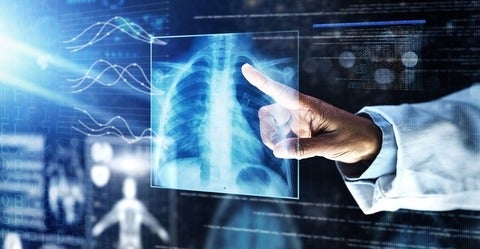
An interdisciplinary team of researchers at the University of Waterloo has developed a more trustworthy method to diagnose diseases such as COVID-19, pneumonia, and melanoma using artificial intelligence (AI) tools.

Waterloo engineering professor Alexander Wong teamed up with other researchers from the university, McGill University, and the National Research Council of Canada to develop a new method to support doctors by enhancing computer-aided diagnosis through deep learning.

Friday, January 26, 2024

Reducing cancer risk with new firefighting gear

by Nicola Kelly, Faculty of Engineering

Recent studies have suggested that firefighters are three times more likely to die of cancer than the general population. This is partly attributed to their gear, which contains polyfluorinated substances (PFAS), a large group of chemicals that are used in many applications, and often elevates the risk to cancer.