Global Futures Fund awards Waterloo faculty and their interdisciplinary teams with more than $2.2 million
The Global Futures Office is proud to announce the inaugural recipients of the Global Futures Fund
How the brain is wired has been understood for a long-time, but how that wiring results in neural activity and cognition remains a mystery. Researchers like Dr. Travis Craddock are using quantum mechanics to gain new insights into the brain and how it works.
Craddock, a Science professor and the Canadian Research Chair in Quantum Neurobiology, bridges the disciplines of biology and physics to map out the physical and molecular processes within the brain.
An innovative method that uses modified versions of a bacterial virus effective at delivering treatments to human cells shows promise as a more inexpensive and efficient way to treat some deadly genetic diseases.
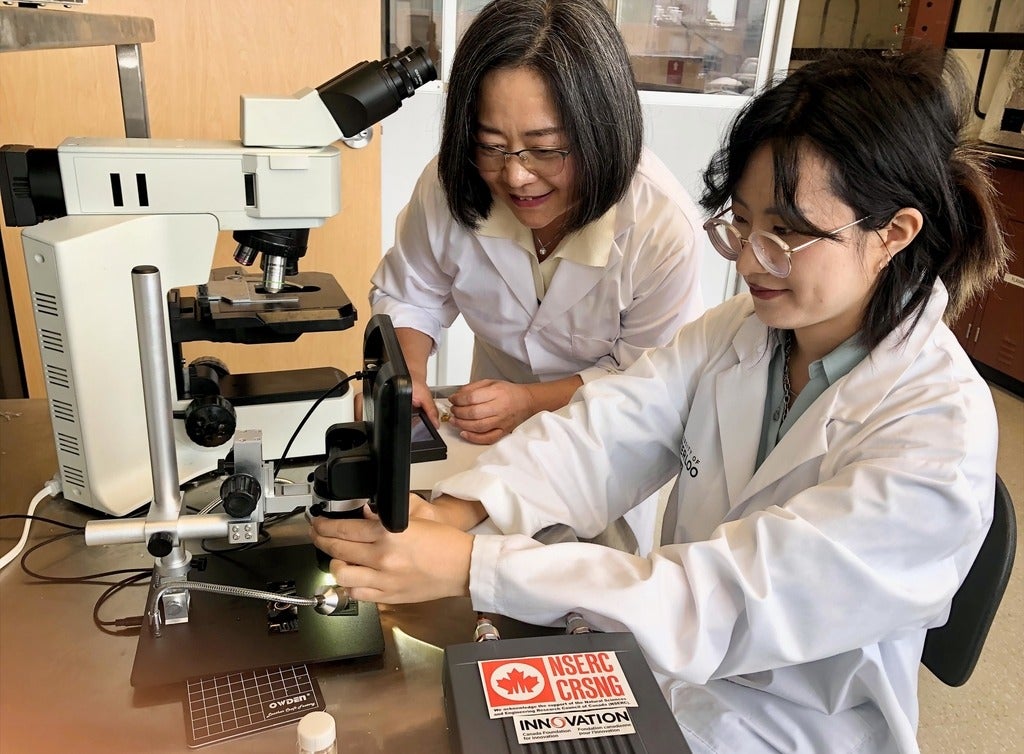
A palm-sized device developed by researchers at the University of Waterloo could help save lives and reduce illness by rapidly and inexpensively detecting toxic bacteria in water supplies.
Contamination caused by E. coli, a bacterium commonly found in the gastrointestinal tracts of mammals, causes an estimated 230 deaths and three million acute illnesses globally each year, mostly affecting babies and young children, according to a study from the National Institute of Health.

As part of a recent Government of Canada announcement, six University of Waterloo doctoral students were named recipients of the Vanier Canada Graduate Scholarship (Vanier CGS).
The Vanier CGS is one Canada’s highest academic honours, awarded to doctoral students who demonstrate academic excellence, research potential and leadership. These scholars join a community of researchers at Waterloo who are tackling today’s most pressing challenges through both fundamental discovery and applied innovation.
Heatwaves are an increasing threat in Canada, especially to vulnerable populations, including those with pre-existing health conditions, children, the elderly and those who lack the resources to beat the heat. Irfhana Zakir Hussain, a PhD candidate in the School of Public Health Sciences and Systems Design Engineering, is working to predict and map which Waterloo neighbourhoods are most at risk of harm during heatwaves using new and existing data.
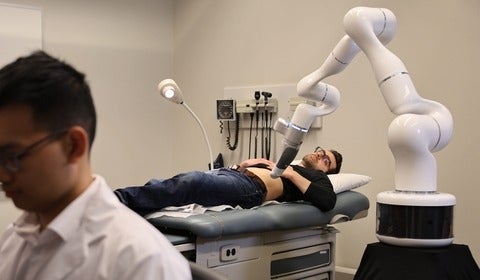
Cobionix, a pioneer in autonomous medical robotics, has secured $3 million in new strategic funding from venture capital firm TitletownTech. The firm, whose backers include Microsoft and the Green Bay Packers, specializes in digital health, agriculture, manufacturing, logistics and entertainment.
Dr. Zainab Abdurrahman, the first Black female president of the Ontario Medical Association, sees herself as a bridge builder.
A clinical immunologist and allergist, she initially studied surgery in medical school before realizing that her love for communicating with patients made her ideally suited for clinical work. It’s her MMath in Biostatistics (’03) from the University of Waterloo, however, that has given her such a unique perspective.
The Centre for Community, Clinical and Applied Research Centre (CCCARE)'s UW WELL-FIT program collaborated with a study by the Canadian Cancer Trials Group and Waterloo Regional Health Network that showed structured exercise significantly improved survival in colon cancer patients.