Thursday, August 7, 2025
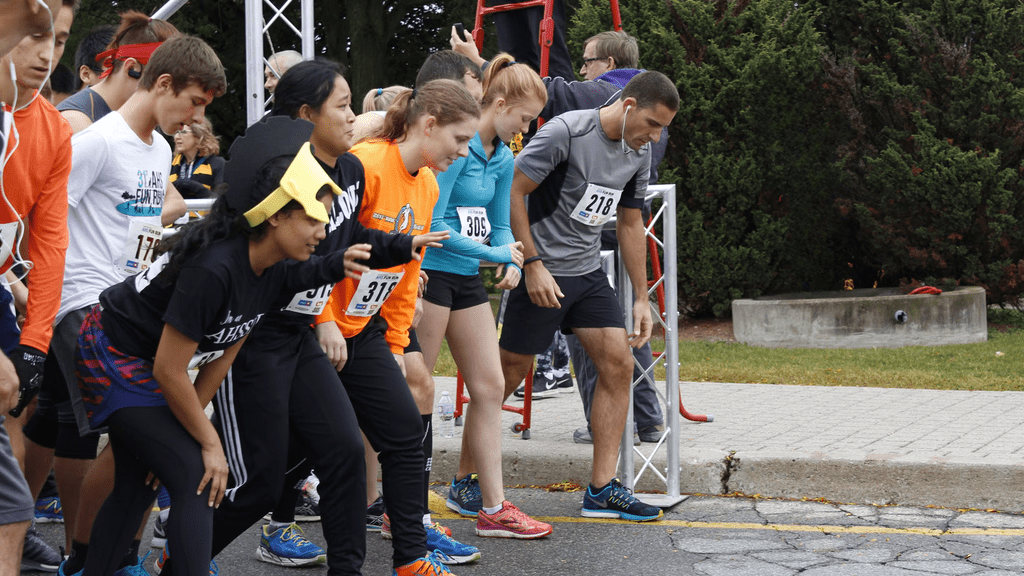
Move. Run. Just have fun!
Looking back at the Fun Run, one of Waterloo’s longest-standing traditions
Looking back at the Fun Run, one of Waterloo’s longest-standing traditions

The Faculty of Health study aims to improve the quality of life for people living with dementia in ethno-racial communities

New research challenges gender bias in aviation performance using eye-tracking technology and flight simulation

From advancing the government’s “tobacco endgame” to improving life experiences for older adults, Waterloo researchers are improving health futures

For 17 consecutive years, the University of Waterloo has been recognized as Canada's top comprehensive research university — driven by a bold, multi-disciplinary approach and strong industry partnerships that turn ideas into impact.

Researchers use thermostat data and AI to identify households most at risk
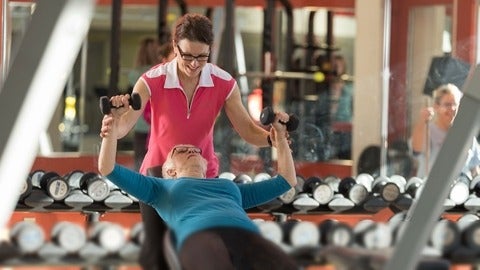
The Centre for Community, Clinical and Applied Research Centre (CCCARE)'s UW WELL-FIT program collaborated with a study by the Canadian Cancer Trials Group and Waterloo Regional Health Network that showed structured exercise significantly improved survival in colon cancer patients.

Kinesiology and Health Sciences Professor Lora Giangregorio has been awarded a Tier 1 Canada Research Chair (CRC) in Bone Health and Exercise Science, with a funding allotment of $1.4 million.
She also received a $75,000 grant from the Canada Foundation for Innovation John R. Evans Leaders Fund (JELF) that is associated with this CRC.
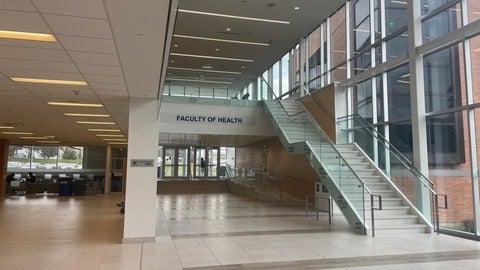
Drs. Geoff Bardwell and Zahid Butt, both researchers in Waterloo’s School of Public Health Sciences, have received funding from the Canadian Institutes of Health Research (CIHR) in the latest competition

Brendan Pinto (BSc ’15, Kinesiology) first took up swimming to improve his fitness, but enjoyment and skill in the sport led him to take it up competitively.
But in 2011, the summer before starting his undergraduate studies at Waterloo, he suffered a leg injury while cross training that resulted in nearly a year of recovery.
“Not being able to swim for the first time had a huge impact on me psychologically, socially and physically,” Pinto says. “A year is a long time to keep having symptoms without any clear idea of whether I’m getting better or not.”