Three Waterloo graduate students earn prestigious Governor General’s Gold Medals for 2026
Top-performing master’s and PhD graduates are honoured for world-class research excellence, alongside finalists advancing innovation across disciplines
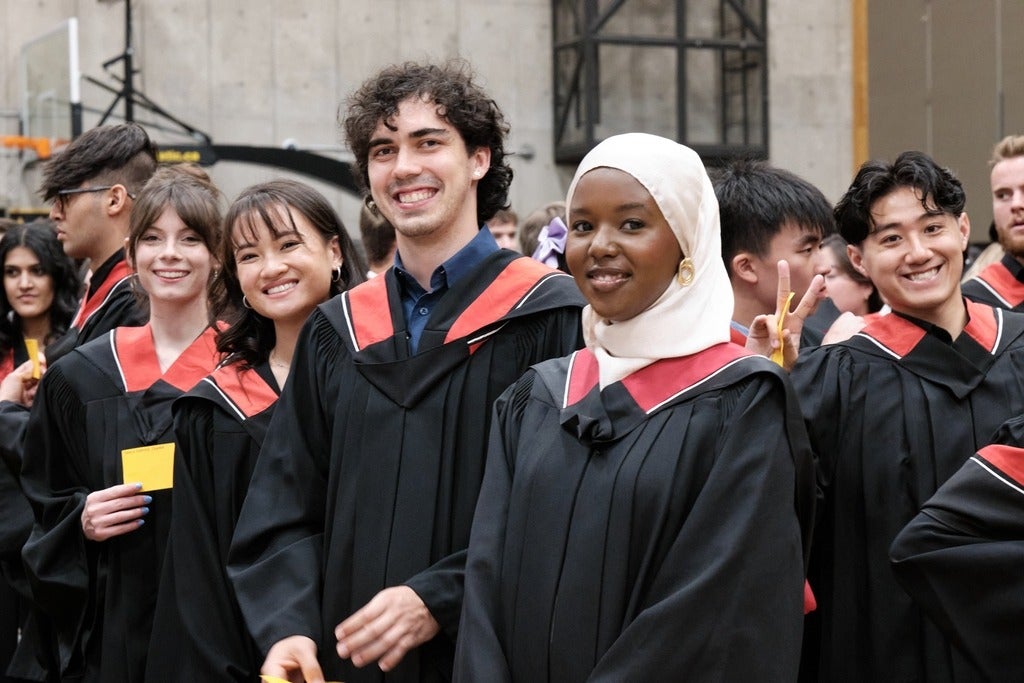
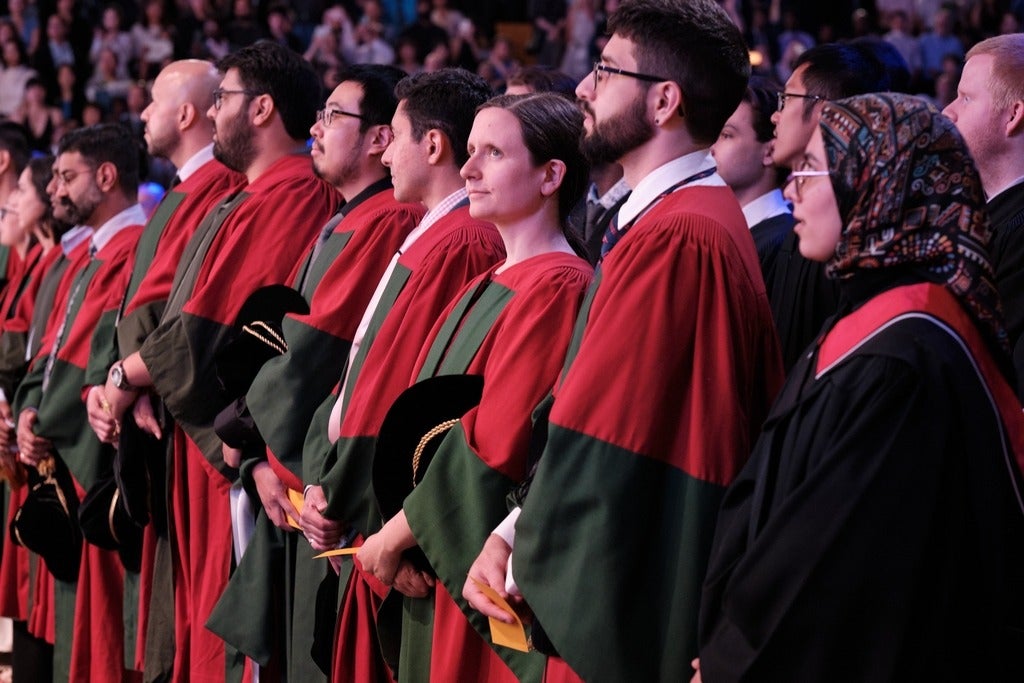
Three exceptional graduate students from the University of Waterloo will be awarded Governor General’s Gold Medals, one of Canada’s most prestigious academic honours, at Spring 2026 Convocation.
The recipients were selected based on their remarkable academic achievement and impactful research. Together, they exemplify Waterloo’s community of graduate scholars driving innovation and discovery.
Here are this year’s medalists and finalists:
Sina Kalantarzadeh (Combinatorics and Optimization, master’s)
Supervisors: Drs. Ricardo Fukasawa and Joseph Cheriyan

Sina Kalantarzadeh was recognized for the highest standing in a master’s program in Waterloo’s Combinatorics and Optimization department. His thesis made original contributions to two areas of optimization. The first part developed new tools for mixed-integer programming, advancing the study of split closures and generalized mixed-integer rounding. The second part studied the minimum multicut problem in networks, improving understanding of linear programming relaxations for planar graphs. The results have implications for operations research and network design.
Dr. Jing Du (Systems Design Engineering, PhD)
Supervisors: Drs. John Zelek and Jonathan Li

Jing Du’s doctoral work in Systems Design Engineering highlights interdisciplinary innovation, combining advanced engineering methods with real-world applications. Her research introduces land cover discovery mapping, which enables these 3D mapping systems to automatically discover and segment unfamiliar objects while still recognizing familiar ones. Du’s achievements reflect a sustained commitment to research excellence and a strong record of scholarly contributions that advance knowledge in her field.
Dr. Nikhita Vinod Joshi (Computer Science, PhD)
Supervisor: Dr. Daniel Vogel
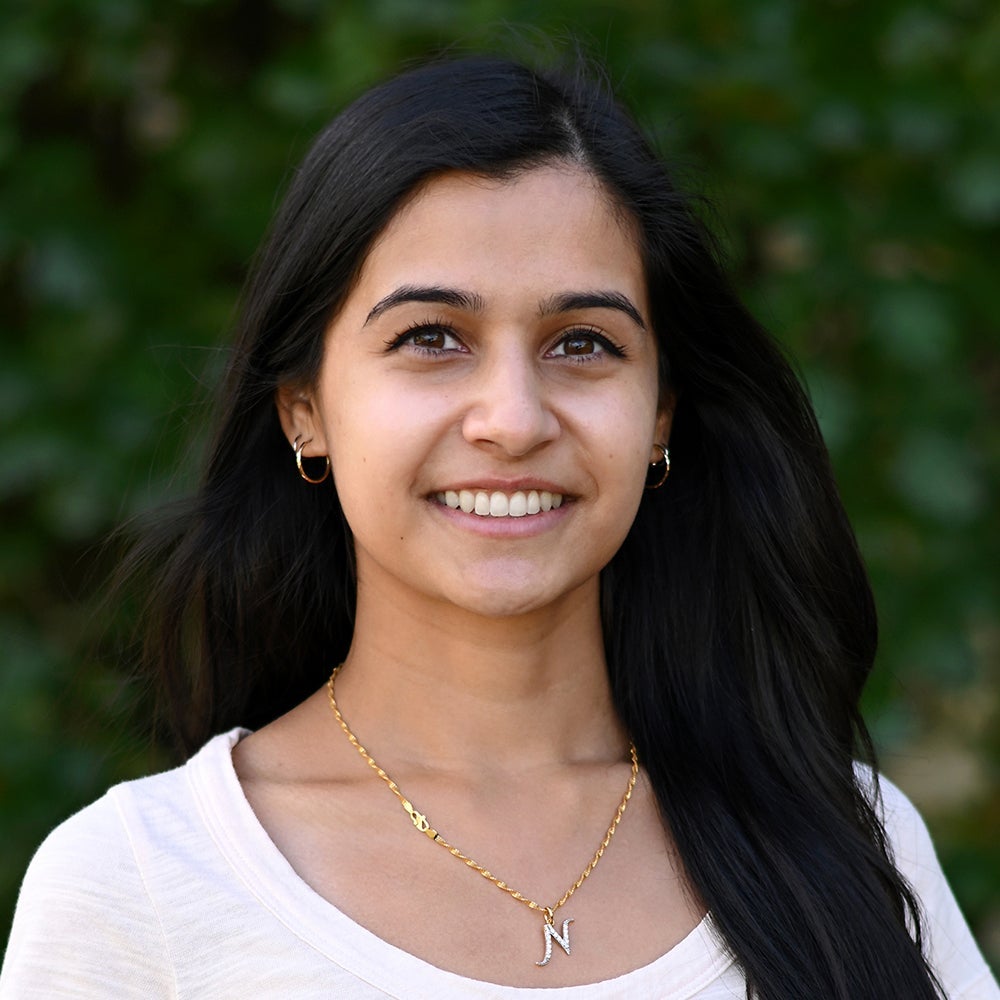
Nikhita Joshi's research in human-computer interaction challenges the common assumption that user interfaces should always make tasks faster and easier. Her doctoral work shows that designed constraints, such as limiting when or how people can interact, can improve how we read, write and think, demonstrated across 15 experiments involving nearly 1,000 participants. Joshi's exceptional academic performance and impactful research reflect Waterloo’s reputation as a global leader in computer science, demonstrating both technical depth and creativity.
Other finalists considered for this year’s Governor General Gold Medal:
Master’s finalist
Sarah Mae Sparkes, Biomedical Engineering | Supervisor: Dr. Veronika Magdanz
Doctoral finalists
Dr. Karmvir Kaur Padda, Sociology | Supervisors: Drs. John McLevey and Owen Gallupe
Dr. Nathanael Thomas Bergbusch, Social and Ecological Sustainability (Water) (Fall 2025) | Supervisor: Dr. Simon Courtenay
Dr. Laura Peach, Public Health Sciences | Supervisors: Drs. Hannah Neufeld and Kelly Skinner
Dr. Irina Bukhteeva, Physics (Nanotechnology) (Fall 2025) | Supervisor: Dr. Zoya Leonenko
Each finalist receives a certificate and the designation of University Finalist for the Governor General’s Gold Medal, reflecting their place among the very best graduate scholars at Waterloo.
The Governor General’s Gold Medal recognizes more than academic achievement, it celebrates the ideas, discoveries and leadership that shape our collective future. From advancing computational theory and engineering innovation to tackling complex global challenges in health, sustainability and society, this year’s recipients and finalists embody the potential of Waterloo graduates to make a meaningful difference on a global scale.
Together, the winners and finalists will carry with them not only a record of excellence, but a shared commitment to building smarter, more sustainable and more inclusive futures for Canada and the world.