Research

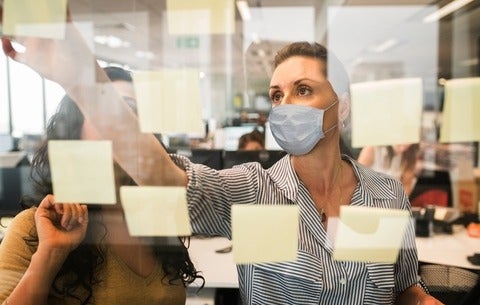
Shift-work and irregular work schedules can cause several health-related issues and affect our defence against infection, according to new research from the University of Waterloo.

These health-related issues occur because the body’s natural clock, called the circadian clock, can be disrupted by inconsistent changes in the sleep-wake schedule and feeding patterns often caused by shift work. To study this, researchers at Waterloo developed a mathematical model to look at how a disruption in the circadian clock affects the immune system in fighting off illness.


New research is shining light on the importance of farmers' markets’ ability to mitigate potential disruptions to distribution networks in the face of system shocks like the COVID-19 pandemic.

In a recent study, the researchers found the markets’ regional characteristics play a key role in the decision to move all or parts of their operations online — and how that decision can help or hinder its surrounding community.

Researchers have answered key questions to help prevent damage and improve the safety of hydraulic systems used for pipelines, water turbines and other applications.

The work, led by engineers at the University of Waterloo, investigates a phenomenon known as cavitation, or the formation and collapse of destructive gas-filled bubbles resulting from rapid pressure changes in liquids.

Dig into Canada’s medical history and you’ll notice a trend, University of Waterloo history professor Heather MacDougall says. Past outbreaks typically led to changes in public health with a collective effort to keep people and communities healthy and to prevent injury and illness. Yet, despite investments and advancements in health care, there are societal changes needed as we recover from COVID-19.

Professor MacDougall sheds some light on what we can learn from the past that could help improve the health and strength of our communities.

Friday, April 9, 2021

The origin of water on planets in our universe

by Elizabeth Kleisath, Faculty of Science

Water is essential for life as we know it – water makes up around 70% of the human body, covers about 70% of the planet Earth, has been found in the far reaches of our universe, and is at the centre of our search for habitable planets around other stars.

But how does this water find its way from interstellar space to the comets and planets it is found on? This was one of the questions that Professor Michel Fich from the Faculty of Science, and his international colleagues set out to research, using observations from the Herschel Space Observatory.

Doublespeak, or the use of euphemisms to sway opinion, lets leaders avoid the reputational costs of lying while still bringing people around to their way of thinking, a new study has found.

Researchers at the University of Waterloo found that the use of agreeable euphemistic terms biases people’s evaluations of actions to be more favourable. For example, replacing a disagreeable term, “torture,” with something more innocuous and semantically agreeable, like “enhanced interrogation.”

Wednesday, April 7, 2021

Waterloo researchers lead remote wearable technology program

by Eugenia Xenos Anderson, Faculty of Health

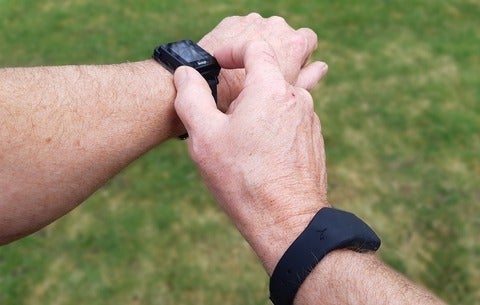
When you have a neurodegenerative disease, like Parkinson’s or Alzheimer’s disease, your symptoms may ebb and flow during the day. Going into a clinic for testing captures your status at that point in time, but how do you gain an understanding of what is happening throughout the rest of the day or over the course of many days?

Wednesday, April 7, 2021

Making space for Indigenous artists to lead

by Wendy Philpott, Faculty of Arts

Logan MacDonald wants to create more opportunities for Indigenous knowledge and leadership within institutions. As one of just a few Indigenous faculty members at the University of Waterloo, the Studio Arts professor’s commitment to Indigenization will play an important part in the University’s actions toward reconciliation.

AI-powered symptom checkers can potentially reduce the number of people going to in-person clinics during the pandemic, but first, researchers say, people need to know they exist.

COVID symptom checkers are digital self-assessment tools that use AI to help users identify their level of COVID-19 risk and assess whether they need to seek urgent care based on their reported symptoms. These tools also aim to provide reassurance to people who are experiencing symptoms that are not COVID-19 related.