Research

Wednesday, August 21, 2019

Speed identified as the best predictor of car crashes

by Media Relations

Speeding is the riskiest kind of aggressive driving, according to a unique analysis of data from on-board devices in vehicles.

Researchers at the University of Waterloo examined data from 28 million trips for possible links between four bad driving behaviours – speeding, hard braking, hard acceleration and hard cornering – and the likelihood of crashes.
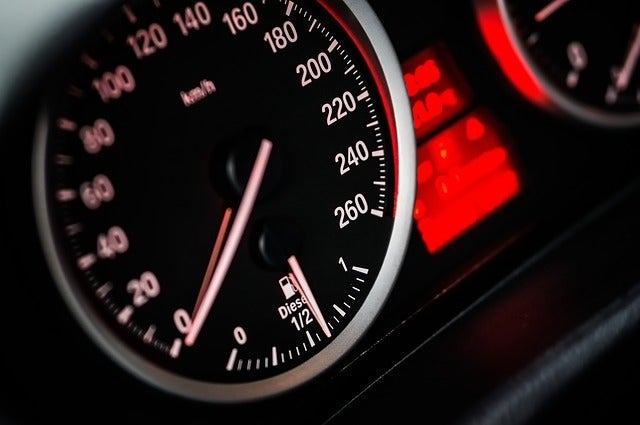

speed meter

Tuesday, August 20, 2019

New tool makes web browsing easier for the visually impaired

by Media Relations

In a new study done in collaboration with Microsoft, researchers found a way to merge the best elements of voice assistants with screen readers to create a tool that makes free-form web searches easier. 

The tool is called Voice Exploration, Retrieval, and Search (VERSE). The study was led by Alexandra Vtyurina, a University of Waterloo Faculty of Mathematics student, along with Adam Fourney, Meredith Ringel Morris and Ryen W. White from Microsoft Research and Leah Findlater, an assistant professor from the University of Washington.

Wednesday, August 14, 2019

Researchers use blockchain to drive electric-vehicle infrastructure

by Media Relations

Researchers at the University of Waterloo have integrated the use of blockchain into energy systems, a development that could result in expanded charging infrastructure for electric vehicles.

In a study that outlines the new blockchain-oriented charging system, the researchers found that there is a lack of trust among charging service providers, property owners and owners of electric vehicles (EVs). 

When people use their computer or smartphone to store information, they may not be able to detect if that information has been manipulated when they retrieve it later, according to researchers from the University of Waterloo. 

“In our study, individuals could rely on an external store when trying to remember some material and manipulations of that store often went undetected,” said Evan Risko, lead author of the study and a professor of psychology. 

A new material created at the University of Waterloo can switch back and forth between a hard solid or a soft gel at the same temperature, a breakthrough that offers an innovative solution to a long-standing challenge with synthetic materials by giving it both strength and shape adaptability.

The two overlapping states of sal-gel, as researchers call it, pave the way for its use as a smart material in a range of technologies including soft robotics, adhesion and adhesives, and aeronautics.

In a recent mixed-method study, researchers from the University of Waterloo surveyed 478 undergraduates and 36 instructors on their perception of technology use in class.

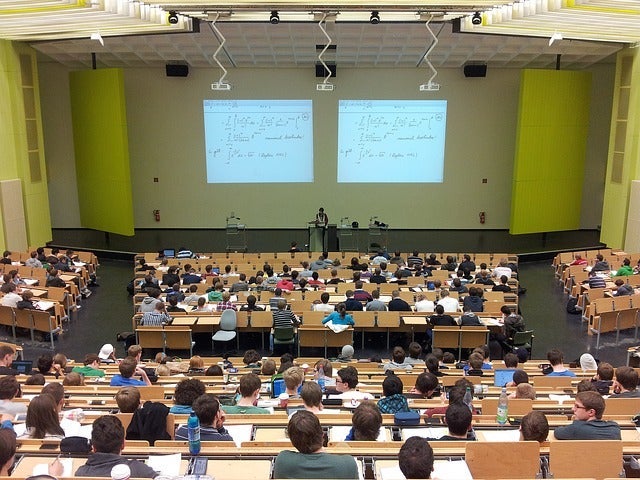
Lecture hall

The survey found that nine per cent of students thought course materials that could be seen on other students’ laptops were distracting, whereas 49 per cent thought that non-course materials on other students’ screens were distracting.