Research

Mitchell Catoen, Devon Copeland, David Ferris, and Rareș Topor-Gosman, who all graduated from Waterloo’s mechatronics engineering program last spring, are up against five other teams, whittled down from over 100,000, in the final leg of the 2019 Hult Prize challenge, the world’s largest student social entrepreneurship competition. 
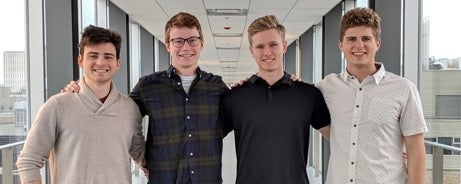
Members of Team Phonic

Thursday, September 12, 2019

What multilingual nuns can tell us about dementia

by Media Relations

The research, led by Suzanne Tyas, a public health professor at Waterloo, examined the health outcomes of 325 Roman Catholic nuns who were members of the Sisters of Notre Dame in the United States. The data was drawn from a larger, internationally recognized study examining the Sisters, known as the Nun Study. 


Multilingual nuns

Monday, September 9, 2019

More than basic shelter

by Carol Truemner, Faculty of Engineering

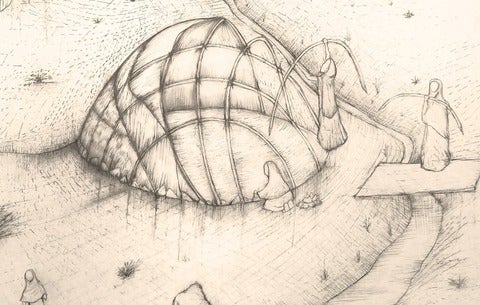
The torn, colourful fabric sheets of Somali huts deeply moved Amal Dirie when she visited her mother’s homeland last year.

The School of Architecture master’s student was so emotionally taken by the nomadic dwellings that she featured them in an award-winning essay titled The Idea of Home and Belonging.

Dirie’s illustrated piece won a Certificate of High Merit in the 2019 Royal Architectural Institute of Canada (RAIC) International Prize Scholarship competition.

Bad wells tend to get excluded from studies on groundwater levels, a problem that could skew results everywhere monitoring is used to decide government policies and spending.

Researchers at the University of Waterloo uncovered the problem while examining a discrepancy between scientific data and anecdotal evidence in southern India.

Reports on thousands of wells and satellite images taken between 1996 and 2016 suggested groundwater levels were rising, good news in an area where it is vitally important for agriculture.

Wednesday, September 4, 2019

New mathematical model can improve radiation therapy of brain tumours

by Media Relations

The new mathematical model, outlined in a recent study led by a University of Waterloo student, can use information about where the majority of the cells in a tumour are located allowing for radiation treatment to be administered to the densest area. 

Much consideration is currently usually given to optimal scheduling and dosing when radiation therapy is being prescribed, but the researchers found the treatment could be far more effective at killing brain tumour cells if oncologists also use the information on cell density, and irradiate the densest area of the tumour.

Tuesday, September 3, 2019

Narcissists: Think you're strong critical thinkers? Think again

by Media Relations

Narcissists are less likely to use critical thinking processes that are important for solving problems and making sound decisions, new research from the University of Waterloo shows.

The researchers found that while many narcissists may perceive themselves as highly intelligent, critical thinkers, they are less likely to use important reflective thinking strategies when solving problems, Therefore, the high levels of confidence they have in their intellectual abilities are often misplaced.

With 75 billion Internet of Things (IoT) devices expected to be in place by 2025, a growing strain will be placed on requirements of wireless networks. Contemporary WiFi and cellular networks won't be enough to support the influx of IoT devices, the researchers highlighted in their new study.

Tuesday, August 27, 2019

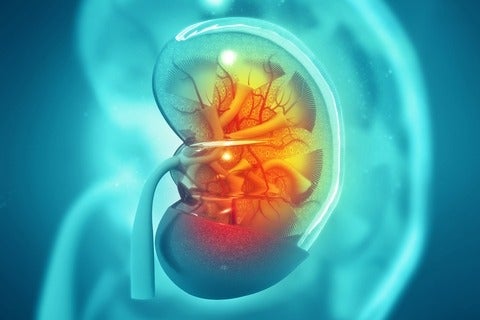
The making of an artificial kidney

by Rose Simone, University Communications
Morteza Ahmadi

Morteza Ahmadi PhD'13
PhD Alumnus, Faculty of Engineering
> Co-Founder, Qidni Labs 
> Velocity Garage

When Morteza Ahmadi visited a dialysis clinic he saw what kidney dialysis patients endure.

Researchers at the University of Waterloo have developed a way to better harness the volume of energy collected by solar panels. 

In a new study, the researchers developed an algorithm that increases the efficiency of the solar photovoltaic (PV) system and reduces the volume of power currently being wasted due to a lack of effective controls. 

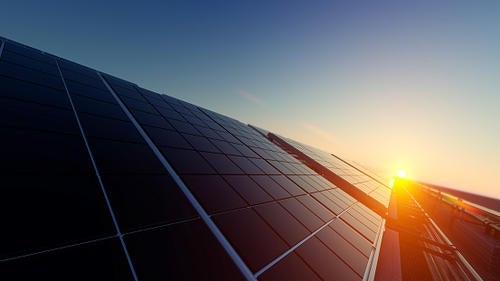
The rising sun sends beams of light across a row of solar panels.