Research

Wednesday, September 20, 2017

Sensory Robotics blurs lines with human capability

by Emily Lucke, Faculty of Engineering

Assorted hands and arms are starting to overtake Soo Jeon’s office – but he doesn’t mind in the least.

A professor of mechanical and mechatronics engineering at the University of Waterloo, he is focused on finding a solution to a key issue in the burgeoning field of robotics.

Representing Waterloo start-up EPOCH, students Jade Choy, Keith Choy, Lisa Tran, and Kaivalya Gandhi ranked among the top six teams in the $1 million Hult Prize Challenge at the United Nations in New York. The Challenge asked participants to find a sustainable, scalable social enterprise that could restore the rights and dignity of 10 million refugees by 2022.

EPOCH proposed an app that facilitates an exchange of talents and skills among refugees and community members through redeemable credits, a form of time banking where time is used as currency.

Monday, September 18, 2017

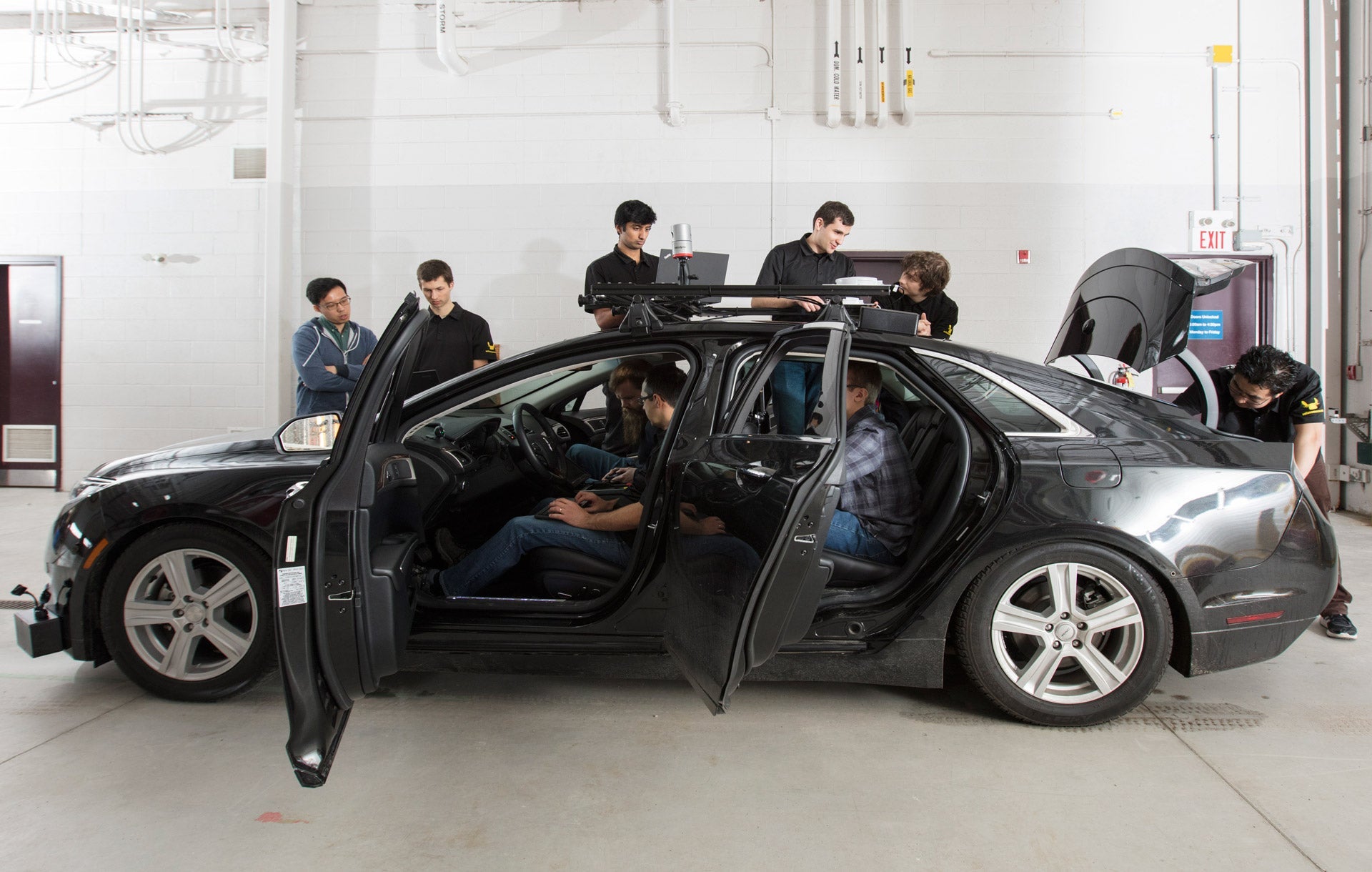
Take a look under the hood of an autonomous car

by Brian Caldwell, Faculty of Engineering

students working on autonomoose car

The basic idea is simple enough: in fully autonomous vehicles of the future, computer systems will replace human drivers.

But as front-line researchers working to develop reliable artificial brains to do that job are quick to point out, actually pulling it off, especially when safety is paramount, is an incredibly complex technical challenge.

Sunday, September 17, 2017

Vaping doubles risk of smoking cigarettes for teens

by Media Relations

The study — from the University of Waterloo and the Wake Forest School of Medicine — found that students in grades seven to 12 who had tried an e-cigarette are 2.16 times more likely to be susceptible to cigarette smoking.

“Since e-cigarettes came on the market there has been a debate about whether their use may lead to cigarette smoking,” said Bruce Baskerville, co-author on the study and a researcher at the Propel Centre for Population Health Impact at the University of Waterloo. “The answer among adolescents is yes.”

The University of Waterloo, in collaboration with Mike and Ophelia Lazaridis, has launched a new $8-million research chair to further solidify Waterloo’s leadership in quantum information research.

Raymond Laflamme becomes the Mike and Ophelia Lazaridis “John von Neumann” Chair in Quantum Information at the University of Waterloo.

Wednesday, September 13, 2017

Professor tackles internal Cybersecurity threats

by Julie Stauffer, Faculty of Engineering

The biggest Cybersecurity threat most organizations face doesn’t come from an anonymous hacker halfway around the world.

Instead, it’s someone within their own walls: a disgruntled employee who wants to wreak havoc, a “trusted” third-party contractor, or even a well-meaning worker inadvertently exposing the company to dangerous malware.

For smaller organizations, keeping sensitive material out of the wrong hands is a pretty straightforward process.

Focusing on high schools in Guatemala City, researchers from Waterloo and the Cardiovascular Surgery Unit of Guatemala found that that the beverage industry is very visible in schools through industry-sponsored food and drink kiosks, advertisements, and donated goods. Further, students attending public schools lacked access to free drinking water during school.

Friday, September 8, 2017

Expert view on Ontario's plan to sell cannabis

by Media Relations

A Waterloo expert is available to speak about Ontario's plan to sell cannabis at government-run stores

Scott Leatherdale - Applied Health Sciences

Scott Leatherdale is an associate professor in Waterloo's School of Public Health and Health Systems. He is CIHR-PHAC Applied Public Health Research Chair in Youth Health and principal investigator and the scientific lead for the COMPASS system (the world’s largest learning system focused on evidence-based programs and policies focused on youth health behaviour).