Research

Tuesday, October 10, 2017

Climate change solutions are within our grasp, professor discovers
by Kira Vermond, Faculty of Engineering

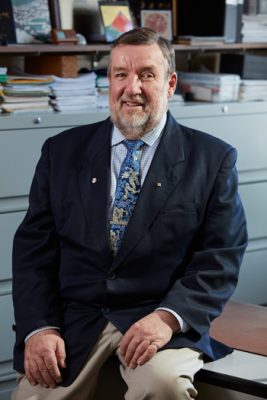
Portrait of Keith Hipel
As he gave talks on climate change and energy use while in Asia, Keith Hipel often put a seemingly simple query to his audiences.

“What’s the worst possible car you could drive if you lived in Japan?” the University of Waterloo systems design engineering professor would ask.

The answers were predictable, typically involving the word ‘diesel’ and large, gas-guzzling vehicles.
New software developed at the University of Waterloo could make it easier to adopt and trust powerful artificial intelligence (AI) systems that generate stock market predictions, assess who qualifies for mortgages and set insurance premiums.

The software is designed to analyze and explain decisions made by deep-learning AI algorithms, providing key insights needed to satisfy regulatory authorities and give analysts confidence in their recommendations.

Lori Campbell — Waterloo Aboriginal Education Centre

Lori Campbell is the director of the Waterloo Aboriginal Education Centre(WAEC). The centre is located at St. Paul’s University College, at the University of Waterloo. A goal of WAEC is to educate the public about the treatment of Indigenous people in Canada throughout history, a necessary component of reconciliation.

Sunday, October 1, 2017

Gearing up Autonomoose for a Canadian first

by Brian Caldwell, Faculty of Engineering

A little bit of history should be made this fall on Colby Drive, an otherwise unremarkable loop of pavement in an industrial area of Waterloo.

After more than a year of painstaking work, it’s where researchers at the University of Waterloo expect to become the first university-based team to test an autonomous car – cleverly nicknamed Autonomoose by students - on any public road in Canada.

Sunday, October 1, 2017

Additive manufacturing technology offers unlimited potential

by Brian Caldwell, Faculty of Engineering

Ehsan Toyserkani was at an air show in Paris this past summer when it hit home just how far word has spread on the newly expanded additive manufacturing (AM) laboratory at the University of Waterloo.

After sitting on a panel about AM and the aerospace industry, the mechanical and mechatronics engineering professor was approached by a representative of a multinational, multi-billion-dollar company to talk about possible collaboration.

Friday, September 29, 2017

A Waterloo invention makes Dyson shortlist four years in a row

by Carol Truemner , Faculty of Engineering

A patch that delivers allergy medication to children developed by Waterloo students is one of only two Canadian projects to be shortlisted for this year’s international James Dyson Awards competition. It’s the fourth year in a row a University of Waterloo project has reached the final round.

Wednesday, September 27, 2017

Housing prices and debt push millennials to live with their parents

by Media Relations

The report, GenY at Home, was released today and builds on recent census data findings that show 47.4 per cent of millennials, also known as GenY, in the Greater Toronto Area (GTA) live with their parents.

In addition to highlighting major reasons young people live at home, it also found that multiculturalism, relief from isolation and mutual support are eroding the stereotype that living with your parents is a bad thing.

Wednesday, September 27, 2017

Ourotech developing biomaterials for testing of cancer drugs

by Shane Schick, Faculty of Engineering

Duleeka Ranatunga proved the strength of his belief in his business idea when he entered – and won – a startup competition known as the Wolves Summit last year.

Held biannually in Warsaw, Poland, the contest is widely celebrated as a gathering of engineers, designers and other innovators. It’s also an opportunity for entrepreneurs to get in front of investors to make five-minute pitches.

Every year, flooding hits communities across Canada causing millions of dollars in property damage and stress to homeowners.

New research from the University of Waterloo, funded by the Standards Council of Canada (SCC) and conducted by the Intact Centre on Climate Adaptation identifies 20 best practices to design and build new residential communities that are more flood-resilient.

Sunday, September 24, 2017

Real cost of mega-sporting events much higher than people think

by Media Relations

That’s because it takes additional investments to keep newly built venues in use after the event.

“In a bid to get a mega-event event, organizers often plan to help offset the cost of new facilities by opening the venue up for public use afterwards,” said Luke Potwarka, the study’s lead author and a professor in the Faculty of Applied Health Sciences at Waterloo. “But the idea that ‘if you build it they will come’ does not always hold true.”